Punjab farmer defies trend, grows cotton without pesticides as acreage hits historic low
Most farmers in Punjab are steadily moving away from cotton, leading to a sharp decline in acreage. The state's cotton area has fallen below 80,000 hectares, one of the lowest levels in its history. Farmers cite repeated pest attacks, including pink bollworm and whitefly, as well as rising input costs and unpredictable yields as reasons for the shift. Many are turning to paddy, especially in the Malwa region, where expanded irrigation makes paddy cultivation safer and more profitable.
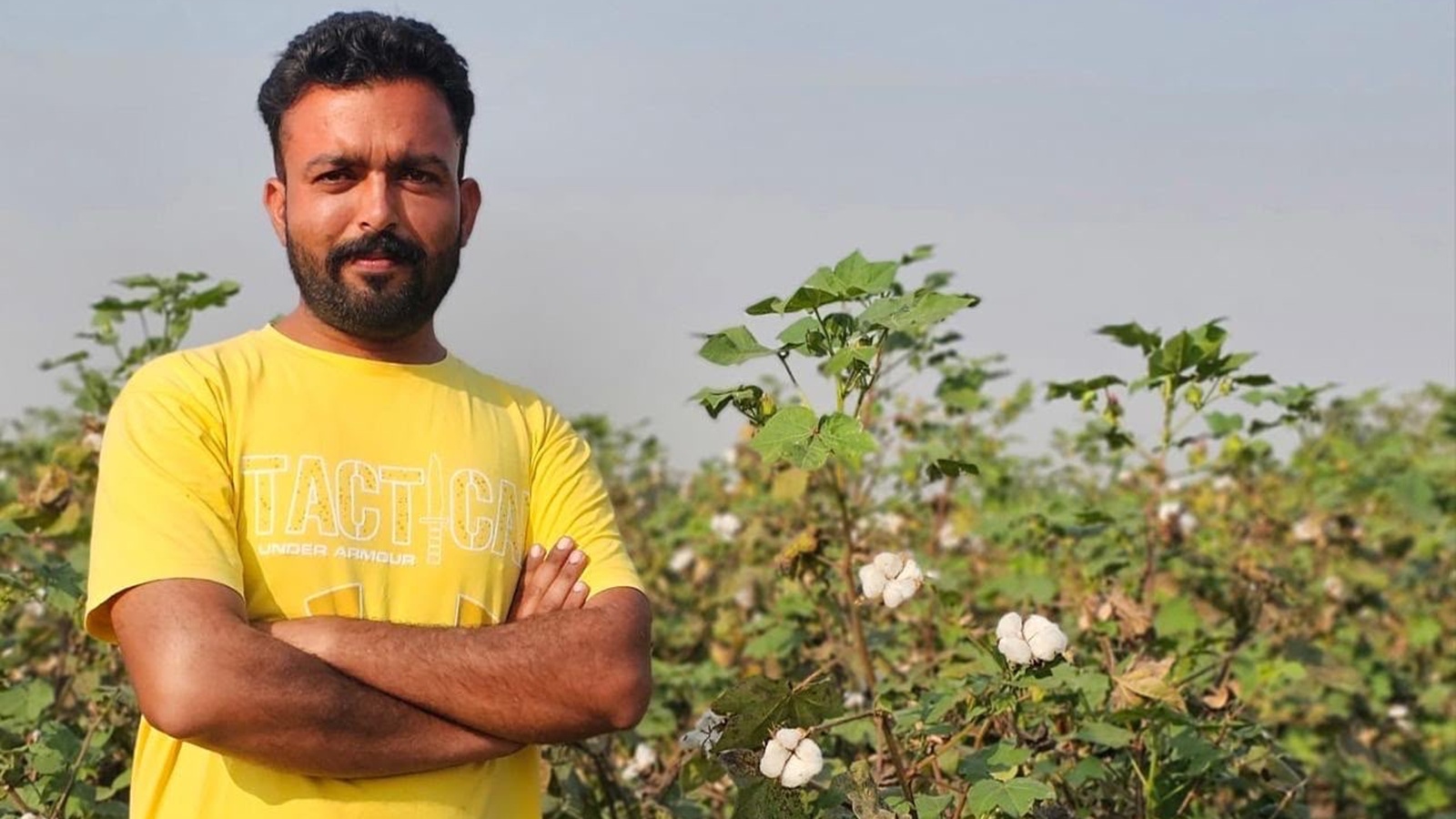
Amid this trend, Gagandeep Singh from Mansa's Raipur village is doing the opposite. On his 10-acre landholding, he has dedicated seven acres to cotton this season. More remarkably, he grows cotton without using any chemical pesticides. He monitors insect populations in his fields and only intervenes when pest numbers cross the Economic Threshold Level (ETL), a scientific benchmark. By allowing beneficial insects to control pests naturally, he has eliminated pesticide use, reduced costs, and protected biodiversity.
Gagandeep harvested nearly 950 kg of seed cotton in 2022, even when pink bollworm was rampant. He calls his method 'zero-budget cotton farming' and relies on crop monitoring and homemade treatments. He also trains neighbouring farmers on insect identification and ETL-based decision-making.
Another farmer, Gurinder Singh from Bathinda's Fatta Balu village, expanded his cotton area from three to seven acres on his 18-acre farm. He has avoided chemical pesticides for four years by using ETL-based strategies. If pests exceed the threshold, he uses pheromone traps costing less than Rs 1,000 per acre, saving thousands on pesticide sprays. He also grows Desi cotton varieties.
Ram Singh from Mansa's Jherianwali village has similarly eliminated pesticide use on his 10-acre farm through ETL-based pest management.
These farmers stand out in a region where cotton acreage is shrinking. Their methods demonstrate that sustainable, low-cost cotton farming is possible even amid pest pressures, offering lessons for the broader agricultural community.







