Polio Virus Traced in Ghaziabad Sewage: Health Workers Launch Door-to-Door Vaccination Drive
On a Thursday morning in Vijay Nagar, a densely populated neighbourhood in Ghaziabad, health worker Rajkumari balances a blue vaccine cold box and a pink file as she knocks on iron gates. Her mission: ensure no child under five misses the polio vaccine.
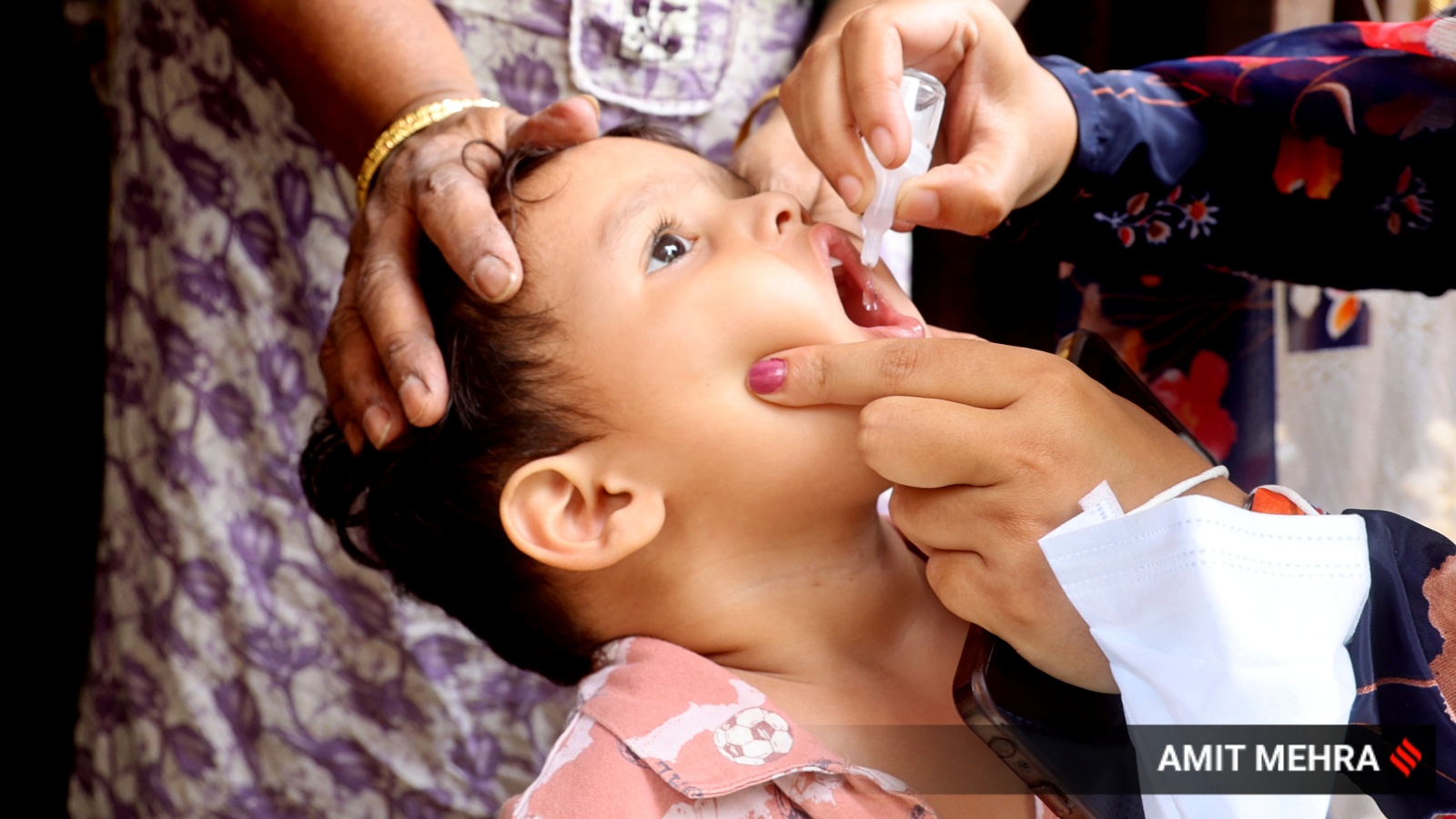
A young mother emerges with her five-month-old daughter. Rajkumari records the child's details while an ASHA worker administers two drops of polio vaccine. The baby cries, but the team moves on, marking each house visited. Some doors remain shut; those are noted for follow-up visits.
Nearby, under an under-construction apartment tower, families from Bihar and Uttar Pradesh live in tin-roofed shelters. Many men work at construction sites; women care for children or work as domestic helpers. Rajkumari and her colleague Manisha step past garbage and algae-covered drains to reach every shack.
Shyam, a carpenter from Darbhanga, spots the workers and calls his young son. 'Give him the drops too,' he says, holding the boy. Shyam recalls vaccination campaigns from his village and says many people are afraid because they don't understand the drops' importance. He knows they are crucial.
The urgency stems from a sewage sample collected in Vijay Nagar on June 5, which tested positive for vaccine-derived poliovirus—a rare strain that can circulate where immunisation coverage is low. India was declared free of wild poliovirus in 2014, but environmental surveillance continues. After the detection, officials traced the sewage network, identified 12 high-risk neighbourhoods home to about 150,000 people, and intensified vaccination efforts under the National Centre for Disease Control and the World Health Organisation.
Dr Soniya Patel, Medical Officer In-charge, says every area covered in previous rounds was reviewed to ensure no child was missed. 'We cannot miss any child,' she states.
Reluctance is not limited to poor areas. In the gated towers of Paramount Symphony, Auxiliary Nurse Midwife Usha Yadav spent 45 minutes persuading a mother to allow vaccination. Another worker, Amit Pal, says some parents refuse to open doors or claim no children are inside. When persuasion fails, supervisors counsel the family.
The campaign aims to reach every eligible child, reinforcing India's commitment to polio eradication.