Police Crack Down on 'Mule Accounts' Fueling Cyber Fraud Across India
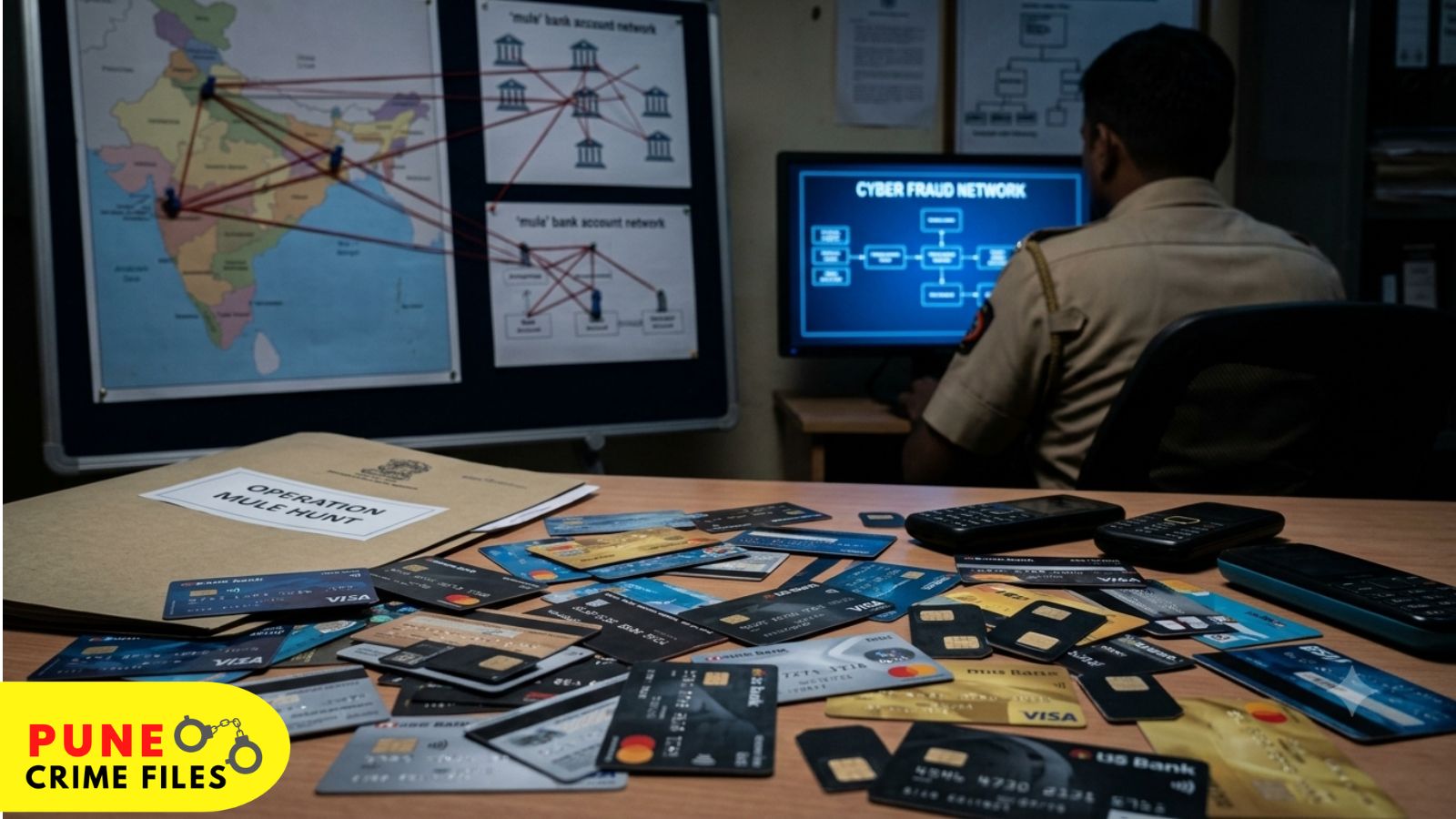
In a major crackdown on the financial infrastructure behind cyber fraud, police in Pimpri-Chinchwad, Maharashtra, have launched 'Operation Mule Hunt' to identify, freeze, and prosecute holders of bank accounts used in online scams. Investigators say these accounts, often opened in the names of defunct businesses or unsuspecting individuals, are the backbone of organised cybercrime networks across India.
Cyber frauds, whether they involve fake stock market schemes, digital arrests, or part-time job offers, all rely on a network of bank accounts to receive and launder stolen money. These accounts, known as 'mule accounts', are rarely held in the criminals' own names. Instead, they are obtained from unemployed youth or financially vulnerable individuals promised easy commissions, or purchased with full banking credentials.
In the last three days, police have registered 15 criminal cases against suspected mule account holders, based on intelligence from the Ministry of Home Affairs's Indian Cyber Crime Coordination Centre (I4C). The accounts were linked to complaints from multiple states. For example, one account opened under a grocery business received and withdrew Rs 94 lakh within 11 days, appearing in 13 cybercrime complaints across five states. Another account, registered under a web developer's name, saw Rs 55 lakh in suspicious transactions in three days. A third account linked to a paper-only real estate firm recorded Rs 20 lakh in a week.
Police are invoking organised crime provisions under the Bharatiya Nyaya Sanhita (BNS) to target the entire network, including account suppliers, middlemen, and those controlling the proceeds. 'We view mule accounts as the financial infrastructure of organised cyber fraud,' said a police officer involved in the operation. 'By using organised crime laws, we can pursue the entire chain of criminals, not just individual account holders.'
The recruitment of mule account holders typically happens via Telegram, WhatsApp, or social media, where victims are lured with promises of easy commissions. Others are coerced into handing over credentials. Police urge the public not to share bank details with unknown entities, as doing so can make them complicit in fraud.
Operation Mule Hunt reflects a shift in law enforcement strategy: targeting the financial conduits of cybercrime rather than solely focusing on individual fraudsters. With cyber fraud rising across India, officials hope this approach will disrupt the networks that enable these crimes to flourish.