PM Modi Tells President Zelenskyy at G7 Summit: India Will Always Be on the Side of Peace
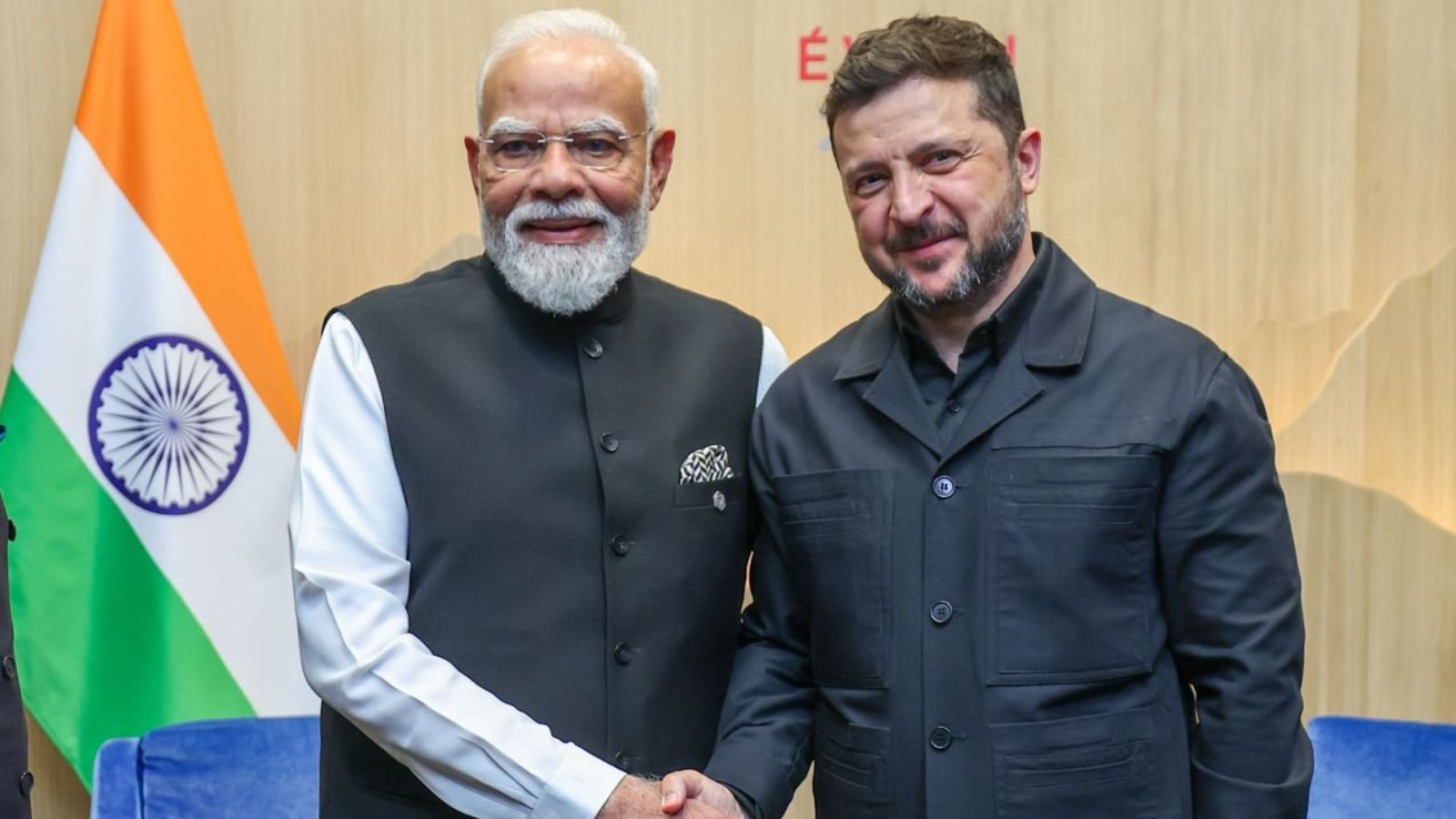
Prime Minister Narendra Modi and Ukrainian President Volodymyr Zelenskyy held a bilateral meeting on the sidelines of the G7 Summit in Évian-les-Bains, France, on Wednesday. The discussions, described as constructive by both delegations, focused on reviewing various aspects of India-Ukraine cooperation, including trade and industrial projects, and reaffirmed the shared commitment to peace and stability.
During the meeting, Prime Minister Modi conveyed India’s unwavering stance on the Russia-Ukraine conflict. "India will always be on the side of peace, placing the values of humanity over everything else," Modi told President Zelenskyy, according to a statement shared by the Prime Minister’s Office. The Indian leader later posted on social media platform X, detailing the engagement: "In recent times, India and Ukraine have been engaging extensively. This has been reflected in different areas of our cooperation. Our talks today were about reviewing different aspects of our cooperation."
The meeting signifies a broadening of dialogue beyond humanitarian and political considerations to include concrete economic collaboration. Officials from both countries indicated that talks covered potential joint ventures in manufacturing, infrastructure, and technology, a significant development given the security constraints Ukraine faces. Trade between India and Ukraine, which had dipped following the onset of the war in 2022, has seen gradual recovery, with India exporting pharmaceuticals, machinery, and agricultural products, while importing sunflower oil and metals.
India has maintained a consistent position of calling for an immediate cessation of hostilities and urging dialogue and diplomacy to resolve the conflict. Since February 2022, New Delhi has not condemned Russia’s actions directly but has repeatedly emphasised respect for the UN Charter, territorial integrity, and sovereignty of states. India has provided humanitarian aid to Ukraine, including medicines, relief materials, and support for reconstruction. In 2025, India participated in the Ukraine Peace Summit held in Saudi Arabia, offering to contribute to the peace process in any capacity acceptable to both parties.
President Zelenskyy, on his part, thanked India for its humanitarian assistance and reiterated Ukraine’s interest in strengthening ties with the global south. Ukrainian officials have previously acknowledged India’s potential role as a mediator given its diplomatic ties with both Russia and the West. However, the focus of Wednesday’s meeting remained largely on bilateral affairs, with the conflict’s shadow evident but not dominating the agenda.
The G7 Summit, hosted by France at the picturesque Lake Geneva town of Évian, brought together leaders from the Group of Seven industrialised nations along with invited guest countries, including India, Brazil, and South Africa. The summit addressed pressing global issues such as climate change, food security, and the governance of artificial intelligence. India’s presence at the summit underscores its growing influence in multilateral forums, and PM Modi’s interactions on the margins—including with President Zelenskyy—highlight New Delhi’s balanced diplomatic approach.
Observers note that the meeting reflects a maturing of India-Ukraine ties, which have navigated the complexities of the war era without rupturing. Foreign policy experts suggest that India’s neutral stance, while sometimes criticised in Western capitals, has allowed it to engage meaningfully with both Moscow and Kyiv. The discussion on industrial and trade projects, if pursued, could offer Ukraine much-needed investment and diversification of economic partnerships, while giving India a foothold in the reconstruction process.
As the conflict enters its fifth year, international fatigue has set in, yet flashes of diplomacy continue. Wednesday’s meeting in Évian serves as a reminder that even amidst prolonged geopolitical strife, nations seek pathways for mutually beneficial engagement. Both leaders expressed hope that the dialogue would continue at various levels, with plans for a visit by Ukrainian ministers to India later this year to explore specific sectors.
In conclusion, the Modi-Zelenskyy meeting at the G7 Summit exemplifies India’s nuanced foreign policy—calling for peace while expanding practical cooperation. As global dynamics shift, India’s role as a voice of moderation and development partnership is likely to gain further prominence.