NEET re-exam 2026: Experts advise staying calm and focusing on revision
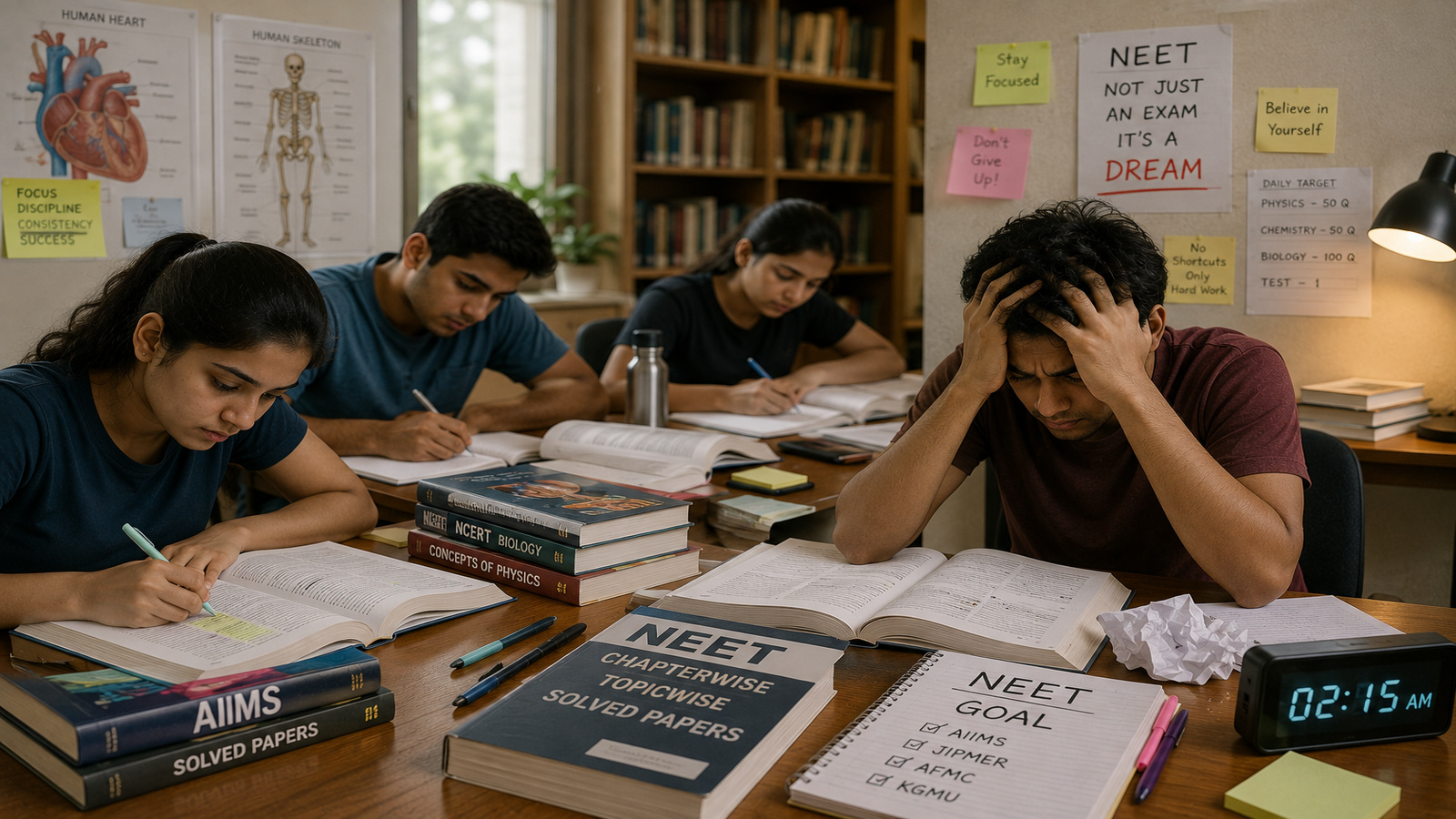
The announcement of a re-examination for the National Eligibility cum Entrance Test (NEET) 2026 has stirred a mix of emotions among applicants. Frustration, fatigue, fear, and anxiety are common as candidates confront the prospect of retaking an exam they had prepared for over months. Experts emphasize that such feelings are entirely natural and that almost every NEET aspirant facing a re-test shares them. Acknowledging these emotions is the first step towards managing them effectively.
The key now is not to start afresh but to build upon existing knowledge. Candidates have already invested months in preparation, completed numerous practice tests, and experienced the actual exam environment. The concepts, formulas, and strategies acquired during this period remain intact. Therefore, the final days leading up to the re-exam should be devoted to revision, not to learning new topics. The focus should be on reviewing critical elements: key concepts, important diagrams, chemical reactions, and NCERT textbooks, which form the backbone of the NEET syllabus. Candidates should also identify and learn from mistakes made in previous attempts to avoid repeating them.
Many students are anxious about whether the difficulty level of the re-exam will match that of the original test. While no one can predict the exact nature of the paper, experts advise that a student's response to the exam is more important than the exam’s difficulty. A calm and composed mind will perform better, even when faced with challenging questions. Panic can cloud judgment, while steadiness helps in recalling information accurately. Thus, candidates should concentrate on maintaining composure throughout the test.
Effective time management is crucial during the examination. Students should begin with questions they find easy and familiar, as this boosts confidence and creates a positive rhythm. It is advisable to avoid spending too much time on any single question; if a problem seems too complex, it is better to move on and return to it later if time permits. Strategic selection of questions and maintaining accuracy are often more valuable than attempting every question in the paper.
Beyond academic revision, practical readiness plays a vital role. Candidates must ensure that their admit card, valid photo identification, passport-sized photographs, and any other required documents are kept ready at least a day before the exam. Reading and following the official guidelines regarding what is and isn’t allowed inside the examination hall is essential. Electronic devices such as mobile phones, smartwatches, calculators, and any study material are strictly prohibited. Students should plan to arrive at the centre well before the reporting time to avoid last-minute stress and to settle down mentally.
The psychological aspect of appearing for a re-test cannot be overstated. Examinations assess not just academic knowledge but also mental resilience. Anxiety and stress can impair concentration and decision-making. In the remaining days, maintaining a healthy routine is paramount. Adequate sleep, proper hydration, and balanced meals significantly impact memory, focus, and overall performance. Staying up late to cram on the night before the exam can be counterproductive, as fatigue may undermine performance on the actual day.
If panic strikes during the exam, it is helpful to pause briefly and take slow, deep breaths. It is not uncommon to encounter a few unfamiliar questions at the start or to experience a momentary mental block. Such situations do not define the entire exam. Regaining composure and tackling the rest of the paper with a clear mind is the best strategy. Remember, the goal is to perform to the best of one’s ability, drawing on the preparation and resilience built over months.