NCERT Revises Class 8 Textbook, Removes 'Corruption in Judiciary' Chapter After Supreme Court Order
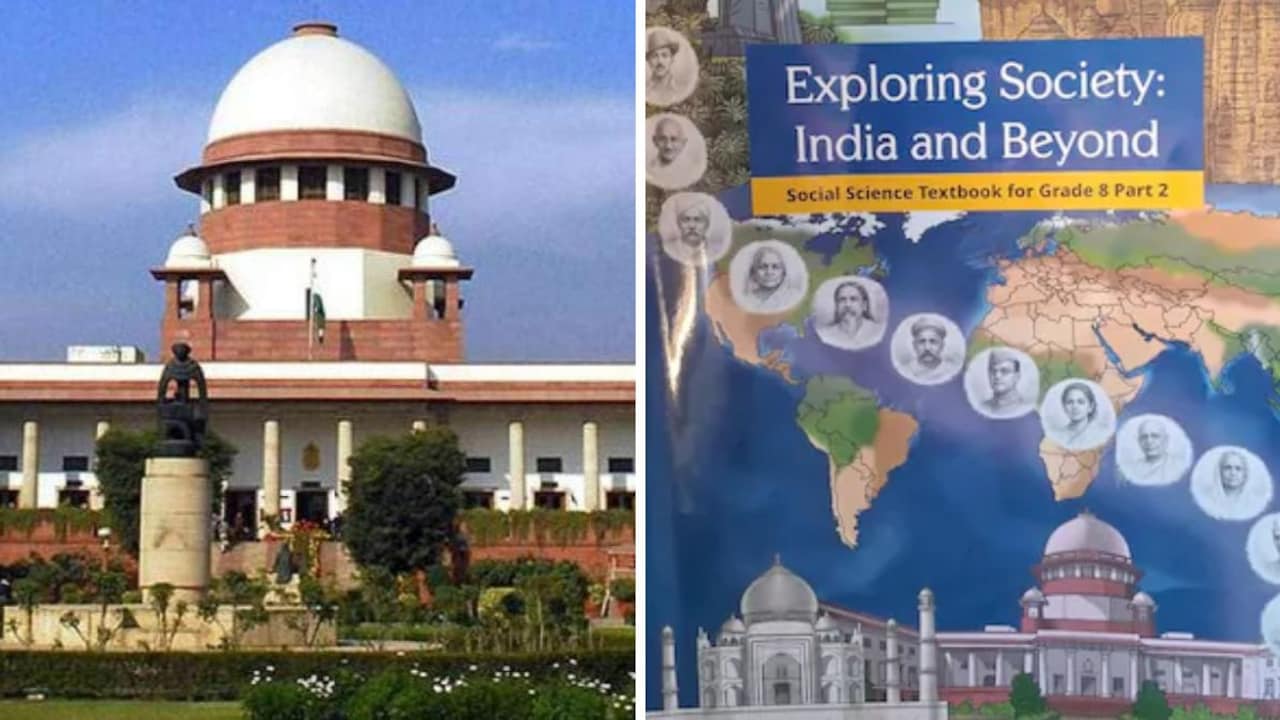
The National Council of Educational Research and Training (NCERT) has released a revised version of its Class 8 Social Science textbook, months after the Supreme Court ordered the withdrawal of an earlier edition that contained a controversial section on 'corruption in the judiciary'. The updated textbook, published in compliance with the court's directives, drops the disputed portions and introduces new content on Public Interest Litigation (PIL), tribunals, and alternative dispute resolution mechanisms.
The controversy erupted in February 2026 when Part 2 of the textbook was released, featuring a chapter titled 'The Role of the Judiciary in Society'. That chapter included a section on 'Challenges Faced by the Judicial System', which detailed a massive backlog of cases attributed to a shortage of judges, cumbersome procedures, and weak infrastructure. A subsequent section on 'Corruption in the judiciary' cited former Chief Justice of India B R Gavai as acknowledging instances of 'corruption and misconduct' within the judicial system. The content sparked immediate backlash, leading the Supreme Court to take suo motu cognisance on February 25. NCERT apologised the same day and promised a rewrite, and the court barred distribution of the textbook in both print and digital formats the next day.
The revised chapter drops these contentious portions entirely. Also removed are references to specific landmark judgments, including the Shreya Singhal vs Union of India case, which struck down Section 66A of the IT Act, and the Association for Democratic Reforms vs Union of India case, which scrapped the electoral bonds scheme. A section explaining how an independent judiciary safeguards fundamental rights and how the Constitution insulates judges from legislative and executive interference has also been excised. Classroom discussions built around these judgments are no longer part of the curriculum.
In their place, the revised textbook introduces a detailed section on Public Interest Litigation (PIL) under Articles 32 and 226 of the Constitution, describing it as 'an innovation introduced by the Supreme Court' to address matters of public concern. It draws on the Hussainara Khatoon case concerning undertrial prisoners, M C Mehta's environmental litigation, and the Vishaka judgment on workplace sexual harassment. The chapter also expands on the Supreme Court's constitutional role, tribunals, and alternative dispute resolution mechanisms.
The textbook's opening 'Big Questions' section has been reworded. The earlier edition asked why an independent judiciary is necessary; the revised version instead asks, 'Why does justice matter for a just and harmonious society?' This shift moves from a focus on institutional independence to broader societal values.
The revised edition acknowledges that it was published in compliance with the Supreme Court's directions in Suo Motu Writ Petition (Civil) No. 1/2026, with Chapter 4 rewritten by an expert committee set up by the Ministry of Education following the court's order of March 16. The matter is next listed for hearing on July 14.
Changes to the textbook development team are also notable. The withdrawn edition credited 51 people; the revised one lists 48. Missing are Michel Danino, Suparna Diwakar, and Alok Prasanna Kumar, the three experts initially blamed for the disputed chapter. The Supreme Court had directed the Centre, states, Union territories, and educational institutions to cut ties with the trio on March 11, but partially modified that order on May 22 after accepting their explanation that the textbook was a collective effort with no intent to malign the judiciary.
In the aftermath, the education ministry set up an oversight committee led by former Supreme Court judge Justice Indu Malhotra, with former attorney general K K Venugopal and Hemvati Nandan Bahuguna Garhwal University vice-chancellor Prakash Singh as members. The head of the National Judicial Academy was also involved in revising judicial content.
This development underscores the ongoing tension between educational content and judicial sensitivity, highlighting the importance of balanced, factual, and respectful discourse in textbooks. The NCERT's response reflects a commitment to constitutional values and the rule of law, ensuring that instructional material does not undermine public trust in institutions.







