MP Police to Launch Coordinated Crackdown on Rail-Borne Turtle Trafficking
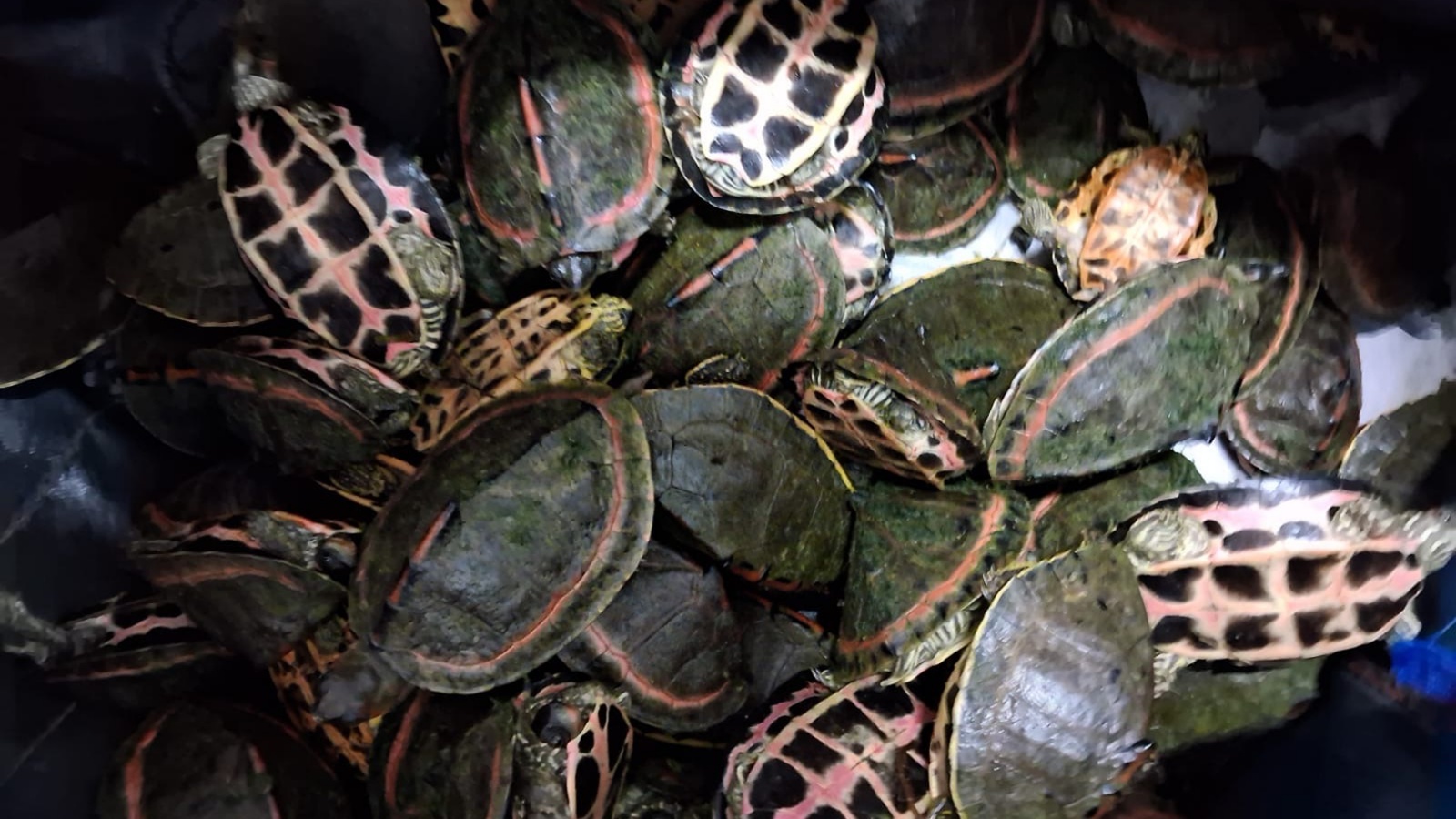
Police in Madhya Pradesh are preparing their first coordinated crackdown on wildlife trafficking through the state's railway network, following an analysis of six years of seizure data that uncovered organised interstate networks smuggling protected freshwater turtles from northern India's river systems to markets in Southeast Asia and the Middle East, The Indian Express has learnt.
Between 2020 and 2026, the State Tiger Strike Force (STSF) and Government Railway Police recovered 654 protected animals from passenger trains crossing the state — 647 turtles and seven vultures — across four organised interstate networks, according to enforcement records.
Senior police officials said the analysis has convinced them that the animals seized over six years represent only a fraction of the wildlife being trafficked through Madhya Pradesh's rail network. Repeat offenders appearing across multiple cases indicate established rackets may have been operating along the same corridors for years.
Based on that analysis, Madhya Pradesh is now preparing its first coordinated crackdown on wildlife trafficking through the railway network, moving beyond isolated interceptions towards a structured enforcement response.
“We are coordinating with all sister agencies like the state wildlife task force and railway officials to enhance the vigilance and checking of these trains and routes,” ADG (Railways) Raja Babu Singh told The Indian Express. “We are taking this very seriously and are formulating a strategy and working on curbing wildlife trafficking.”
Additional Principal Chief Conservator of Forests (Wildlife) L Krishnamurthy confirmed to The Indian Express that turtles seized in Madhya Pradesh “are trafficked primarily as exotic pets”, while Singh described the data on wildlife trafficking through the railways as “alarming”.
The seizures suggest traffickers overwhelmingly rely on passenger trains rather than railway cargo systems. All 654 animals recovered during the six-year period were found concealed in passengers' luggage.
The turtles begin their journey far from Madhya Pradesh. The Indian softshell and Indian flapshell turtle — both listed under Schedule I of the Wildlife Protection Act, 1972, in the same protection category as tigers and elephants — inhabit the river systems of the Gangetic basin. STSF officers said poachers and fishermen capture them from stretches of the Ganga and its tributaries in Uttar Pradesh before selling them to collectors, who aggregate consignments until they are large enough to move by train. Madhya Pradesh is where they next appear in official records, usually after being detected during random checks.
Wildlife officials said the seizures in the state reflect a much larger interstate trade. “Freshwater turtles are the species we encounter most frequently in trafficking cases,” a senior wildlife official said. “The animals are sourced from river systems in northern and eastern India and transported through the rail network. Madhya Pradesh is largely a transit corridor in these cases, with consignments moving towards markets in western India.”
Different species feed different markets. “Indian roofed turtles and star tortoises are primarily sought for the illegal pet trade,” officials familiar with the investigations said. “We have seen networks linked to cities such as Indore, Dewas and Ujjain, with further movement towards Gujarat.” Softshell and flapshell turtles follow a different route. “There is demand in parts of eastern India, particularly Odisha and West Bengal. Investigators have also found evidence of turtles moving through Bangladesh, where they are valued for traditional medicinal uses before being trafficked further.”
The rarest species face the most organised extraction. Species such as the Batagur turtle, which is critically endangered and survives in very limited stretches, including the Chambal river system, are particularly vulnerable.