Monsoon Delay: Sardar Sarovar Dam at 64% Capacity Eases Water Worries for Gujarat
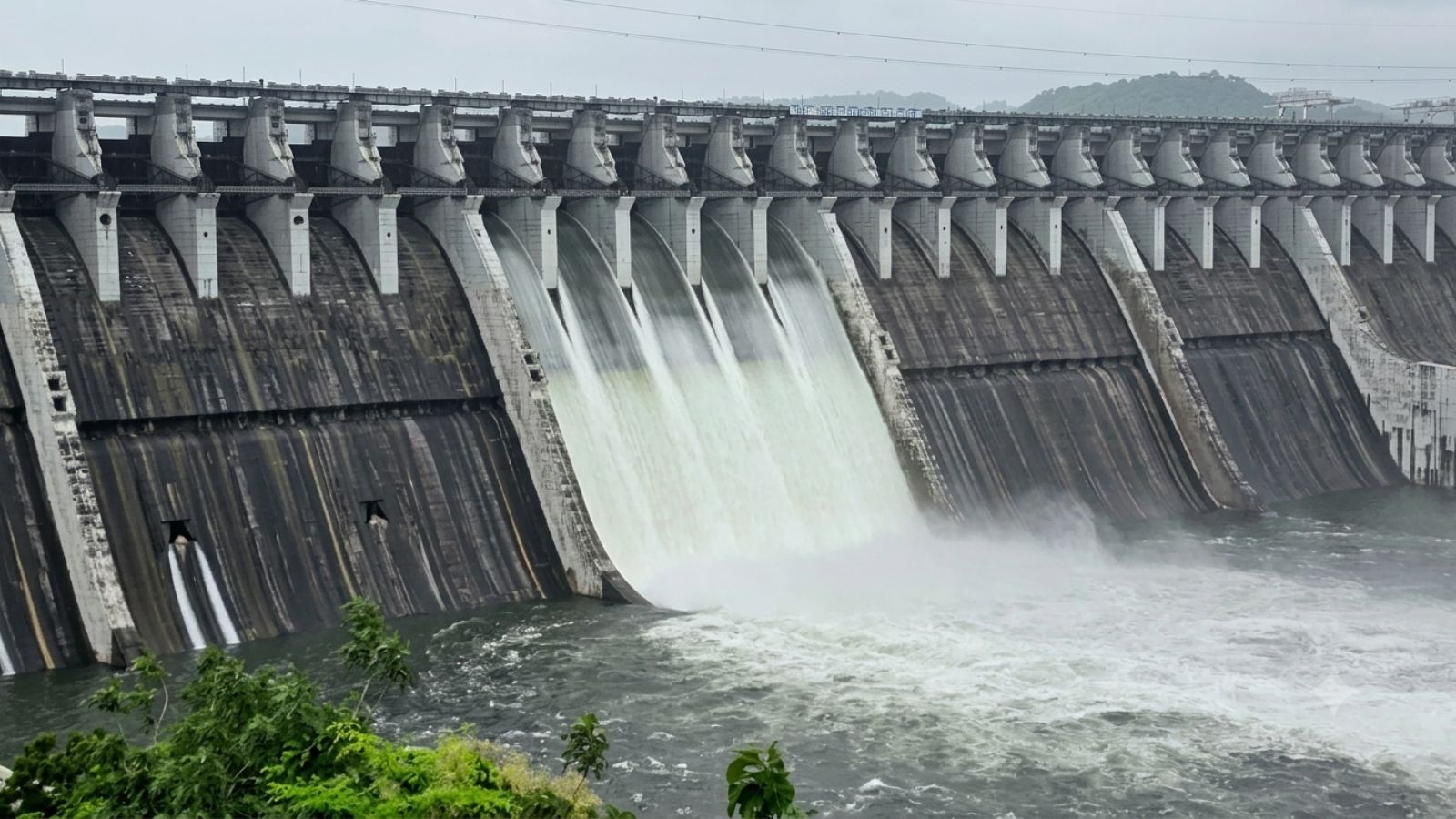
With the southwest monsoon delayed in several districts of Gujarat, the Sardar Sarovar Narmada dam has emerged as a critical lifeline for drinking and irrigation water, holding approximately 64% of its storage capacity. The dam recorded a water level of 126.59 metres on Saturday, against its full reservoir level (FRL) of 138.68 metres, with a gross storage of 6,140.31 million cubic metres (MCM) — 64.91% of its design capacity of 9,460 MCM.
This storage is 1,496.55 MCM more than what was recorded on the same day last year, providing the state with a substantial cushion as it enters the peak monsoon season. The dam's average inflow was 7,554 cusecs, while releases through the canal head powerhouse stood at 14,522 cusecs, out of a combined flow of 15,705.83 cusecs downstream at the Garudeshwar head regulator.
Statewide, Gujarat's 207 reservoirs held a combined gross storage of 11,875.08 MCM on Saturday, amounting to 47.02% of their total design capacity. The delayed monsoon has raised concerns in several districts, but the robust storage in the Sardar Sarovar dam offers significant relief for both agricultural and domestic water needs.
The Sardar Sarovar dam, a key component of the Narmada project, plays a vital role in meeting the water demands of Gujarat, particularly during years of erratic rainfall. The current storage levels indicate that the state is better prepared this year compared to last, when storage at the same time was notably lower.