Romania shuts nuclear plant as Danube hits 30-year low amid heatwave
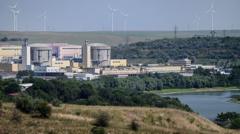
Romania has temporarily shut down its only nuclear power station because water levels in the Danube River have fallen to their lowest in three decades, a consequence of prolonged hot weather across much of Europe. The Cernavodă plant, which generates about 20% of the country's electricity through two reactors, is not expected to resume operations for at least ten days.
The second reactor at Cernavodă was disconnected from Romania's electricity grid shortly before midday on Thursday, according to plant director Romeo Urjan. He told the AFP news agency that a restart within the next ten days is not foreseen. The first reactor had already been taken offline in July.
The shutdown marks only the second time in the plant's history that it has been forced to halt operations; the previous instance was in 2003. The plant relies on the Danube for cooling, and the extremely low river level has made it impossible to draw sufficient water for that purpose. Earlier this week, authorities attempted to raise the water level near the plant by sinking barges loaded with rocks into the river, but these measures were not enough to prevent the shutdown.
The situation is not confined to Romania. In neighbouring Hungary, the Paks nuclear plant, which also uses the Danube for cooling, has so far avoided a full shutdown, but officials have warned that it could be forced to close entirely for the first time. Prime Minister Péter Magyar cautioned last month that the Soviet-era facility, which has four reactors, faces that risk. Plant officials have noted that the water level is so low that the suction nozzles used to draw in water cannot reach it.
The Danube, Europe's second-longest river, has seen water levels fall to their lowest in 30 years in several countries. The drought and heatwave have also severely affected Romania's substantial hydropower capacity, which has been heavily reduced by the same low river levels. The shortfall in electricity from nuclear and hydro sources is being compensated by solar and wind generation during hot, windy daylight hours, but coal- and gas-powered generation will need to be supplemented by imports during the evenings.
This incident highlights the growing vulnerability of Europe's energy infrastructure to extreme weather events. While the immediate cause is the current heatwave, scientists have linked such prolonged high temperatures to broader climate change patterns. The shutdown is a reminder of the delicate balance between energy production and environmental conditions, particularly in regions that depend on major rivers for cooling or generation.
The Romanian government has not declared an energy emergency, and the grid is expected to remain stable with imports and other sources. However, the situation underscores the need for investment in more resilient energy systems, including better cooling technologies and diversified power sources. The long-term reliability of nuclear and hydroelectric power in a warming climate will likely become an increasingly important policy consideration for countries along the Danube and elsewhere.
For now, residents in Romania and Hungary face the immediate challenge of ensuring uninterrupted electricity supply while dealing with the broader impacts of the heatwave, which has also affected agriculture, water supply, and public health. Authorities are monitoring river levels closely, and the restart of Cernavodă will depend on a significant improvement in the Danube's flow.