Ministry Report Exposes Widespread Failures in India's Agriculture Data System
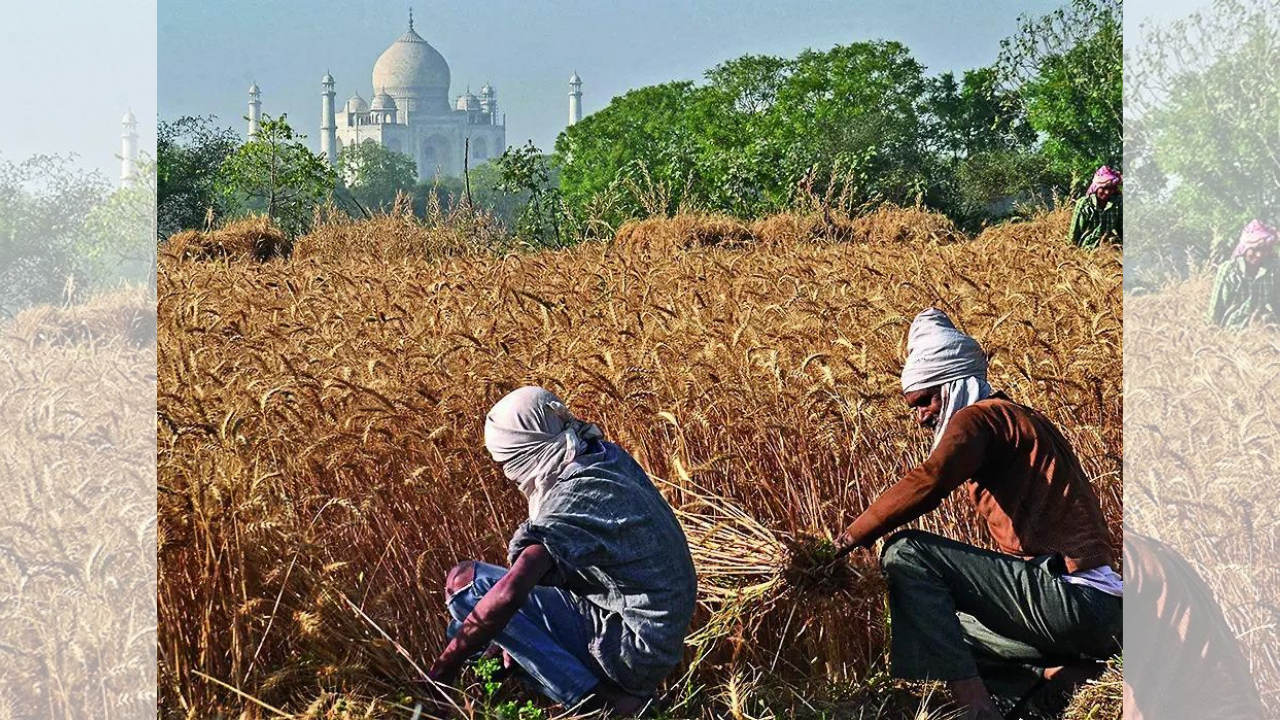
New Delhi: A new report from the Ministry of Statistics and Programme Implementation has uncovered serious deficiencies in the country's system for collecting agriculture data, threatening the accuracy of crop estimates used for critical policy decisions such as export bans, import duties, and inflation control.
The report, titled 'Review of Crop Statistics System', reveals that 'girdawari' — the basic crop inspection conducted by village revenue officers — was completed on time in less than half of India's sample villages for the 2023-24 crop year. Timely completion during early kharif stood at only 43%, late kharif at 46%, rabi at 48%, and summer at 33%.
States including Andhra Pradesh, Assam, Bihar, Gujarat, Haryana, Jharkhand, Karnataka, Maharashtra, Punjab, Telangana, Uttar Pradesh, and West Bengal showed 'alarmingly high' instances of delayed girdawari. The report urges state authorities to take action to ensure timely completion.
Another major finding is that 63% of village maps — essential for tracking land-use changes — are over 20 years old. Outdated maps make it difficult to identify survey numbers, especially as construction and urbanisation alter plot boundaries. In West Bengal and Puducherry, all village maps are more than two decades old, while Odisha (99%), Uttarakhand (98%), Assam (94%), Tamil Nadu (93%), and Jharkhand (93%) also have high proportions. In contrast, only 5% of Gujarat's village maps share this problem.
The report also highlights issues with crop-cutting experiments (CCEs), which are used to calculate average yields and final food output. In 2023-24, an estimated 1.2 million CCEs were conducted, but many were performed by untrained staff. In Jharkhand and Uttar Pradesh, 40% of CCEs were done by untrained personnel; in Madhya Pradesh, Maharashtra, and West Bengal, more than 10% were carried out by junior staff.
The Commission for Agriculture Costs and Prices (CACP) uses this grassroots data to calculate production costs and shape national advance estimates. The government then uses these estimates for food security interventions, such as imposing export bans, adjusting import duties, or releasing buffer stocks to curb inflation.
The report concludes that 'suitable action needs to be taken by the respective state authorities to ensure timely completion of girdawari in all the states' and that regular updation of maps is essential. These gaps in data collection undermine the reliability of crop statistics and could affect policy responses to challenges like deficient monsoons and food price volatility.