July 13, 1986: Gujarat Violence, Holy Sites Policy, TULF Talks, Jnanpith Award
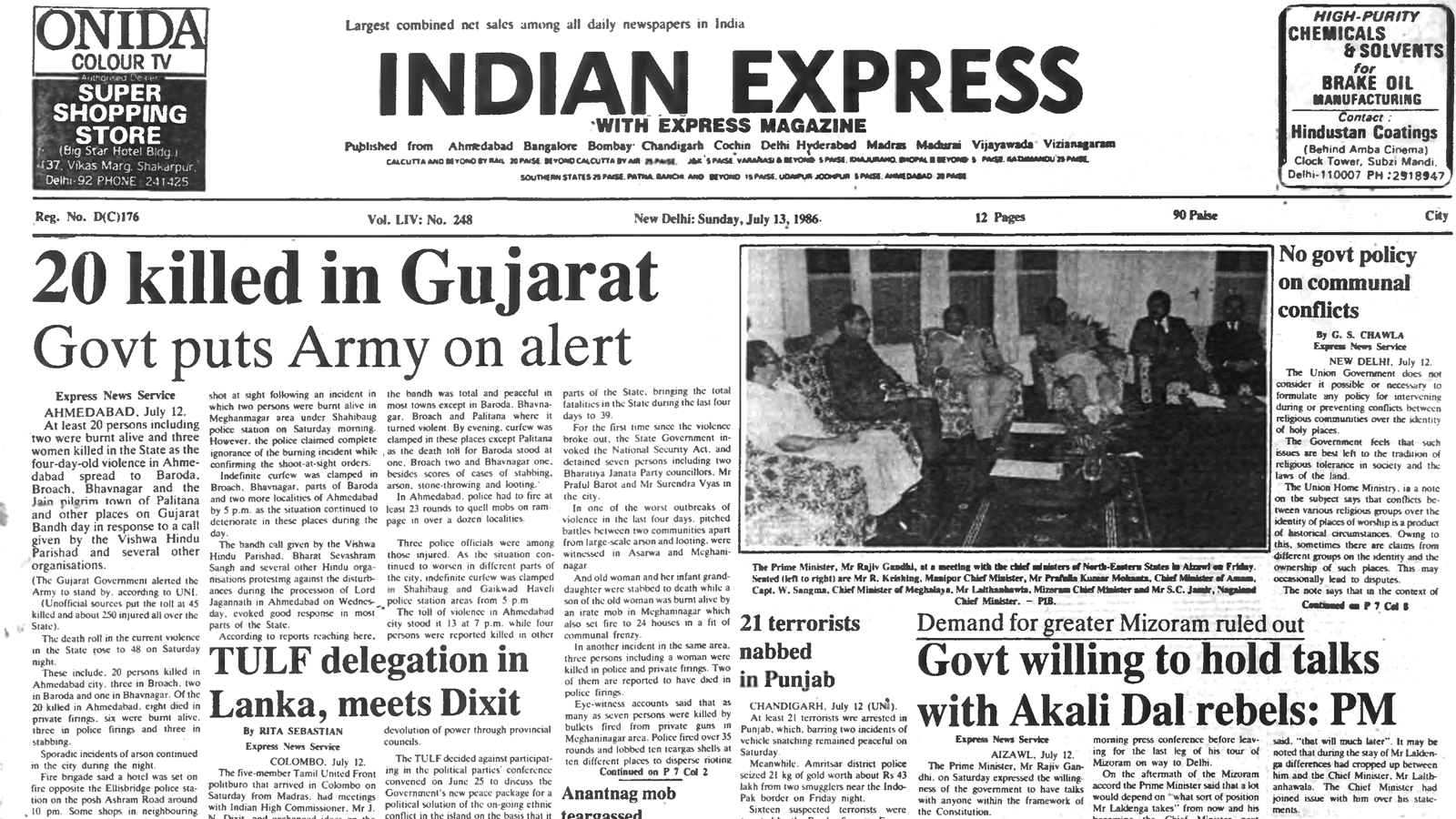
Forty years ago, on July 13, 1986, a series of significant events unfolded in India and Sri Lanka. In Gujarat, communal violence that had erupted in Ahmedabad four days earlier spread to Baroda, Broach, Bhavnagar, and the Jain pilgrim town of Palitana. At least 20 persons were burnt alive and three women were killed as the statewide bandh called by the Vishwa Hindu Parishad and other organisations intensified the unrest. The death toll rose to 48, prompting the Gujarat government to alert the army to stand by.
On the same day, the Union Government clarified its position on conflicts over holy places. In a note, the Home Ministry stated that it did not consider it possible or necessary to formulate a policy to intervene in or prevent disputes between religious communities over the identity of places of worship. The government felt such issues were best left to the tradition of religious tolerance and the laws of the land, arising from historical circumstances.
In Colombo, a five-member politburo of the Tamil United Front (TUF) arrived from Madras and held meetings with Indian High Commissioner J N Dixit. The delegation exchanged views on the current situation in Sri Lanka and also met party members from the northern and eastern provinces. They were expected to engage in direct discussions with the Sri Lankan government on proposals for devolution of power through provincial councils.
In literary news, veteran Gujarati writer Pannalal Patel was awarded the 21st Jnanpith Award for 1985 in recognition of his remarkable contribution to Indian literature. The award, which carried Rs 1.50 lakh in cash and a citation, was announced after the selection board met under the chairmanship of P V Narasimha Rao.







