Israel Strikes Lebanon After Hezbollah Rejects US-Brokered Deal
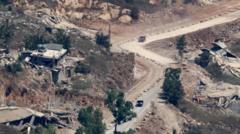
Israeli air strikes in Lebanon have killed at least one person, the Lebanese health ministry said on Saturday, a day after a US-brokered framework agreement between Israel and Lebanon was announced. The deal aims to de-escalate tensions, but has been rejected by the Hezbollah militant group.
Lebanon's state news agency reported that an Israeli drone struck the southern town of Nabatieh al-Fawqa, killing one person and wounding two others. The Israeli military said it carried out the strike on an individual who posed a threat to its forces, without providing further details.
The leader of Hezbollah, Naim Qassem, condemned the agreement on Saturday, calling it "humiliating, shameful, and a surrender of sovereignty." Hezbollah was not involved in the negotiations. Qassem criticized provisions linking Israel's withdrawal from southern Lebanon to the group's disarmament, stating they crossed "all red lines." He accused the Lebanese government of making damaging concessions and vowed to continue armed resistance.
Under the four-point framework, Israel is to withdraw its forces from the South Litani area, with the Lebanese army taking exclusive control. However, Israeli forces are permitted to remain in an expanded security zone. Israeli Defence Minister Israel Katz later ordered troops to prepare for an extended stay in the security zone, an area up to 10 km inside Lebanese territory.
Israeli Prime Minister Benjamin Netanyahu called the agreement "historic" and "a blow to Iran and Hezbollah." Hezbollah is an Iran-backed militant group that fought a war with Israel in 2006 and has been involved in the current hostilities.
Lebanon was drawn into the conflict on 2 March, when Hezbollah launched missiles into Israel in retaliation for an Israeli strike that killed Iran's supreme leader. Israel responded with an air campaign and ground invasion. According to the Lebanese health ministry, Israeli attacks have killed at least 4,192 people and injured over 11,600 since the current round of hostilities began, with more than 1.2 million displaced. Israel reports 36 soldiers and four civilians killed on both sides of the border.
A US-brokered ceasefire on 16 April failed to stop the fighting. A renewed ceasefire in June also collapsed. The latest framework aims to establish "pilot zones" under Lebanese army control, excluding non-state actors.