India's Submarine Fleet: Why Attack Subs Matter as Much as Nuke-Armed Boats
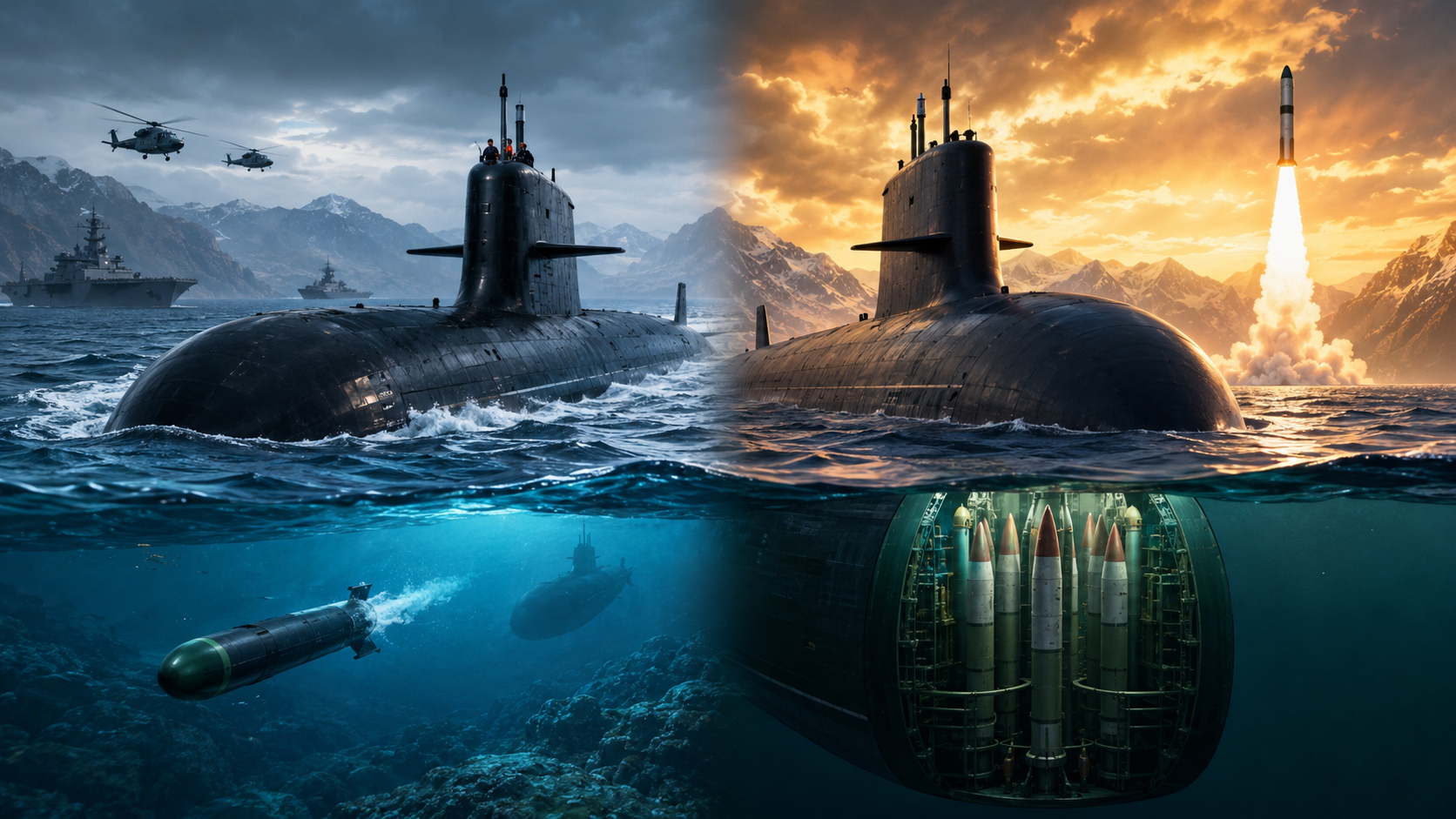
NEW DELHI: Submarines powered by nuclear reactors are often grouped together as 'nuclear submarines', but there are two very different categories: SSNs (nuclear-powered attack submarines) and SSBNs (nuclear-powered ballistic missile submarines). Both use nuclear reactors for propulsion, allowing them to remain underwater for months, but their missions, weapons and strategic roles are fundamentally different.
For India, understanding this distinction is crucial because the country already operates SSBNs as part of its nuclear deterrent, while it is only now moving towards building a sizeable fleet of SSNs.
The designation system originates from the US Navy. The first 'S' stands for submarine. The second 'S' indicates nuclear propulsion. The final letter defines the submarine's primary role.
An SSN is a nuclear-powered attack submarine. Its primary mission is hunting enemy submarines and warships, gathering intelligence, escorting carrier groups and conducting conventional strike missions. An SSBN, meanwhile, is a nuclear-powered ballistic missile submarine designed primarily to carry nuclear-tipped ballistic missiles and provide a country's second-strike nuclear capability.
Although both use nuclear reactors and can remain submerged for extended periods, they are built for entirely different strategic purposes. One fights wars; the other is designed to prevent them.
An SSN is essentially a stealth hunter. It is among the most versatile naval platforms ever built. Attack submarines are designed to track and destroy enemy submarines, sink surface ships, gather intelligence, monitor sea lanes and, in some cases, launch cruise missiles against land targets. Because they are powered by nuclear reactors, they do not need to surface frequently for fuel, allowing them to operate across vast oceanic distances.
Modern SSNs are equipped with torpedoes, anti-ship missiles, land-attack cruise missiles and advanced sonar systems. They are usually faster and more manoeuvrable than ballistic missile submarines because speed and stealth are critical to their missions.
The world's leading SSN operators include the United States, Russia, the United Kingdom, France and China. Their attack submarines routinely shadow adversary fleets, monitor chokepoints and conduct covert surveillance operations.
An SSBN serves a very different purpose. Rather than hunting enemy vessels, its primary mission is strategic nuclear deterrence. These submarines carry submarine-launched ballistic missiles (SLBMs), many of which can be armed with nuclear warheads. During a conflict, they remain hidden in vast ocean areas, making them extremely difficult to detect and destroy.
The logic behind SSBNs is straightforward. Even if an adversary destroys a country's land-based nuclear missiles and air bases in a surprise attack, hidden SSBNs can survive and retaliate. This guaranteed ability to respond is known as a second-strike capability.
Because of this role, SSBNs are often described as the most survivable leg of a nation's nuclear triad, which consists of land-based missiles, aircraft-delivered nuclear weapons and sea-based nuclear weapons.
The greatest challenge in nuclear strategy is ensuring survivability. Fixed missile silos can be targeted. Aircraft require airfields. Ballistic missile submarines, however, can disappear into thousands of square kilometres of ocean. A single SSBN can remain submerged for months while carrying enough nuclear warheads to inflict devastating damage. For this reason, countries possessing SSBN fleets regard them as strategic assets of the highest national importance.
India currently operates two classes of nuclear submarines: the INS Arihant and INS Arighat SSBNs, and a single Akula-class SSN on lease from Russia. The country is now developing its own class of SSNs under the Project 75 Alpha programme, which aims to build six nuclear-powered attack submarines indigenously.
Why does India need SSNs when it already has SSBNs? The answer lies in the different roles they play. SSBNs provide strategic deterrence against nuclear threats, but they are not designed for tactical warfare. SSNs, on the other hand, are essential for protecting India's sea lanes of communication, countering the growing Chinese naval presence in the Indian Ocean, and providing a credible conventional deterrence beneath the waves.
The future of India's undersea force will likely see a balanced fleet of both types: SSBNs for nuclear deterrence and SSNs for dominance in the maritime battlespace. As India expands its submarine capabilities, the distinction between these two classes becomes not just a matter of technical interest, but a cornerstone of national security strategy.