India's LRLACM cruise missile: Key features and strategic role explained
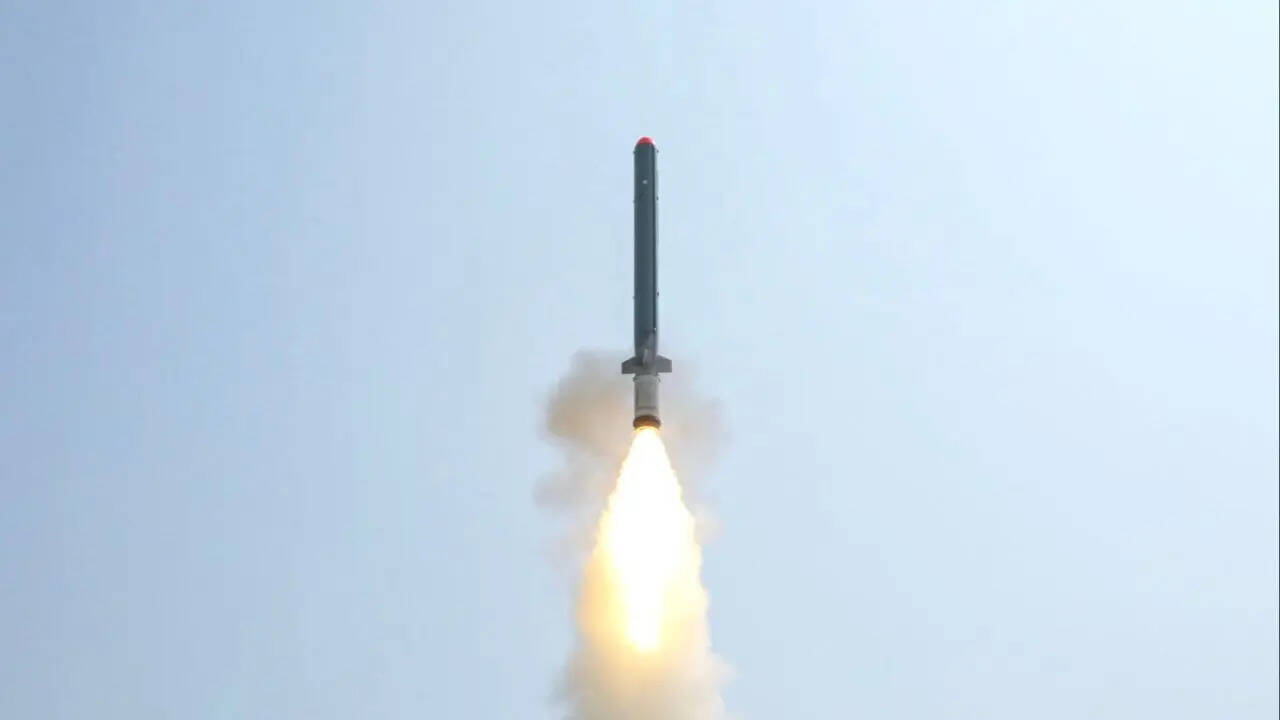
The Long Range Land Attack Cruise Missile (LRLACM) is India's latest indigenous cruise missile system, developed by the Defence Research and Development Organisation (DRDO). It is designed to engage ground targets with high precision at ranges up to 1,000 kilometres. The missile has undergone several successful tests, including one in February 2024, and is expected to enter service soon.
The LRLACM is a subsonic missile with a terrain-hugging flight profile, which means it can fly at low altitudes following the contours of the land. This capability, combined with sea-skimming over water, makes it difficult for enemy radar systems to detect and intercept. The missile uses terrain contour matching (TERCOM) navigation, which compares the terrain below with a preloaded digital map to guide it accurately to the target.
In terms of precision, the LRLACM can strike targets with an accuracy of a few metres, thanks to its advanced guidance systems. It can be armed with a conventional warhead and can be launched from land-based mobile platforms, ships, and submarines. The missile's range of 1,000 kilometres provides a significant stand-off capability, allowing launch platforms to remain outside the range of most adversary air defences.
The LRLACM is considered the successor to the earlier Nirbhay cruise missile, which had a range of around 700-800 kilometres. While Nirbhay was also a subsonic, terrain-hugging missile, the LRLACM incorporates improvements in materials, propulsion, and guidance. It complements the BrahMos supersonic cruise missile, which has a range of around 300-500 kilometres and is faster but requires a different launch profile. Together, these missiles give the Indian armed forces a layered cruise missile capability for various operational scenarios.
The development of the LRLACM is part of India's broader push towards self-reliance in defence manufacturing. The missile is expected to be produced in large numbers and deployed along the borders with Pakistan and China. Officials have stated that the LRLACM will enhance India's conventional deterrence and provide more options for precision strikes without resorting to nuclear weapons.
It is important to note that while the LRLACM is a major milestone, it operates within the framework of India's no-first-use nuclear policy and is designed for conventional roles. The missile's development is in line with India's stated doctrine of credible minimum deterrence and its commitment to maintaining a stable strategic environment.