Ceuta crisis: Spain installs 500-metre sea barrier after migrant surge
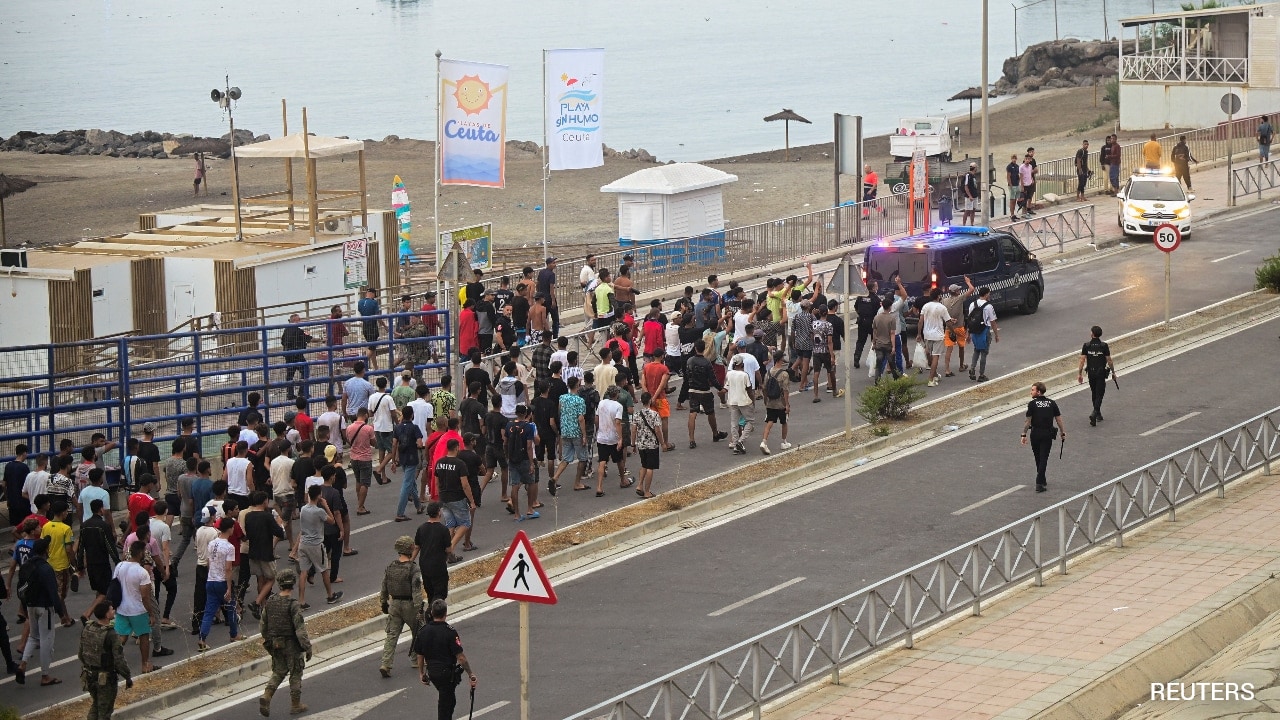
Spain has installed a 500-metre-long sea barrier off the coast of its North African enclave of Ceuta, days after an estimated 50,000 to 60,000 migrants crossed the border from Morocco, triggering a humanitarian crisis.
The barrier was set up on Saturday, following the sudden surge of arrivals on Thursday and Friday. Most of the migrants were quickly returned to Morocco, the Spanish government said. At least 67 people died, including some who drowned and others who were killed in a stampede while trying to cross a breakwater.
The events have reignited the migration debate across Europe. Spanish Prime Minister Pedro Sánchez defended his government's migration policy, which includes granting legal status to undocumented workers who entered the country before 2026. This approach contrasts with the stricter anti-migration and pro-deportation policies promoted in many EU countries and in the United States.
Critics, particularly from right-wing and far-right parties in Spain, seized on the images of crowds entering Ceuta, a territory that has been a Spanish possession since 1580. Sánchez dismissed calls from some EU leaders to suspend Spain from the Schengen zone, saying they were "driven by prejudice, fake news, ignorance, or political interest." He also wrote on social media: "In the current international context, the European Union cannot afford this kind of selfish, polarizing and unlawful reaction."
Spanish Interior Minister Fernando Grande-Marlaska defended Morocco's role in the crisis. "The events require an evaluation by Spain and Morocco," he told journalists. He stressed that cooperation with Morocco allowed Spain to "revert the situation in 24 hours." Marlaska described Morocco as "not a threat to Ceuta, or to the rest of Spain" but a "reliable partner."
On Saturday morning, soldiers escorted a handful of migrants who swam to Ceuta's Tarajal beach back across the border. Marlaska said the government would be "relentless against those who break the law."
Meanwhile, several EU member states called for urgent talks and a coordinated response. A letter released by the Danish Prime Minister's office, signed by leaders from 21 countries, including Italy, Germany, Austria, and Poland, warned that uncontrolled mass crossings could create the perception that illegal entry into the European Union is possible. The letter, addressed to top EU officials, said: "We cannot allow uncontrolled mass crossings, the instrumentalisation of migration or other hybrid threats to create the perception that illegal entry into the European Union is possible. Such a perception would encourage further attempts, undermine confidence in our common migration policy and have repercussions for all Member States."
Sánchez also requested a videoconference of EU interior ministers, saying that the security of the bloc's external borders is a shared responsibility. Italy announced it was reimposing border controls for people arriving from Spain by air and sea. However, Ceuta is not part of the Schengen area, and border checks are already carried out when traveling from the enclave to mainland Spain or other Schengen countries.
Despite the crisis, Spain has recorded fewer irregular crossings than its Mediterranean neighbours Italy and Greece in recent years. The situation in Ceuta highlights the complex challenges facing the EU's external borders, as well as the differing approaches among member states to migration and the role of neighbouring countries like Morocco in managing migration flows.