India's Defence Exports Hit Record High, But Future Lies in Drones and Smart Systems
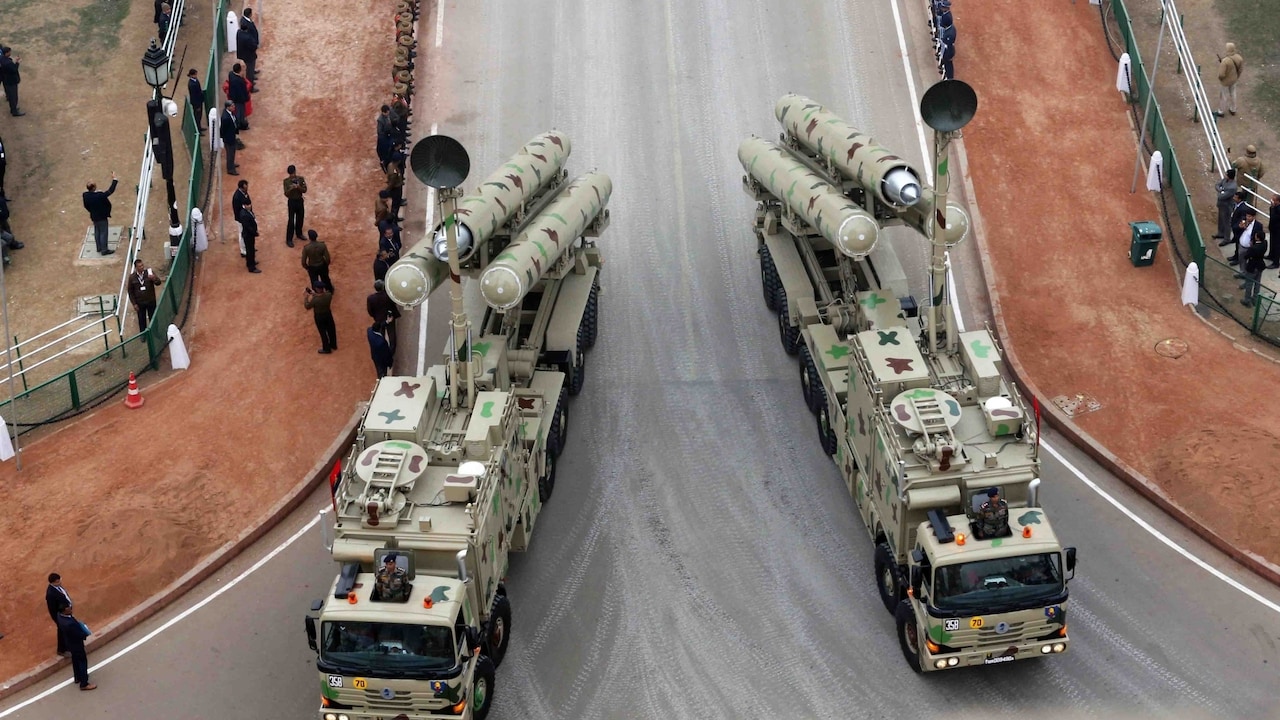
India's defence exports have reached a new milestone, touching Rs 38,424 crore in the fiscal year 2025-26, a rise of 62.66 per cent from Rs 23,622 crore in the previous year. The country now supplies defence equipment to over 80 nations, and the number of exporting firms has grown from 128 to 145.
While the BrahMos supersonic cruise missile has long been the face of India's defence exports, industry observers point to a quiet transformation. The next phase of growth is likely to be driven not by a single high-value system, but by a broader range of technologies including drones, precision-guided munitions, electronics and autonomous systems.
Global conflicts in recent years have reshaped military priorities. Drones, loitering munitions, electronic warfare and counter-air defence systems have moved to the centre of defence planning. Nations are seeking weapons that offer longer reach, accurate targeting, autonomous operation and lower costs than traditional platforms.
Indian manufacturers are responding to this demand. Noida-based IG Defence has developed KAL, a long-range one-way attack drone. According to the company, KAL can operate up to 1,000 kilometres, stay airborne for seven to eight hours and carry a 50-kilogram payload. The firm is preparing to offer the system for export, subject to government clearances.
Bodhisattwa Sanghapriya, founder and CEO of IG Defence, said the changing nature of warfare creates new opportunities. "The future battlefield will increasingly be defined by autonomous, long-range precision strike capabilities," he said. His company believes friendly nations seeking to modernise their forces will look for systems that are indigenous, affordable and quick to deploy.
KAL is one example among many. India's export basket now includes counter-drone systems, radars, artillery, air-defence systems, ammunition, protective gear and aircraft components. The Pinaka rocket system and ATAGS howitzer have attracted overseas buyers. The Akash missile system and Swathi weapon-locating radar are also being offered internationally.
The evolution is not limited to complete platforms. The technology within weapons — fuzes, guidance systems, sensors and electronics — is equally important. Ammunic Systems, an Indian firm, focuses on these components. Its CEO, Priyanka Singhal, said the export story should not be judged only by finished products. "BrahMos gets the headlines, but a large share of India's defence export potential lies in the electronics that make munitions smarter," she said.
Singhal pointed out that India has built considerable expertise in manufacturing weapons. The next step is developing the "brain" that controls them. That includes fuzing and precision electronics. Ammunic has worked with the Indian armed forces and the Defence Research and Development Organisation (DRDO) on munitions and electronic fuzes. DRDO, along with IIT Madras and Munitions India, is also working on converting conventional artillery shells into precision-guided munitions.
The export opportunity, therefore, is not limited to selling entire missile or artillery systems. Components and sub-systems are becoming significant contributors to the defence trade. As India's defence industry matures, the range of what it can offer to the world is expanding beyond the symbolic success of BrahMos.