🏠 News Empire
india

Supreme Court: 24-hour production deadline starts at detention, not formal arrest
Published on: 05 Nov 2026, 05:30 AM
Supreme Court: 24-hour production deadline starts at detention, not formal arrest

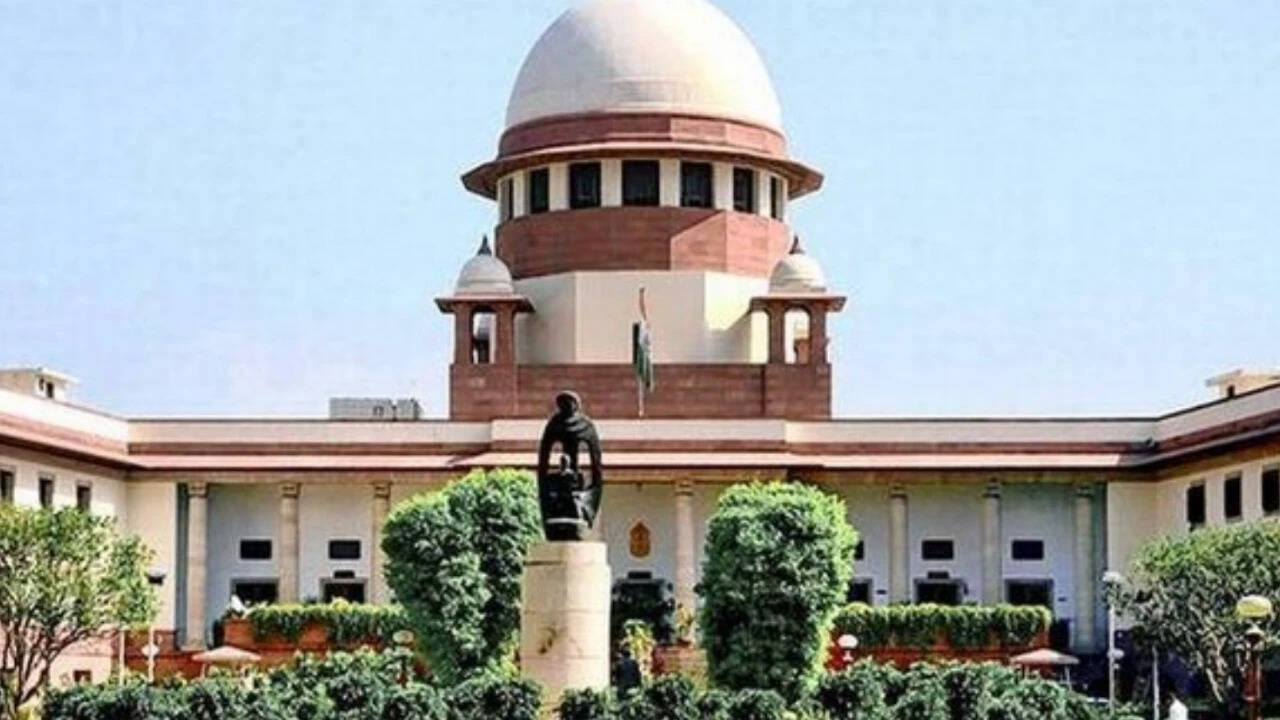
The Supreme Court has ruled that the 24-hour period within which a detained person must be produced before a judicial magistrate begins from the time of detention, and not from the time of formal arrest.

A Bench held that arrest and detention are effectively the same for the purpose of this constitutional safeguard, because a person’s liberty is curtailed in both situations. It observed that any attempt to draw an “artificial distinction” between detention and arrest is “constitutionally unsustainable”.

The ruling relates to the safeguard under Article 22(2) of the Constitution, which requires a person who is arrested to be produced before the nearest judicial magistrate within 24 hours, excluding the time needed for the journey from the place of arrest to the court. The court clarified that this requirement applies from the point at which the person is first detained.

The purpose of the constitutional rule is to ensure judicial oversight over custody and to prevent a person from being kept in detention without being brought before a magistrate. By fixing the clock at the point of detention, the court has addressed a gap that could otherwise allow authorities to hold a person in custody while delaying a formal arrest.

The distinction between arrest and detention has practical consequences. If the 24-hour clock were to start only after paperwork for formal arrest is completed, a person could remain in custody for longer without judicial scrutiny. The court’s ruling prevents such a result by treating the loss of liberty, rather than the label given to it, as the trigger for the constitutional safeguard.

The Supreme Court also criticised several High Courts for making an artificial distinction between arrest and detention. It said such a distinction could undermine the protection that the Constitution gives to personal liberty.

In another significant observation, the court held that the fundamental rights of an accused person must take precedence over provisions of special laws in cases involving delays in trial and the grant of bail. The court referred to contradictory verdicts on bail in cases under laws such as the Unlawful Activities (Prevention) Act (UAPA), the Narcotic Drugs and Psychotropic Substances (NDPS) Act and the Prevention of Money Laundering Act (PMLA).

The court said the constitutional rights of an accused must be given priority. It further observed that special laws cannot serve as a guide to interpreting the Constitution. Instead, such laws must be interpreted in accordance with constitutional principles.

The observations are significant because special statutes often contain stricter conditions for bail. The court’s reasoning indicates that these conditions cannot be read in a way that ignores or dilutes fundamental rights, particularly when delays in trial affect an accused person’s liberty.

The court’s observations on bail are equally important. Under special laws, courts sometimes impose conditions that are stricter than those in general criminal law. The Supreme Court’s ruling does not strike down those laws. It says their provisions must be applied and interpreted consistently with fundamental rights, especially when an accused person has faced prolonged delay in trial.

The ruling is expected to guide magistrates and investigating agencies across the country. It also settles the approach courts should take when provisions of special laws appear to conflict with constitutional protections. The emphasis, the court made clear, must remain on the Constitution and the rights it guarantees to every person, including those accused of crimes.


Latest in India 10
Christian delegation raises church attacks with RSS in Kolkata; both sides seek probe
india

Christian delegation raises church attacks with RSS in Kolkata; both sides seek probe

A delegation of the Bangiya Christiya Pariseba met RSS leader Jishnu Saha in Kolkata on November 4 to raise concerns over a wave of attacks on churches and Christian gatherings in several districts of West Bengal. The RSS functionary said dialogue would continue but flagged concerns about forced conversions, and both sides called for investigations into the violence and the allegations. Christian organisations say at least 60 such incidents were documented in the State between May and September this year.

The Hindu 05 Nov 2026, 04:44 AM
Read More →
Hong Kong activist Joshua Wong sentenced to 10 years in second national security case
india

Hong Kong activist Joshua Wong sentenced to 10 years in second national security case

Hong Kong activist Joshua Wong, 30, was sentenced to 10 years in prison on Thursday after pleading guilty to conspiracy to collude with foreign forces under the city's national security law — his second conviction under the legislation. The judge described the offence as grave, while critics say the case signals a hardening approach to dissent; Beijing and Hong Kong authorities defend the law as necessary for stability.

The Hindu 05 Nov 2026, 05:11 AM
Read More →
ISRO's NVS-03 settles into geosynchronous orbit after four engine burns; satellite healthy
india

ISRO's NVS-03 settles into geosynchronous orbit after four engine burns; satellite healthy

ISRO said the NVS-03 navigation satellite reached its intended geosynchronous orbit on November 4, 2026, after four successful orbit-raising manoeuvres with a cumulative engine burn of 6,164 seconds. The satellite, launched by GSLV on October 30, is the third in India's next-generation navigation series meant to sustain the NavIC/IRNSS system, and carries an indigenous atomic clock as well as L1, L5 and S band signals. ISRO said the satellite's health is normal, a positive outcome after NVS-02 could not complete its planned orbit-raising in 2025 due to a valve malfunction.

The Hindu 05 Nov 2026, 05:34 AM
Read More →
US Sanctions Chandigarh Couple, Nine Firms Over Alleged Role in Iran's Shadow Fleet
india

US Sanctions Chandigarh Couple, Nine Firms Over Alleged Role in Iran's Shadow Fleet

The US Treasury has sanctioned a Chandigarh couple, nine linked Indian entities and a Turkish firm, accusing them of running a maritime fraud network that helped Iran's oil trade and airlines dodge American restrictions. Washington said the designations are part of its "Operation Economic Outcast" campaign, announced a day after US midterm elections. The accused have not been convicted of any offence, and no response from them or the Indian government was reported.

NDTV 05 Nov 2026, 03:17 AM
Read More →
Centre proposes 10 new gateways for drug imports, Noida airport on the list
india

Centre proposes 10 new gateways for drug imports, Noida airport on the list

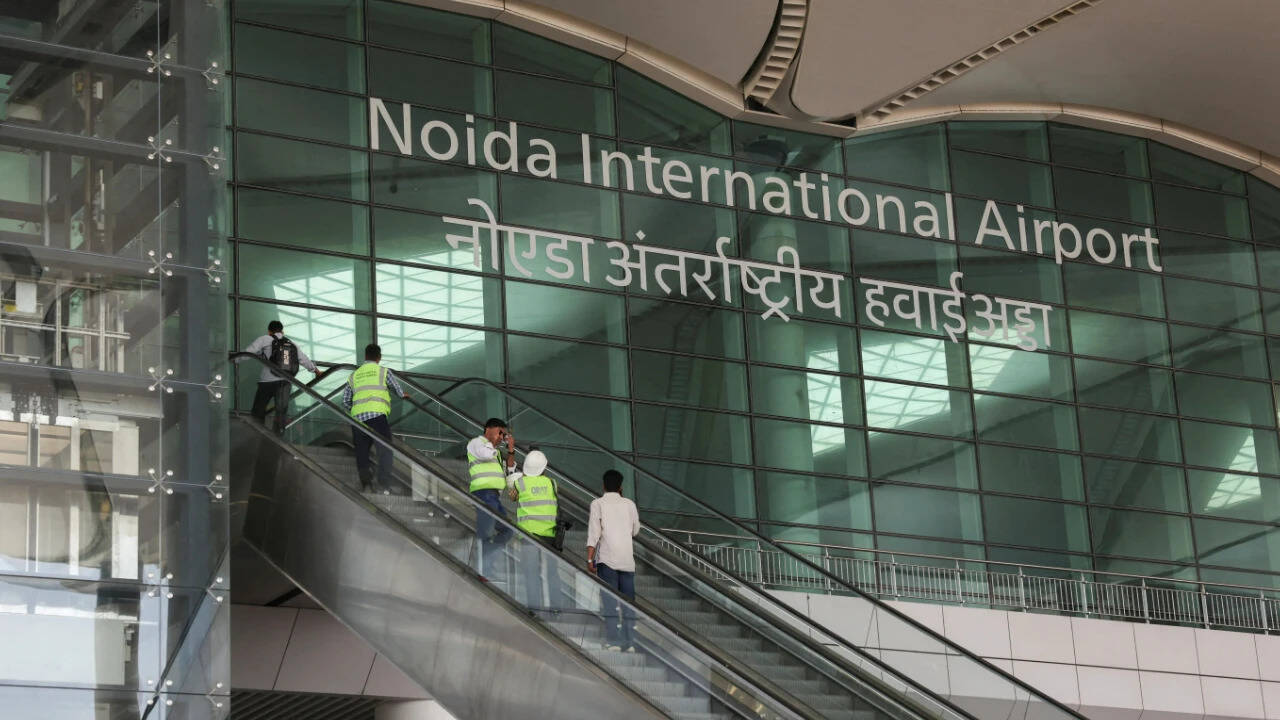
The Union Health Ministry has proposed adding ten entry points to India's authorised drug import network, including Noida International Airport and inland container depots in Haryana, Uttar Pradesh, Gujarat, Hyderabad and Bengaluru. The draft amendment to the Drugs Rules, 1945, is expected to help companies clear consignments closer to their warehouses and cut transport costs and delays. Objections and suggestions have been invited before the changes are finalised.

Times of India 05 Nov 2026, 03:34 AM
Read More →
Jaishankar at CHOGM: Commonwealth must de-risk supply chains, diversify trade
india

Jaishankar at CHOGM: Commonwealth must de-risk supply chains, diversify trade

External Affairs Minister S. Jaishankar has urged Commonwealth partners to de-risk and diversify, with shorter trusted supply chains, more connectivity and local distribution. At CHOGM in St. John’s, he also highlighted digital public infrastructure, climate initiatives, disaster relief hubs and skills mobility. He met UK Prime Minister Andy Burnham and Australian Prime Minister Anthony Albanese, discussing CETA and economic partnership.

The Hindu 05 Nov 2026, 03:49 AM
Read More →
→ View All India News