🏠 News Empire
health

India’s Anaemia Fight Expands: Low Birth Weight Infants Added to Revamped Programme
Published on: 28 Jun 2026, 08:07 PM
India’s Anaemia Fight Expands: Low Birth Weight Infants Added to Revamped Programme

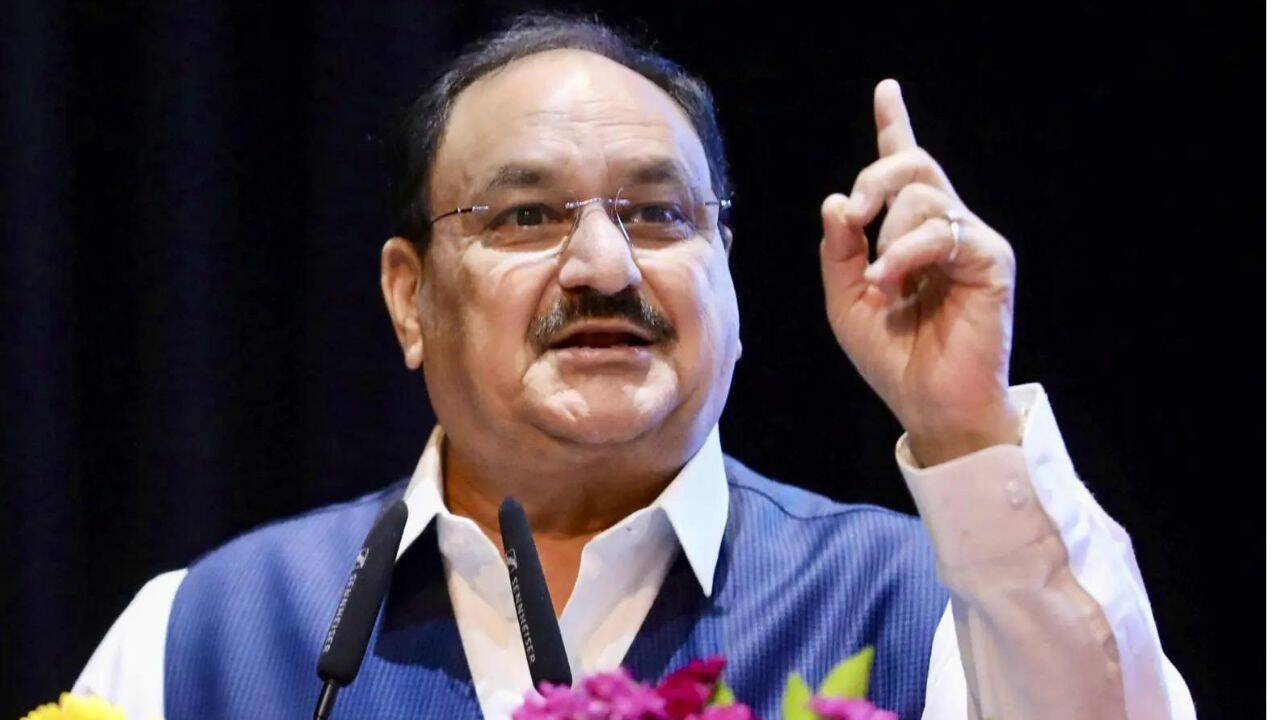
The Union government has expanded its flagship anaemia control programme to include low birth weight babies up to six months of age for the first time, as it overhauls its strategy to address one of the country’s most persistent public health challenges. The revamped Anaemia Mukt Bharat Abhiyaan, to be released by Union Health Minister J P Nadda on Monday, moves beyond iron supplementation to incorporate better testing, treatment, nutrition, and digital tracking.

Anaemia remains a major public health problem in India, linked to poor pregnancy outcomes, low birth weight, and impaired child development. The revised programme replaces the existing 6x6x6 framework with a new 7x7x7 strategy, adding low birth weight babies as the seventh beneficiary group to target anaemia from the earliest stage of life.

Under the updated guidelines, a new “Eating Right” initiative encourages regular consumption of iron-rich and diversified diets. Additionally, the programme’s T3 approach—Test, Treat, and Talk—has been upgraded to T4 with the addition of “Track,” ensuring beneficiaries are monitored after diagnosis and treatment. For pregnant and lactating women with severe anaemia or those not responding to oral iron therapy, intravenous iron treatment using ferric carboxymaltose and iron sucrose has been included in national treatment protocols.

Digital tracking will be strengthened by linking haemoglobin test records of pregnant women through the JANANI portal, while records for children will be captured through the RBSK and U-WIN portals. The seventh institutional mechanism is strengthened monitoring through digital tracking.

The revised guidelines aim to improve prevention, early detection, treatment, and follow-up, leveraging technology to enhance the programme’s reach and effectiveness. The release of the operational guidelines is scheduled during the 16th meeting of the Central Council of Health and Family Welfare.

Latest in Health 10
Doctors' Association Criticises Speaker's Remarks, Opposes NEET Abolition, Seeks Reforms
health

Doctors' Association Criticises Speaker's Remarks, Opposes NEET Abolition, Seeks Reforms

The Doctors' Association for Social Equality has criticised the Tamil Nadu Legislative Assembly Speaker's reported anti-abortion remarks and opposed the state's resolution to abolish NEET, urging a permanent exemption instead. It has also made several demands, including better educational assistance for government-school quota students and withdrawal of action against Dr. Perumal Pillai.

The Hindu 12 Aug 2026, 07:19 PM
Read More →
Telangana PM POSHAN Coverage Drops 19%, Data Tabled in Parliament
health

Telangana PM POSHAN Coverage Drops 19%, Data Tabled in Parliament

The number of PM POSHAN beneficiaries in Telangana has fallen from 17.91 lakh in 2021-22 to 14.49 lakh in 2025-26, as per Union Education Ministry data tabled in Lok Sabha. The decline of nearly 19% has raised concerns among MPs, even as the government highlights quality measures like eggs and Ragi Java.

The Hindu 12 Aug 2026, 02:21 PM
Read More →
Telangana CM to Inaugurate 1,000-Bed MCR TIMS Sanathnagar on August 17
health

Telangana CM to Inaugurate 1,000-Bed MCR TIMS Sanathnagar on August 17

Telangana Chief Minister A. Revanth Reddy will inaugurate the 1,000-bed Marri Chenna Reddy Telangana Institute of Medical Sciences (MCR TIMS) at Sanathnagar on August 17. The hospital, built at a cost of ₹1,070 crore, features advanced facilities including emergency care, cancer treatment, and 15 operation theatres.

The Hindu 12 Aug 2026, 01:21 PM
Read More →
AI heart risk tools show promise but need more validation, review finds
health

AI heart risk tools show promise but need more validation, review finds

A review of AI tools for predicting heart disease finds they hold promise but are not ready for clinical use due to a lack of external validation, potential bias, and poor interpretability. The findings are especially relevant for India, where cardiovascular disease causes nearly one-third of all deaths, often in younger people.

The Hindu 12 Aug 2026, 05:29 AM
Read More →
→ View All Health News