India must transform from back office to product nation, says UIDAI chief Neelkanth Mishra
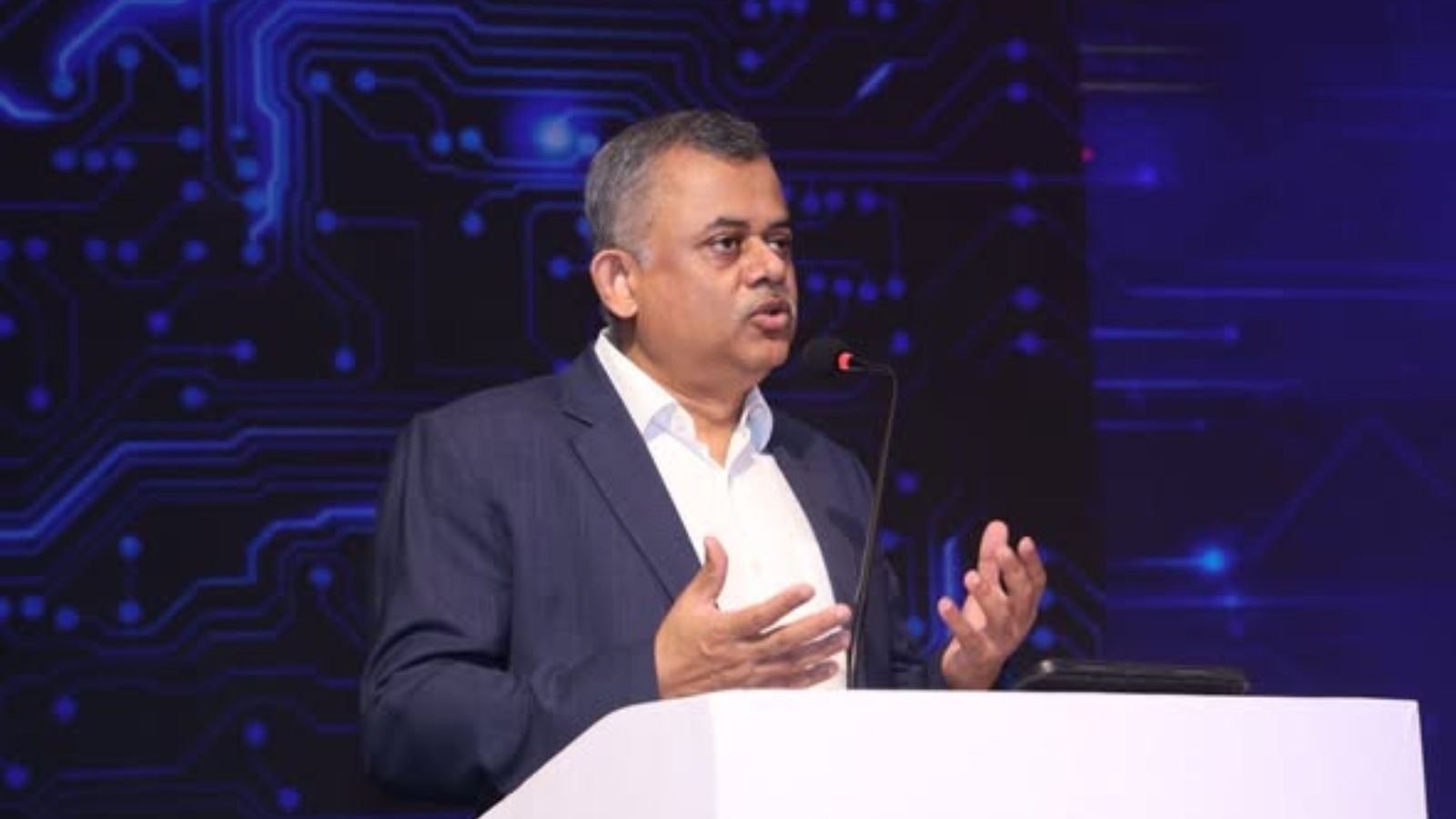
India needs to shift its economic model from being the world's back office to becoming a product nation that owns technologies and brands, according to Neelkanth Mishra, Chief Economist of Axis Bank and Chairman of the Unique Identification Authority of India (UIDAI). Speaking at the 15th convocation of the Indian Institute of Technology Gandhinagar (IIT-Gn) on Saturday, Mishra emphasised the need for a comprehensive ecosystem that supports continuous innovation.
Mishra, who also serves as a member of the Telecom Regulatory Authority of India (TRAI), highlighted that while countries like Taiwan and South Korea achieved prosperity by excelling in a few sectors, India's scale demands global leadership in at least 15 to 20 sectors. These include prominent fields such as artificial intelligence, semiconductor manufacturing, quantum computing, drones, clean energy, and energy storage, as well as less-publicised but critical technologies like aircraft engines, heavy machinery, construction equipment, shipbuilding, materials manufacturing, and telecommunications equipment.
Drawing comparisons with other nations, Mishra noted that historically, rich countries took 150 to 200 years to move from lower-middle income to upper income. However, India must accomplish this in about a third of that time due to rapidly falling fertility rates. He warned that the country has only about 25 years before an aging population begins to slow economic growth.
Mishra observed that many prosperous nations after World War II—including Japan, Germany, South Korea, Taiwan, Thailand, Malaysia, and China—benefited from what he called an "assisted rise." The United States transferred technology and capital to these countries to accelerate their integration into global value chains, often as a counterweight to the Soviet Union or to prevent them from turning communist. In contrast, he argued that India's rise would be a "resisted rise." He explained that the US, having seen China emerge as a strategic competitor, is unlikely to replicate such support. Moreover, he cited the Australian Strategic Policy Institute, stating that China now leads in 66 of 74 critical technologies, while the US leads in only eight. This makes India's primary competitor far ahead in technological advancement.
Describing the current global environment, Mishra said that the era of hyper-globalization—where design happens in the smartest places, manufacturing in the cheapest, and components move seamlessly across borders—is over. It has been replaced by an era of intense hyper-nationalistic competition, marked by uncertainty.
The convocation ceremony awarded 734 degrees, including 107 PhDs, to a graduating batch of 225 women and 508 men from 26 states and Union Territories, along with international students. The highest number of graduates came from Gujarat (104), followed by Maharashtra (84), Uttar Pradesh (81), Rajasthan (74), West Bengal (58), and Madhya Pradesh (40). A total of 46 students received medals for their achievements.
Mishra's address underscores the urgent need for India to foster indigenous innovation and build self-reliance in critical technologies to secure its economic future in a competitive global landscape.