India faces third driest June in a century as rainfall deficit hits 42%
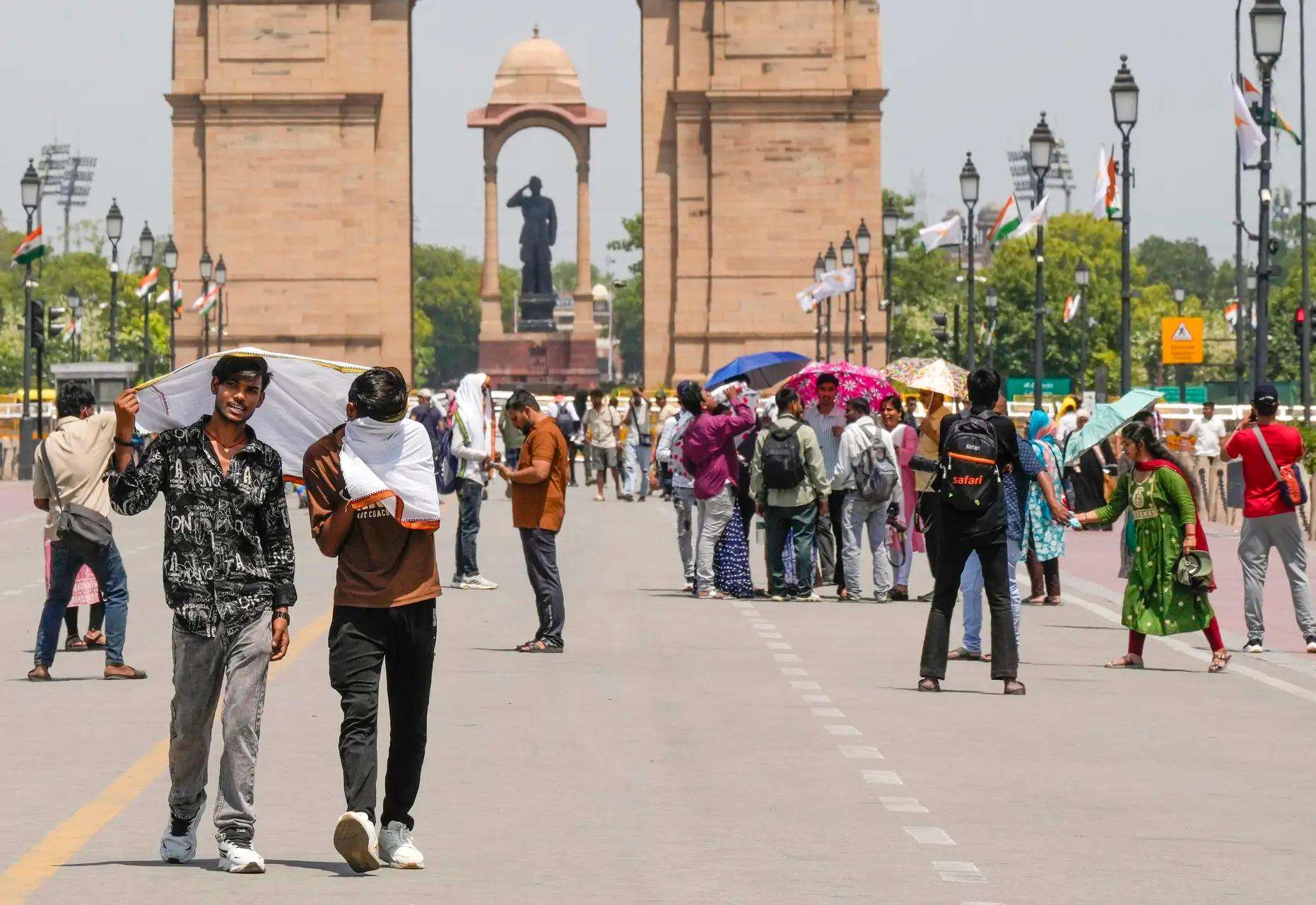
New Delhi: June 2023 is on track to become the third driest June in India in the last 100 years, with the countrywide rainfall deficit standing at 42% as of the month's penultimate day. The average rainfall recorded across the country this June is 92.2 mm, against a normal of 157.7 mm, according to data from the India Meteorological Department (IMD).
Even if significant rainfall occurs on the last day of the month, June is likely to record around 100 mm of rain in total. Over the past century (1927-2026), only two years have seen lower overall rainfall in June: 2009 (87.5 mm) and 2014 (92.1 mm), both within the last two decades.
The deficit is not uniform across the country. Central India has been the hardest hit, with a rainfall deficit of 54%, followed by east and northeast India at 41%, northwest India at 30%, and south India at 28%. It is rare for all four regions to record such large shortfalls simultaneously, indicating that El Niño may already be affecting the monsoon.
The El Niño phenomenon, a periodic warming of surface waters in the east and central Pacific Ocean, alters wind patterns and typically suppresses rainfall over the Indian subcontinent. According to an update from the US-based International Research Institute for Climate and Society, El Niño is already close to moderate strength, with rapid warming in the equatorial Pacific. It is projected to strengthen further over the coming months, increasing the likelihood of an adverse impact on India's monsoon.
After a weak onset over Kerala on June 4, the monsoon has failed to gain momentum. During the month, daily rainfall across India has exceeded the norm on only a single day so far.
On a positive note, IMD projections indicate that the first week of July may bring better and more evenly distributed rainfall across most parts of the country, particularly central India, which has experienced the highest deficit. However, the overall forecast remains cautious, given the strengthening El Niño conditions.
Farmers and policymakers are closely watching the situation, as the monsoon is critical for agriculture and the wider economy. The government has contingency plans in place for drought-prone areas, but timely and adequate rainfall remains essential for crop sowing and yields.