India Commissions 6th Indigenous Stealth Frigate INS Mahendragiri
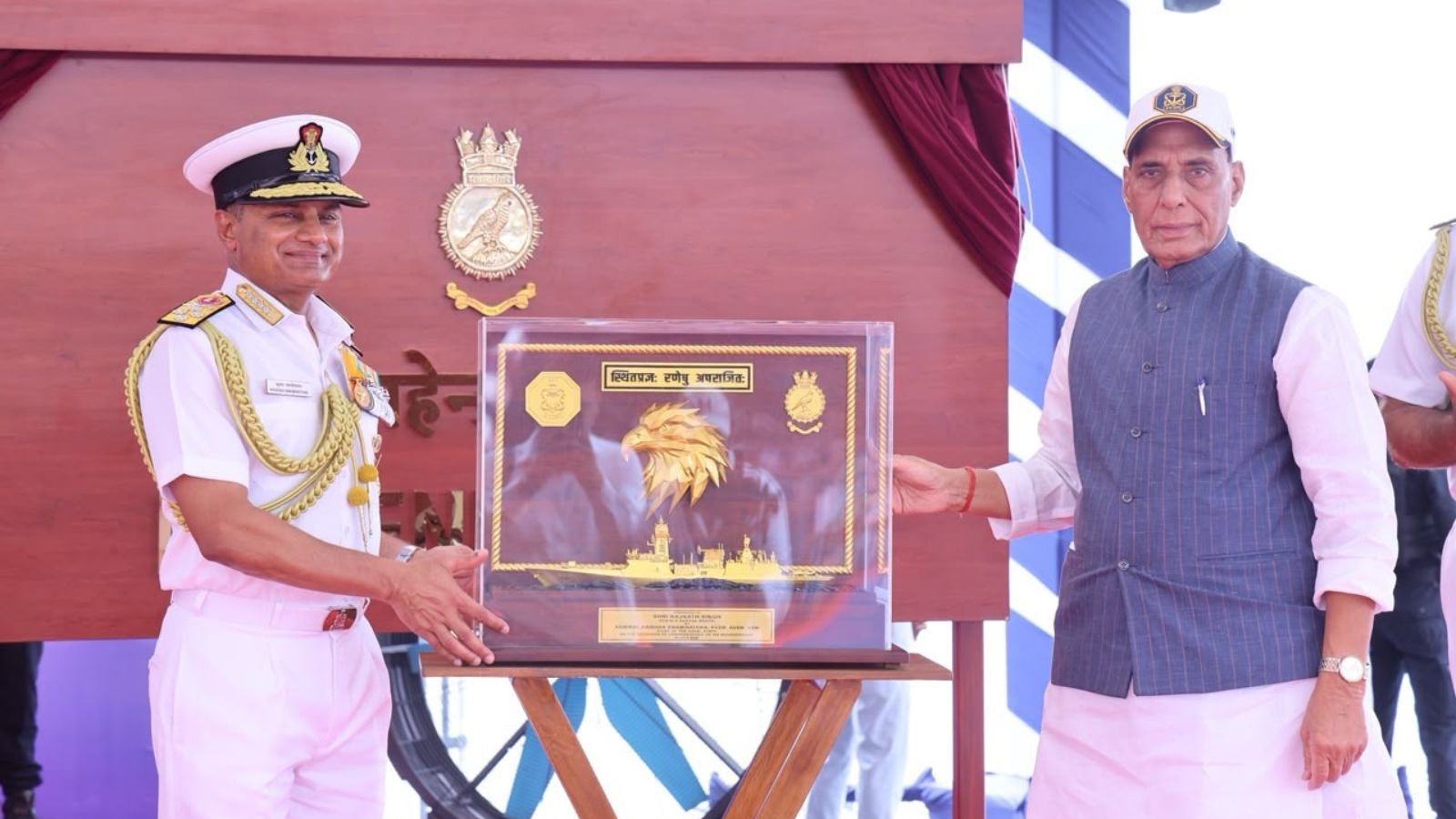
The Indian Navy on Saturday inducted the indigenously built advanced stealth frigate INS Mahendragiri into its Eastern Fleet during a ceremony at Visakhapatnam. Defence Minister Rajnath Singh presided over the commissioning, highlighting the warship's role in safeguarding India's maritime interests both near the coast and in deep oceans.
INS Mahendragiri is the sixth vessel of the Project 17A class of stealth frigates to join the Navy in just 1.5 years. The first ship of the series, INS Nilgiri, was commissioned in January 2025, followed by INS Udaygiri and INS Himgiri in August 2025, INS Taragiri in April this year, and INS Dunagiri last month.
Designed by the Indian Navy's Warship Design Bureau and built by Mazagon Dock Shipbuilders Limited (MDL), the frigate can undertake a full spectrum of maritime operations, including fleet air defence, anti-surface warfare, anti-submarine warfare, maritime interdiction, surveillance, and humanitarian assistance and disaster relief.
Chief of Naval Staff Admiral Krishna Swaminathan called the warship a symbol of India's growing maritime capability and technological self-reliance. The frigate has over 75 per cent indigenous content, displaces approximately 6,670 tonnes, and can reach speeds of up to 28 knots. It is equipped with supersonic surface-to-surface missiles, medium-range surface-to-air missiles, anti-submarine warfare capabilities, a multi-role helicopter, advanced stealth features, modern sensors, and network-centric combat systems.
Singh noted that the ship can be armed with BrahMos supersonic cruise missiles, and features multifunction radar and surface-to-air missiles for extended-range aerial threat neutralisation. The arsenal also includes an indigenous rocket launcher, torpedo launchers, an anti-submarine defence system, an electronic warfare suite, and a close-in weapon system.
In his address, Singh remarked that while emerging technologies like drones, artificial intelligence, cyber warfare, space-based capabilities, hypersonic weapons, and unmanned systems are transforming warfare, conventional military capabilities remain vital. He said future wars may involve AI but will still be won by national resolve, trained soldiers, and credible military power. He cited Operation Sindoor as an example of integrating conventional and modern capabilities.
Referring to the Navy's role during the West Asia conflict, Singh mentioned Operation Urja Suraksha, under which the Navy safely escorted 18 merchant vessels carrying essential cargo valued at over Rs 9,000 crore. He said INS Mahendragiri will further strengthen the Navy's overall maritime strategy and enhance the strength of the eastern seaboard.







