Houthi drone and missile attacks hit Saudi airport; two killed, eight injured in Dammam

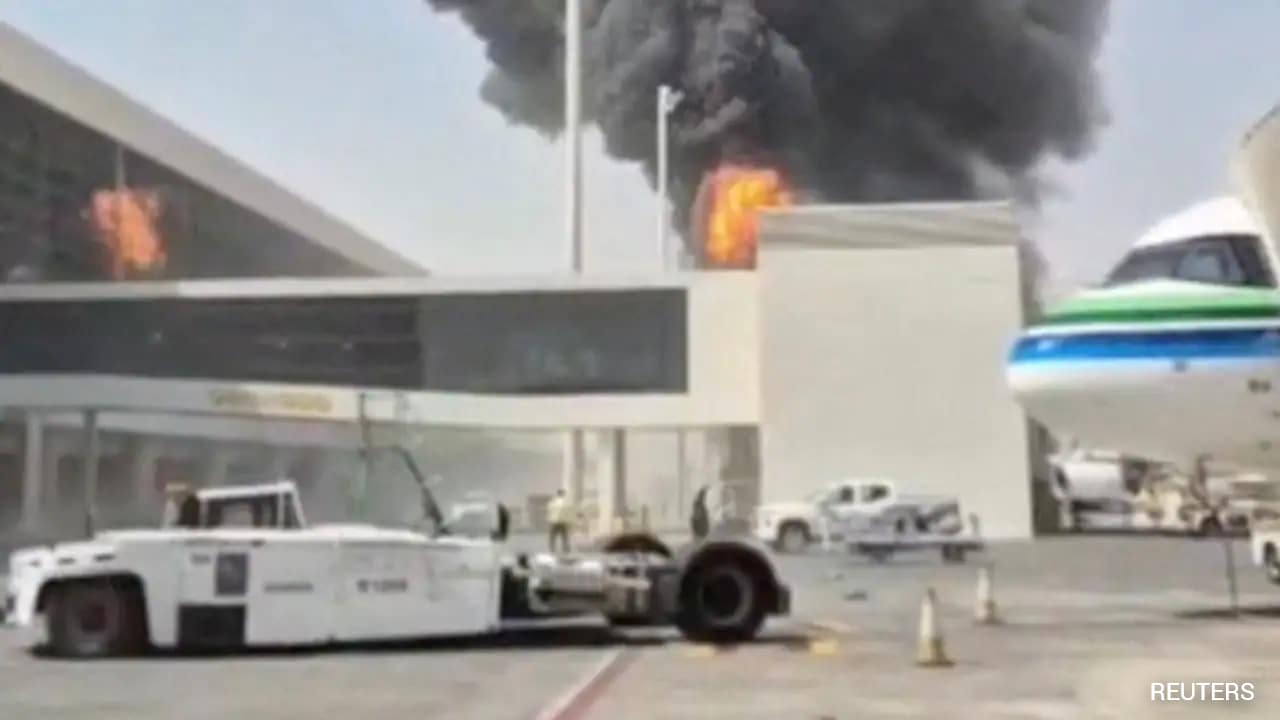
Two people were killed and eight others injured in an attack on King Fahd International Airport in Dammam, in eastern Saudi Arabia, on Wednesday evening, according to Saudi authorities. Yemen's Houthi movement said on Thursday that it had carried out the strike.
The Saudi General Authority of Civil Aviation identified those killed as a Saudi citizen and an Indian resident. The authority did not specify what type of attack was involved.
The Houthis said the airport was among several sites they had targeted with drones and missiles over the preceding 48 hours. The movement, which Saudi Arabia and its allies say is backed by Iran, has stepped up cross-border attacks in recent weeks.
In a separate incident the same day, two more people were killed by debris from a drone that was intercepted elsewhere in Eastern Province, the Saudi energy ministry said. The drone was brought down as it attempted to target a processing facility owned by the state oil company Aramco in the Shaybah oil field, according to the ministry. A contractor's vehicle at the site was set ablaze. The ministry identified the dead as residents of the Philippines and Nepal.
The Houthis' military spokesman, Yahya Sarea, did not claim responsibility for the attack on the oil field. He said the group had instead targeted the Saudi defence ministry's headquarters building in the capital, Riyadh, an Aramco facility in the Red Sea city of Yanbu, and Abha International Airport in the south of the country.
The Saudi-led coalition, which supports the internationally recognised Yemeni government in its war against the Houthis, said four drones were intercepted over Eastern Province on Wednesday night. It said another four were intercepted over the provinces of Riyadh and Medina on Thursday.
According to Saudi authorities, at least 21 people have now been killed in Houthi attacks on Saudi airports since the beginning of October. A missile strike on Riyadh's international airport on 10 October killed 13 people and injured 308 others, making it the deadliest attack inside the kingdom in more than a decade.
The conflict in Yemen began in 2014, when the Houthis seized the capital, Sanaa, prompting a Saudi-led military intervention the following year. The war has since killed tens of thousands of people and displaced millions, and the United Nations has repeatedly described Yemen as one of the world's worst humanitarian crises.
Casualty figures in such incidents are typically supplied by the authorities in whose territory the attack occurs, and independent verification is often difficult in the immediate aftermath. Responsibility claims by armed groups are also difficult to confirm independently.
The attacks come amid stalled efforts to secure a lasting ceasefire in Yemen. Previous rounds of talks have produced limited truces, but a permanent settlement has remained elusive. The targeting of civilian infrastructure, including airports, has drawn repeated international concern, with aid agencies warning that strikes on transport hubs complicate the delivery of humanitarian supplies and endanger civilian travellers.
Saudi officials have not announced any change to airport operations following Wednesday's attack. Authorities have not released further details on the condition of those injured in Dammam.