High Court Upholds Haryana's Right to Set Higher Norms for Professor Recruitment
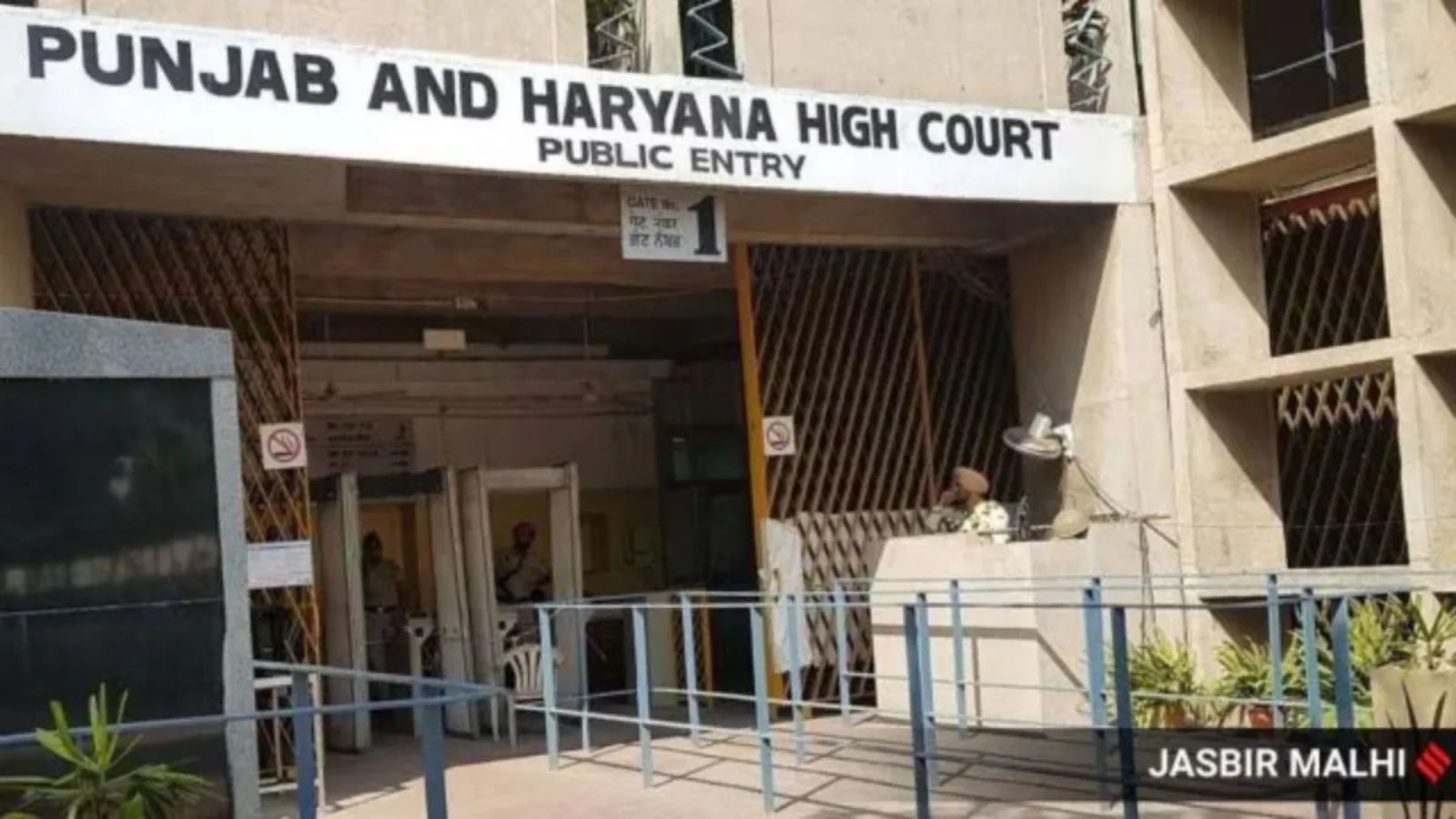
The Punjab and Haryana High Court has dismissed a petition challenging Haryana's recruitment process for 123 Assistant Professor (Chemistry) posts, ruling that the state is empowered to prescribe qualifications higher than the minimum standards set by the University Grants Commission (UGC) regulations, as long as these do not dilute the norms. However, noting an apparent conflict with an earlier coordinate bench judgment, the court referred the legal issues to a larger bench for resolution.
The petition, filed by Renu Kumari Rohal, sought to quash the Haryana Public Service Commission's (HPSC) advertisement issued in August 2024 and the subsequent selection process for the posts. Rohal had qualified the Screening Test but failed the Subject Knowledge Test, scoring 52 marks against the qualifying benchmark of 52.5 marks.
Advocate R N Lohan, representing the petitioner, argued that the UGC Regulations, 2018, which had been adopted by the Haryana government, govern appointments to the post of Assistant Professor. He contended that while the UGC Regulations require a selection committee to conduct the recruitment, the state government modified the regulations by empowering the HPSC to frame selection criteria, which he argued was contrary to law. Citing the Supreme Court's judgment in Mandeep Singh, he asserted that the UGC Regulations are binding on the state.
Lohan further argued that the UGC Regulations do not envisage conducting an examination for the post of Assistant Professor. He submitted that a candidate's subject knowledge is already evaluated through the Test of General Competence (TGC) conducted at the national level, making a separate Subject Knowledge Test unnecessary. He also claimed that fixing a 35 per cent qualifying cut-off in the Subject Knowledge Test was arbitrary and had been set aside by the high court in the Asha Rani versus State of Haryana case.
Opposing the plea, Deputy Advocate General Harish Nain, representing Haryana, argued that the petitioner had not challenged the state government's notification dated November 11, 2022, which adopted the UGC Regulations with modifications. He submitted that the petitioner approached the court only after failing to qualify the Subject Knowledge Test, and thus her challenge was motivated by her failure.
Rejecting the petition, Justice Harpreet Singh Brar held that an unsuccessful candidate who participated in the selection process without objection cannot later challenge it merely because the outcome was unfavourable. The court noted that participation in the process without protest amounts to acquiescence, and the candidate is deemed to have waived the right to question the methodology or procedure adopted for selection.
On the central issue, the bench ruled that the UGC Regulations prescribe only minimum standards and do not prevent a state from introducing additional measures to ensure merit. 'The UGC Regulations provide for a minimum benchmark and not a restrictive upper limit on institutional excellence,' the court observed. The bench further held that the impugned advertisement did not dispense with the interview process; rather, it added a qualifying test followed by a Subject Knowledge Test to promote meritocracy.
The court also emphasized that it is the prerogative of the employer to recruit the best available talent and not merely those who satisfy the base minimum. The petition was dismissed, but the legal questions were referred to a larger bench due to the conflict with an earlier judgment.







