Goa CM defends police query over 'Free Umar Khalid' placard at NEET protest
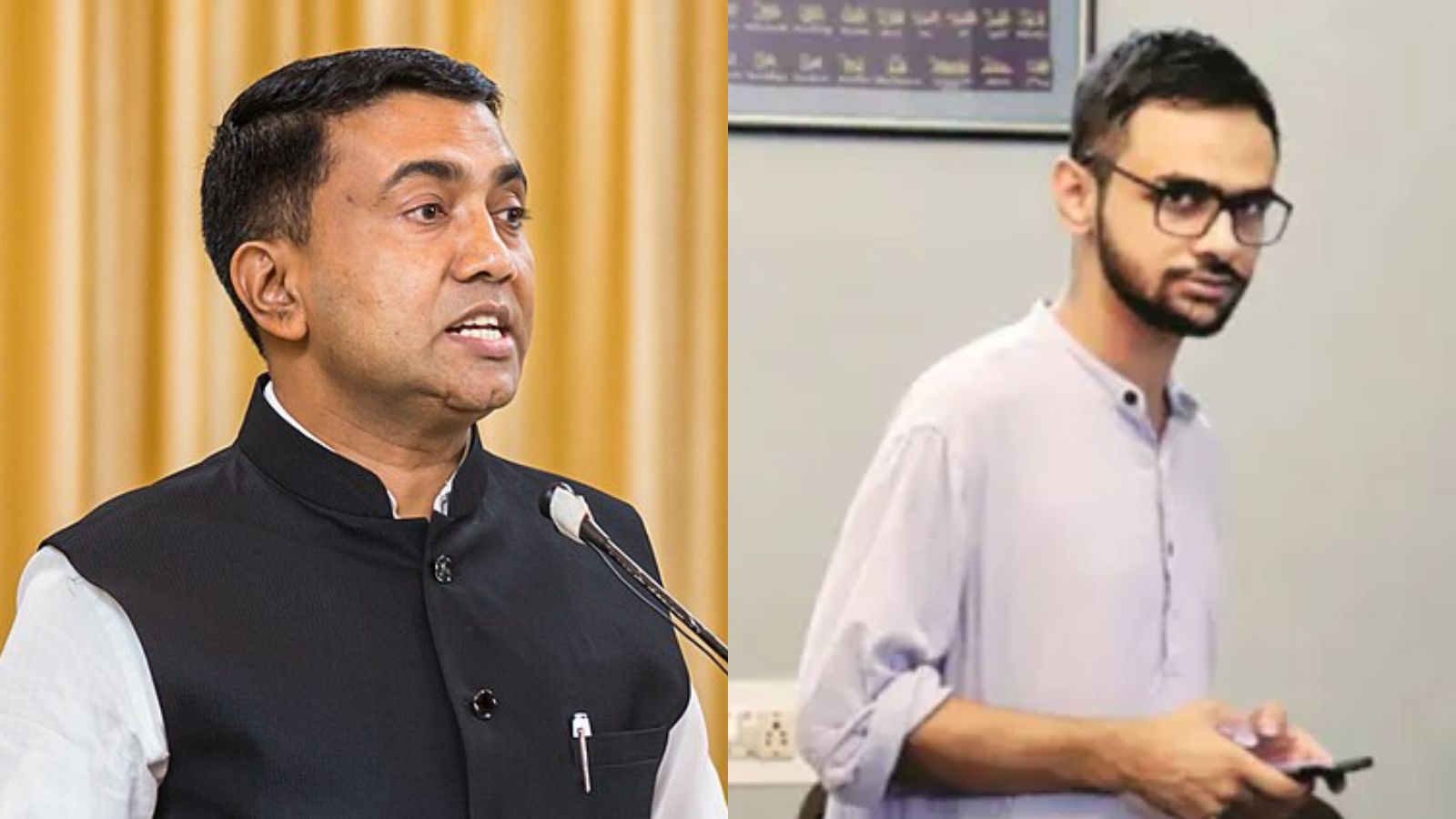
Goa Chief Minister Pramod Sawant has defended the police action against two activists who were questioned after attending a protest against NEET paper leaks, asserting that no anti-national movement would be allowed in the state. The activists were summoned by the police on July 26 and 27, days after they participated in a protest in Mapusa on July 24.
Speaking on the sidelines of the National Conclave for Goan Architecture and Sustainability, Sawant said in Hindi: “I will say only one thing. If someone wants to run an anti-national movement, it won’t work. We haven’t arrested anyone else. We have arrested only those who were trying to run an anti-national movement in Goa on the back of this protest.” When asked about the “Free Umar Khalid” placard, he added, “It is the same thing. That is why we have arrested them.”
However, the two individuals were not formally arrested or charged. They were detained briefly, made to fill a questionnaire, and released. The police action followed an application from a local group called “Citizens of Mapusa”.
The questionnaire reportedly contained about 240 questions, including queries about who led the protest, whether the individuals were members of any WhatsApp, Telegram or Signal groups related to the protest, how they travelled to the venue, what they intended to achieve, and whether they were affiliated with any political party, social organisation, student organisation, NGO or activist group. Several questions pertained to Umar Khalid, a JNU alumnus and activist facing charges of criminal conspiracy under the Unlawful Activities (Prevention) Act in connection with the 2020 Northeast Delhi riots.
The protest on July 24 was part of a nationwide movement by the Conference of Islamic Parties (CJP) against the alleged leak of NEET question papers. That movement gained traction after the resignation of Dharmendra Pradhan as Union Education Minister, though similar protests have continued in various states.
Sawant acknowledged the right to protest, saying: “Everyone has a right to protest; if there is an issue, people will protest. We have never said no to that. The cause of the protest has to be identified. If it is for their rights, it is okay.” His comments suggest a distinction between legitimate protest and actions his government considers anti-national.
Meanwhile, the broader context of police action against protesters has become a contentious issue in Parliament and outside. The CJP has claimed it received assurances that FIRs against peaceful protesters would be quashed, with some state governments announcing such steps. However, reports of police continuing to pursue certain cases have kept tensions alive.
In a separate incident, a zero FIR has been registered against Ruchika Singh, a 25-year-old Noida resident, for allegedly using abusive language against Prime Minister Narendra Modi at a protest site at Jantar Mantar in New Delhi on July 23.
Civil liberties concerns have been raised over the questioning of activists and the nature of the questionnaire, which critics argue could have a chilling effect on the right to dissent. The Goa government, on the other hand, maintains that its actions are aimed at preventing unlawful activities while allowing peaceful protest.


