From Haryana judoka to Harvard scientist: Indian expert joins US council probing UFOs
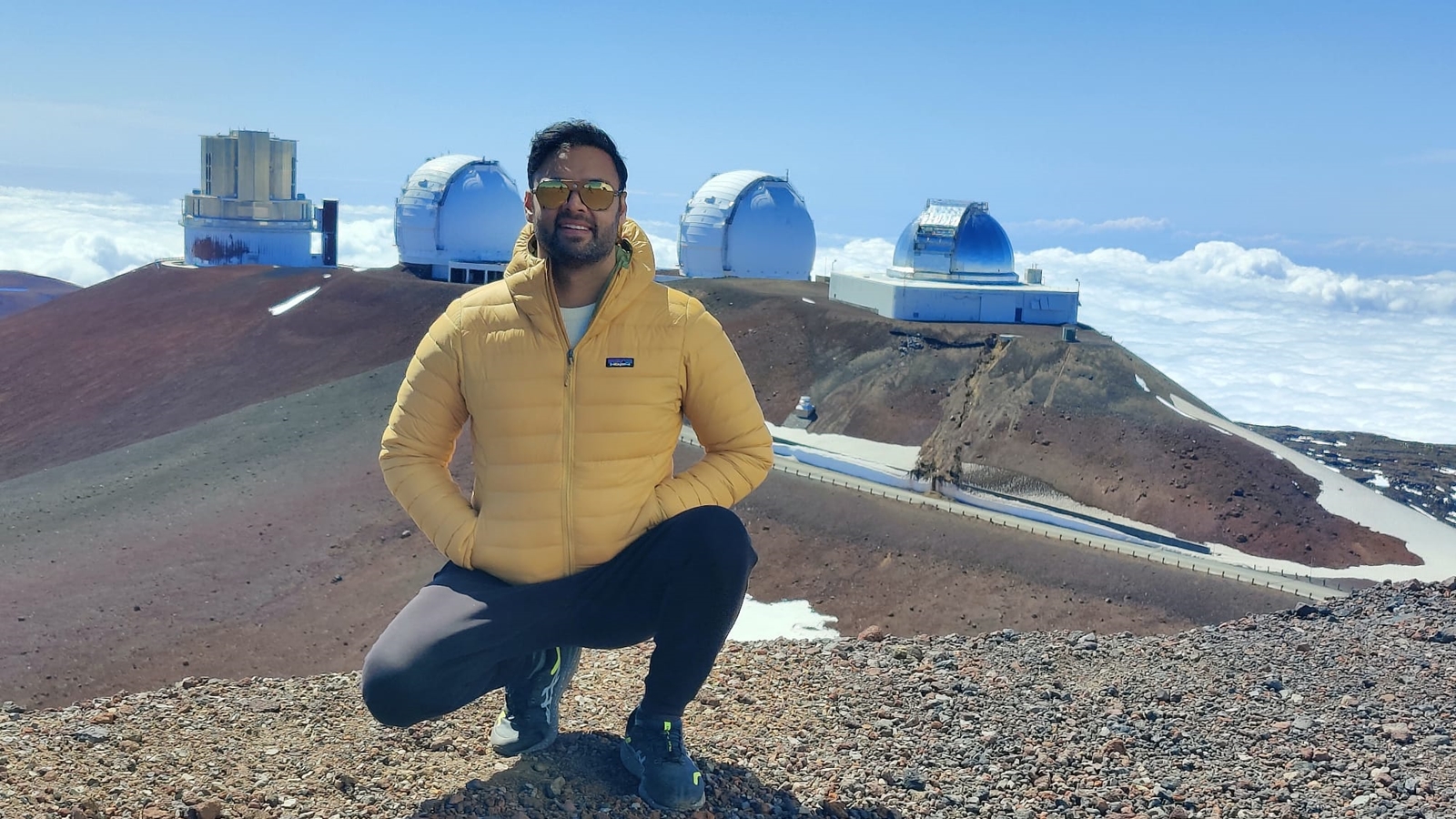
Dr Devesh Nandal, a 37-year-old scientist from Jatal village in Panipat, Haryana, has been appointed to the newly formed Unidentified Anomalous Phenomena (UAP) Science Advisory Council. The council, established by Harvard professor Avi Loeb, advises the White House, Pentagon, FBI, and US intelligence community on unexplained aerial phenomena — commonly referred to as UFOs.
Nandal, a postdoctoral researcher at the Center for Astrophysics at Harvard & Smithsonian, brings expertise in astrophysics and electronic engineering. His role is to apply rigorous scientific methods to analyze UAP reports, separating credible observations from speculation. 'I wish to apply scientific principles and expect to understand the physics that operates such objects,' he told The Indian Express.
The appointment comes amid renewed US government interest in extraterrestrial life. In 2022, Congress held its first hearings on UFOs in five decades, and the Pentagon has released files on reported sightings, though none provide conclusive proof of alien origin. The council aims to bring scientific discipline to a field often marked by conjecture.
Nandal's journey from junior judo athlete to Harvard scientist reflects a shift in focus. He was part of Haryana's junior judo team that won gold in 2006, but by age 17, his interests turned to science. 'We noticed he was more keen on science and decided to encourage him,' said his father, Sumer Singh Nandal, a former judo coach.
After studying engineering at the University of Leeds, Nandal earned fellowships at the University of Virginia and the Swiss National Science Foundation, leading to his current position at Harvard. His parents, both retired academics in Panipat, express pride in his work. 'His role is not to assume answers but to make sure that every observation is studied with clarity, evidence, and scientific discipline,' his father said.
Nandal's appointment highlights the growing intersection of mainstream science and UAP research, a topic historically stigmatized. His expertise in theoretical modelling and stellar evolution will help the council apply modern astrophysics to anomalous observations, potentially offering insights into unknown natural phenomena or, hypothetically, extraterrestrial technology.







