From Cold War Rivals to Strategic Partners: The Transformation of US-India Relations
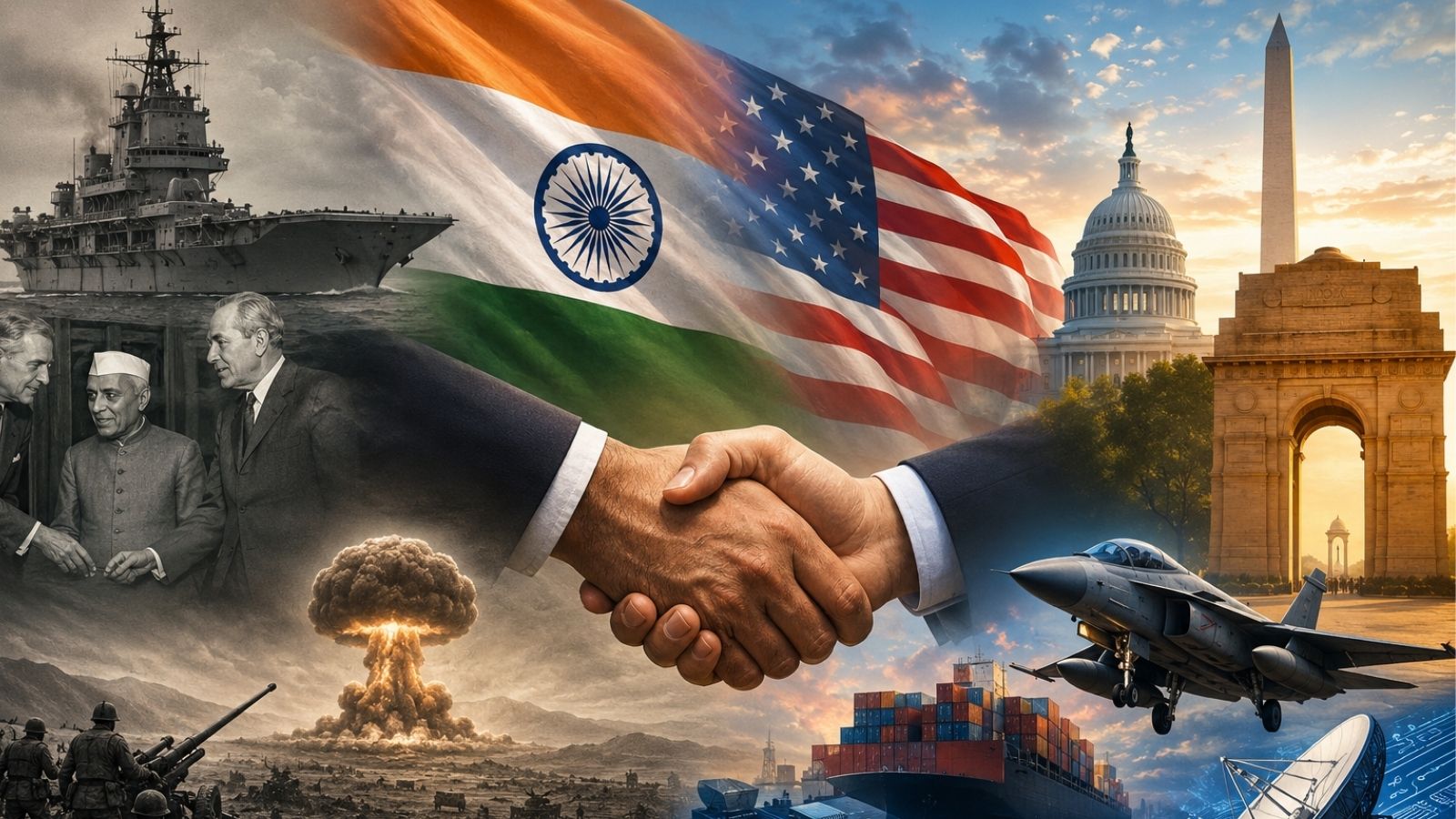
The United States celebrates its 250th independence anniversary on July 4, 2026. Among the many shifts in its foreign relations over the centuries, the transformation of ties with India stands out. Once marked by Cold War tensions and nuclear sanctions, the relationship has matured into a multifaceted partnership covering defence, technology, trade, and shared interests in the Indo-Pacific region.
The contrast between past and present is stark. During the 1971 India-Pakistan war, US President Richard Nixon ordered a naval task force led by the USS Enterprise into the Bay of Bengal—a move widely seen as signalling support for Pakistan. Today, India and the US are negotiating one of their most ambitious bilateral trade agreements, reflecting how the two largest democracies have realigned their relationship.
India's early foreign policy was shaped by non-alignment, avoiding formal ties with either the US or the Soviet Union. Prime Minister Jawaharlal Nehru visited Washington in October 1949, meeting President Harry Truman, but the two nations remained distant due to differing Cold War perspectives. President Dwight Eisenhower became the first US president to visit India in December 1959, addressing Parliament and meeting Nehru. Yet, the distance persisted, leading political scientist Dennis Kux to later describe them as 'estranged democracies.'
The 1971 Indo-Soviet Treaty of Peace, Friendship and Cooperation, signed in August, deepened Washington's mistrust. Later that year, during the Bangladesh Liberation War, the US naval deployment exacerbated tensions. Another low point came in 1974 when India conducted its first nuclear test, Smiling Buddha, at Pokhran. Described as a 'peaceful nuclear explosion,' it triggered US sanctions and international isolation, as India remained outside the Nuclear Non-Proliferation Treaty (NPT). Relations worsened further after India's second round of nuclear tests in 1998, Pokhran-II, prompting the US to impose sanctions and recall its ambassador.
The turnaround began with the 1999 Kargil conflict, when the US pressured Pakistan to withdraw its forces from Indian territory—a departure from earlier positions. President Bill Clinton's state visit to India in March 2000 marked a significant thaw. After the September 11, 2001 attacks, President George W. Bush lifted remaining sanctions, paving the way for closer ties.
The defining breakthrough came with the India-US Civil Nuclear Agreement, negotiated between 2005 and 2008 under Prime Minister Manmohan Singh and President George W. Bush. The deal ended India's nuclear isolation by allowing civilian nuclear cooperation despite India not signing the NPT. India agreed to separate its civilian and military nuclear facilities and place civilian reactors under International Atomic Energy Agency safeguards. In return, the US facilitated nuclear fuel and technology exports. The US Congress approved the agreement in October 2008.
Today, India and the US conduct joint military exercises, collaborate on space and technology, and coordinate on Indo-Pacific security. While differences remain on trade and human rights, the trajectory from estranged democracies to strategic partners is a defining feature of modern international relations.