Doval Recalls the Day His Agents Were Captured by China: 'I Knew My Career Was Over'
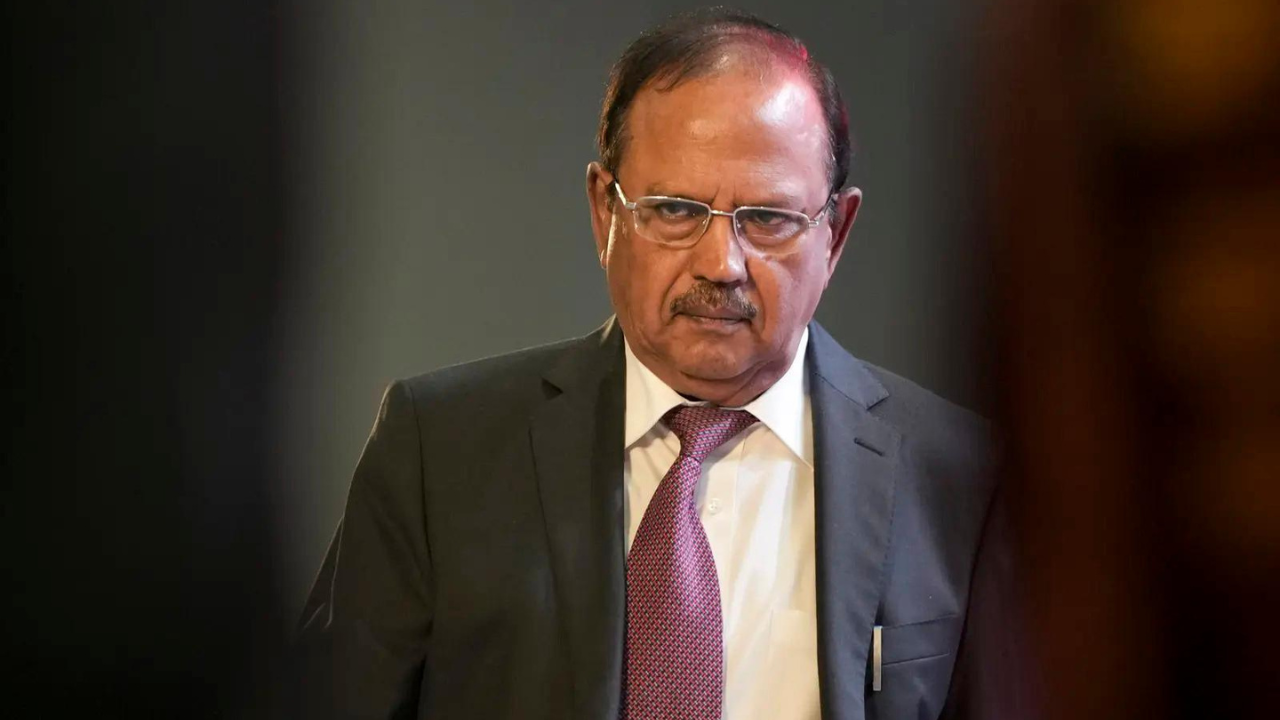
New Delhi: National Security Advisor Ajit Doval has spoken publicly about an episode from his years as an intelligence officer in which operatives working under him were captured by Chinese authorities, recalling that he believed it would end his career.
Mr Doval, who headed the Intelligence Bureau before he was appointed National Security Advisor, described the episode in broad terms. He did not name the personnel involved, specify where or when the incident took place, or explain how the matter was resolved. Such operational details are not normally disclosed by serving officials, and this publication has not independently verified the specific circumstances.
According to accounts of his remarks, Mr Doval said the realisation that his men had fallen into the hands of Chinese authorities came as a severe personal and professional jolt. "I knew this was the end of my career," he is reported to have said, describing the weight of responsibility an officer carries for those who work under him.
Intelligence work along the India-China frontier is among the most sensitive assignments an Indian officer can be given. The two countries share a border of about 3,488 km, much of it in the high Himalayas, where patrols operate in thin air, extreme cold and terrain that is difficult to monitor. Both sides maintain large deployments along the Line of Actual Control and have clashed there, most seriously in the Galwan Valley in June 2020, when 20 Indian soldiers were killed and Chinese authorities acknowledged four deaths on their side.
Since then, the two sides have completed several rounds of disengagement at friction points and have continued diplomatic and military talks aimed at restoring calm along the frontier. Incidents involving intelligence personnel, however, are rarely discussed in public by either government and are almost never confirmed in detail.
Mr Doval joined the Indian Police Service in 1968 and spent nearly four decades in the Intelligence Bureau, in roles that included counter-insurgency and counter-terror operations. He served as Director of the IB from 2004 to 2005 and was appointed National Security Advisor in 2014, continuing in the post under successive governments.
His decision to speak about an operation that went wrong is unusual. Serving and former intelligence officers generally avoid discussing operations publicly, both because disclosure can endanger personnel still in service and because it may compromise methods that remain in use. When such accounts do surface, they typically come years after the event and in carefully limited form.
That caution shapes how the public can assess what is said. Without knowing when the capture happened, who was involved, how they were held or how the matter was settled, it is difficult to draw firm conclusions about the handling of the operation or its consequences. Parliamentary committees on defence and home affairs are not briefed on such operations in open session.
What the remarks do offer is a reminder of the stakes involved in intelligence work and of command responsibility — the principle that an officer is answerable for those he sends into danger. That principle is a widely accepted standard in security forces and in public administration more generally.
India and China have in recent years sought to stabilise a relationship that both describe as important, while managing a boundary dispute that remains unresolved. Public comments of this kind by a serving National Security Advisor are rare, and neither the government nor Mr Doval's office has released further detail on the episode.
This report is based on publicly reported remarks. The identity of the personnel involved, the location and date of the incident, and the manner in which it concluded have not been disclosed, and this publication has not independently verified them.