Over 40 Wild Elephants Trample Assam Villages, Crops Damaged, NH-17 Traffic Halted
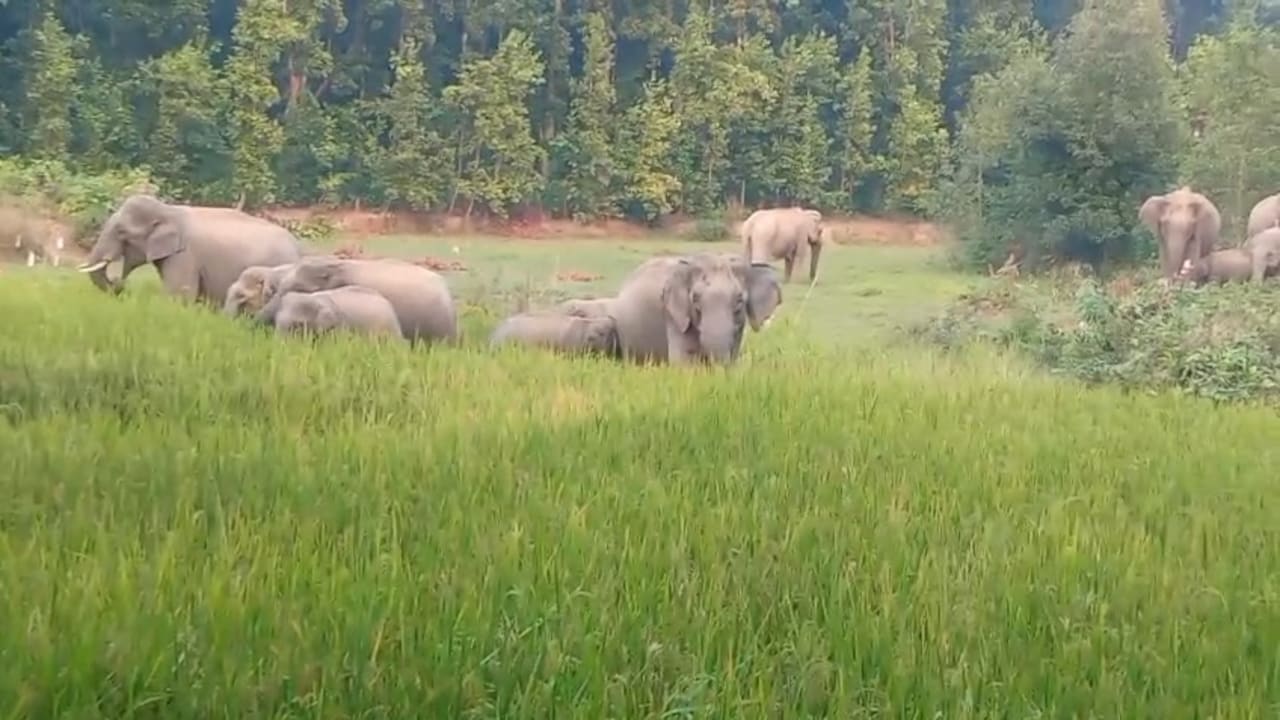
A herd of more than 40 wild elephants has been moving through villages in the Boko area of Assam, damaging paddy fields and banana plantations and disrupting daily life for residents, according to local people and forest officials.
The elephants have been sighted in Rajapara, Muhipara, Chenchapani, Kukurmara and Dekapara villages, all of which fall under the Bandapara Forest Range. Farmers reported substantial damage to standing paddy crops and banana plantations as the animals passed through agricultural land in search of food.
The destruction comes at a particularly difficult moment for farming families in the area, many of whom were preparing for the harvest season. Crop losses at this stage of the cycle can erase months of work and the investment made in seeds, labour and fertiliser.
On Sunday afternoon, the herd also crossed National Highway 17, bringing traffic to a halt for several hours. Vehicles were stranded on both sides of the highway as the elephants moved across the road, and commuters had to wait until the animals had cleared the carriageway. No injuries were reported in the episode.
Residents of the affected villages said such visits have become a recurring feature of life in the region. Herds often enter from nearby forest stretches, they said, straying into farmland and damaging crops before returning to the forest. Each such movement leaves farmers to absorb losses that are hard to recover.
Range Forest Officer Kulumonali Gogoi said forest personnel were continuously engaged in efforts to guide the herd back towards the forest. Officials have not reported any injuries to people or to the animals in the latest incident.
The episode underlines a wider challenge in Assam, where elephants and people frequently share the same landscape. The state is home to one of India's largest wild elephant populations, and the movement of herds between forest patches often takes them across farmland, roads and settlements. Wildlife researchers have for years pointed to the shrinking and fragmentation of elephant habitat, and the disturbance of traditional migration routes, as factors behind repeated human-elephant encounters.
Human-elephant conflict is a year-round concern in many parts of Assam, but it often intensifies during the cropping season, when herds are drawn to ripening paddy and fruit. Conservation groups have advocated early warning systems, community-based monitoring and the protection of wildlife corridors as ways to reduce both crop losses and casualties.
Elephant movements through Boko and neighbouring areas have previously led to incidents in which both people and elephants have died, a reminder of the stakes involved when herds pass through densely populated countryside.
For residents, the immediate concerns are the standing crop and the safety of both villagers and the animals. The latest episode has once again disrupted farming activity and affected traffic on NH-17, a key route through the region. Villagers say they want more reliable advance warning when herds approach, and a faster process for assessing and compensating crop losses.
Forest department teams remained in the area on Monday, tracking the herd's movement and attempting to steer it away from habitation and back into forest land. Officials have urged residents to keep a safe distance from the animals and to avoid gathering in large numbers near the herd, noting that elephants can react unpredictably when they feel cornered or threatened.