Digital smokescreens: How VPNs are thwarting Mumbai police's threat email probes
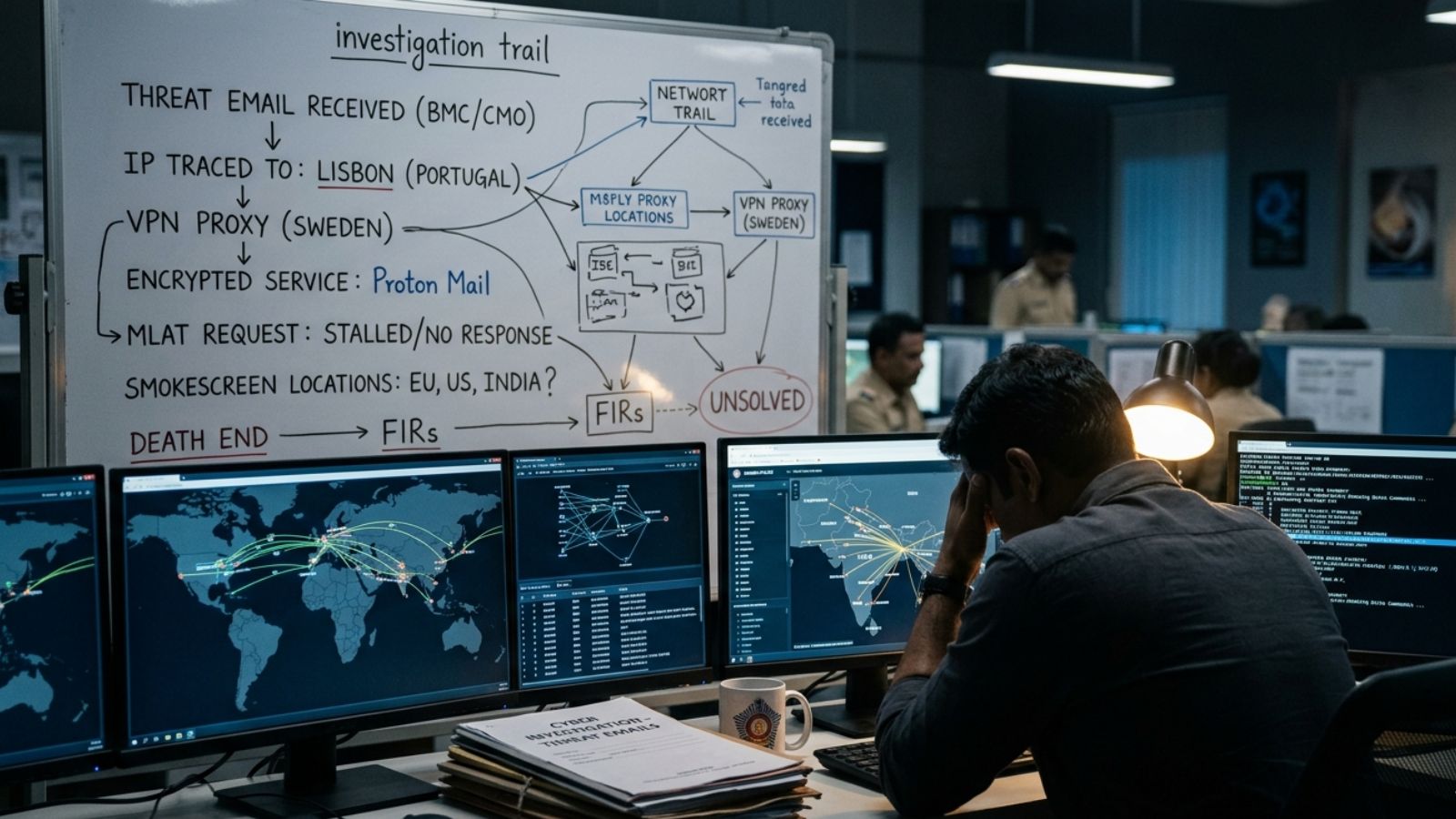
The Mumbai police are facing a growing challenge in tracing the origin of threat emails, as suspects increasingly use Virtual Private Networks (VPNs) to mask their digital footprints. This was highlighted last week when the Brihanmumbai Municipal Corporation (BMC) received a series of threat emails warning of blasts at government offices, including the Chief Minister's Office. Investigators found digital trails leading to five different locations across the world, from the European Union and the United States to India, but police officials say those locations were almost certainly a smokescreen.
The IP addresses traced during the investigation are believed to have been masked using VPNs, making it increasingly difficult for law enforcement agencies to identify the actual sender. This challenge is not new. In 2024, when a Facebook post claimed responsibility for the firing outside actor Salman Khan's residence in Bandra, investigators traced the IP address to Portugal. Officials later suspected that the original source had been concealed through similar methods.
According to sources, only those cases where the sender lacks the technical expertise to properly conceal their identity are eventually solved. The use of VPNs and other anonymising tools is becoming more common, complicating the work of cybercrime investigators. The Mumbai police are now exploring new techniques and collaboration with international agencies to address this growing threat.