Delhi’s New EV Policy Targets Two- and Three-Wheelers to Curb Air Pollution
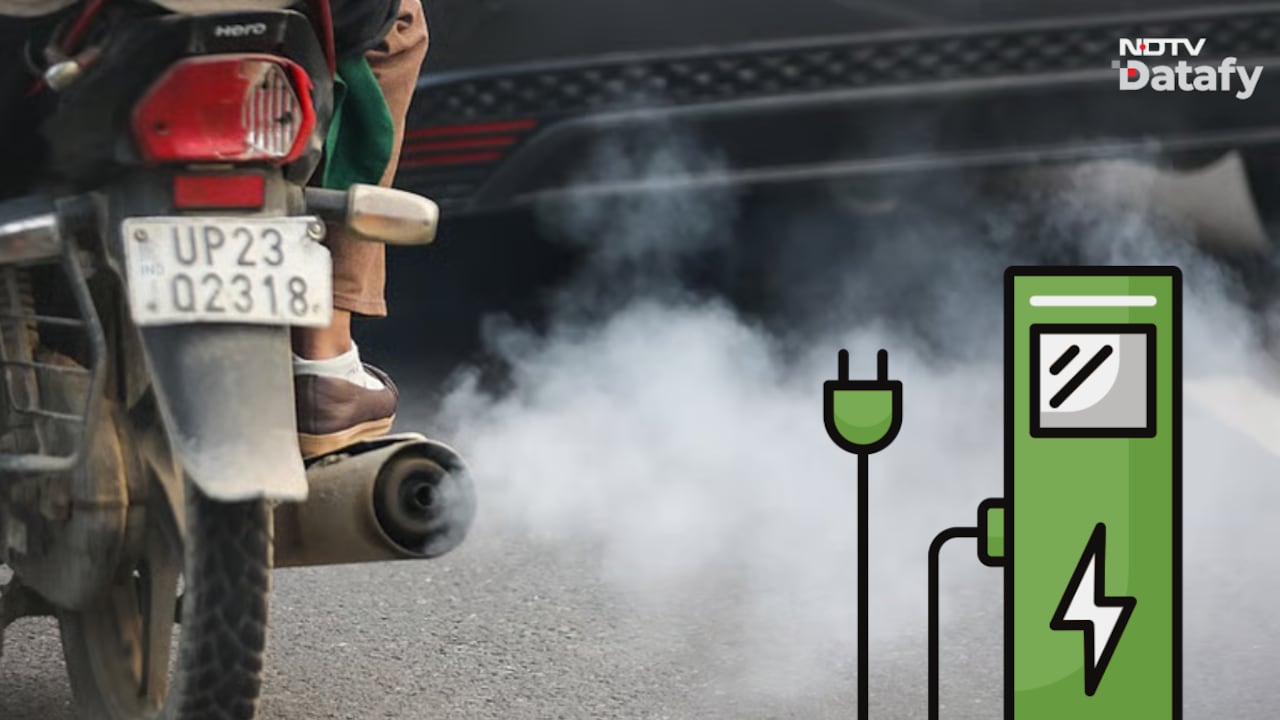
Delhi's newly approved Electric Vehicle (EV) Policy is designed to significantly reduce air pollution in the capital. The policy focuses on vehicle categories that contribute the most to transport-related pollution.
According to a joint study by The Energy and Resources Institute (TERI) and the Automotive Research Association of India (ARAI) on PM2.5 emissions from automobiles in Delhi-NCR, two-wheelers account for 25 per cent of vehicular PM2.5 pollution, while three-wheelers contribute another 17 per cent. Together, these two categories make up 42 per cent of pollution from the transport sector, making them primary targets for pollution control.
The new policy proposes to stop the registration of new petrol-powered two-wheelers from April 2028 and restrict the registration of new CNG-powered three-wheelers from the end of this year.
Data from the Vahan dashboard shows that Delhi's two-wheeler market remains dominated by petrol vehicles. In 2025, more than 4.92 lakh petrol two-wheelers were registered in the capital, compared to around 37,000 electric two-wheelers. In 2026 (up to June), petrol vehicles still account for the majority of new registrations, with over 2.54 lakh petrol two-wheelers registered against 25,424 EVs. Petrol-powered two-wheelers consistently accounted for more than half of all new two-wheeler registrations between 2020 and 2026, highlighting why this segment is a major focus of the policy.
The situation is different for three-wheelers, where the shift to electric mobility is already underway. In 2025, Delhi registered 59,543 electric three-wheelers, compared to only 8,180 CNG three-wheelers. EV registrations have surpassed CNG registrations every year since 2020. In 2026, electric three-wheeler registrations stand at 8,005, nearly double the 4,237 CNG vehicles registered during the same period.
Delhi's registration data reveals two contrasting trends. The transition to electric vehicles is already happening among three-wheelers, where EV registrations now far outnumber CNG vehicles. However, the two-wheeler market remains heavily dependent on petrol, with EVs still accounting for a small fraction of new registrations. This is precisely where Delhi's new EV policy places its biggest bet: transforming the vehicle segment that contributes 25 per cent of transport-related PM2.5 pollution.