Delhi HC Rules Entire Apps Can Be Blocked as 'Information' Under IT Act
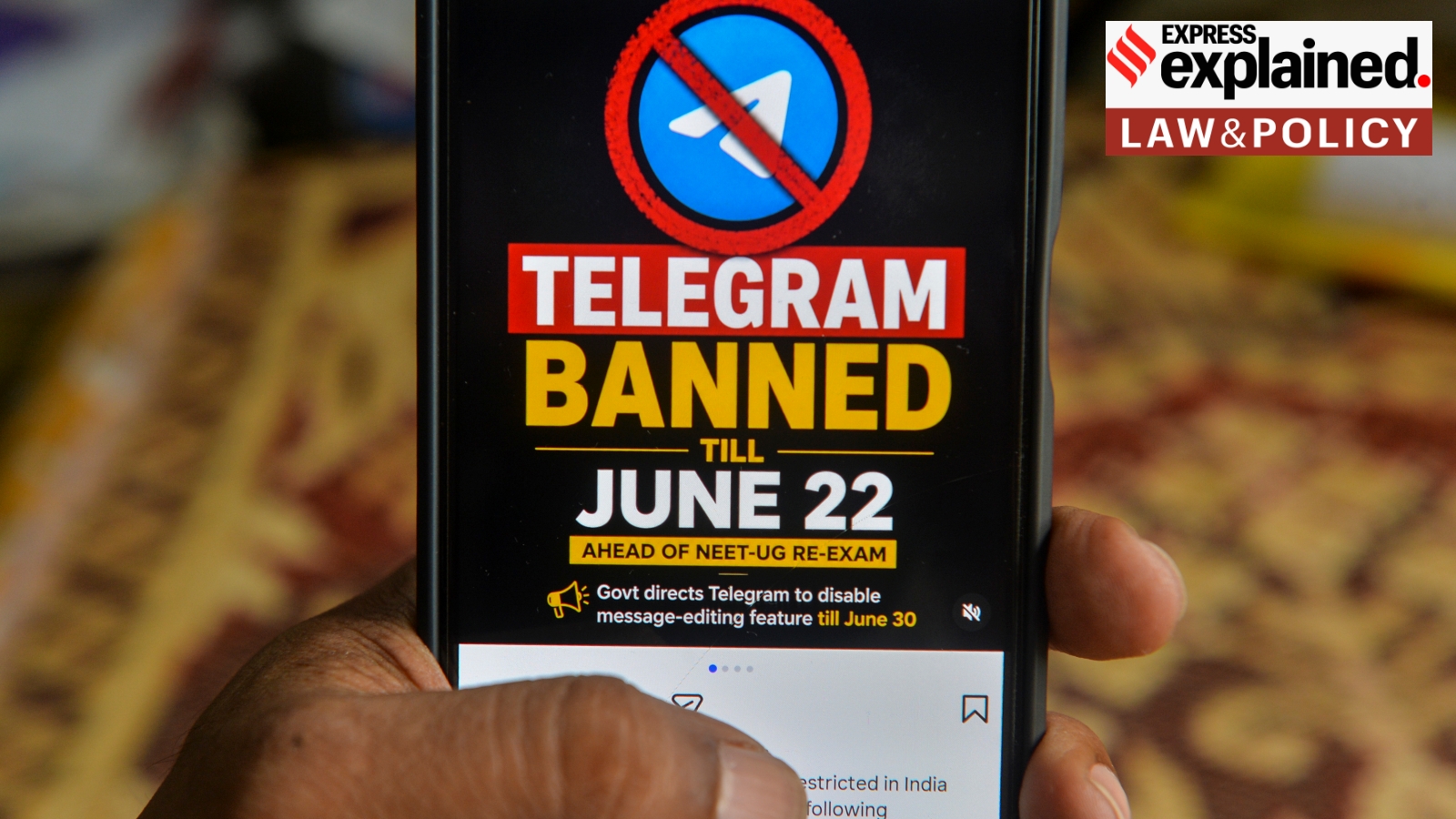
The Delhi High Court has upheld the Central government's temporary block on messaging app Telegram, ruling that an entire application—not just its content—can be considered 'information' subject to blocking under Section 69A of the Information Technology Act, 2000. This marks the first time a court has interpreted the law to include software architecture as blockable information.
The dispute arose after the Ministry of Electronics and Information Technology (MeitY) issued an interim order on June 16, blocking Telegram across India until June 22 and disabling its message editing feature until June 30. The order was prompted by concerns over the app's alleged misuse in connection with the NEET-UG paper leak, which led to the cancellation of the May exam and a re-examination scheduled for June 21.
Telegram challenged the order, arguing that Section 69A only permits blocking specific content, not entire platforms. However, Justice Tejas Karia ruled that the definition of 'information' under Section 2(1)(v) of the IT Act—which includes 'data, text, images, sound, voice, codes, computer programmes, software and databases'—is broad enough to cover the entire application. 'There is no reason to exclude an application or platform from the ambit of the said expression,' the court stated.
The court also applied the four-part proportionality test from the Supreme Court's 2020 judgment in Anuradha Bhasin v. Union of India. It found that the block was necessary because other measures had 'repeatedly been found to be ineffective and inadequate,' and its short duration made it 'the least restrictive measure for achieving the stated objective.'
The National Testing Agency had first alerted MeitY about Telegram's alleged misuse on May 21. After multiple meetings, MeitY sent Telegram a list of 1,300 URLs on June 9; the company claims it disabled around 900. The interim block order on June 16 was followed by a hearing before a statutory committee on June 17, which confirmed the block on June 18.
Legal experts noted that while Section 69A had previously been used to block Chinese apps, this is the first instance where a court has explicitly ruled on the scope of 'information' to include the app itself. Meghna Bal, director at the Esya Centre, a technology policy think-tank, remarked that 'the novel context here is that it's temporary and it was done in the interest of public order.' However, she questioned whether the court had sufficient technical evidence to assess alternatives to a platform-wide block. 'As technology becomes an increasingly pervasive factor in judicial determinations, it is incumbent on the judiciary to reach out to external technology experts, particularly those from civil society, to get their inputs,' she added.
The ruling sets a significant precedent for how Indian courts interpret the IT Act in cases involving digital platforms, potentially affecting future disputes over app bans and online content regulation.