Congress to Disrupt Parliament Over Alleged Ram Temple Donation Irregularities
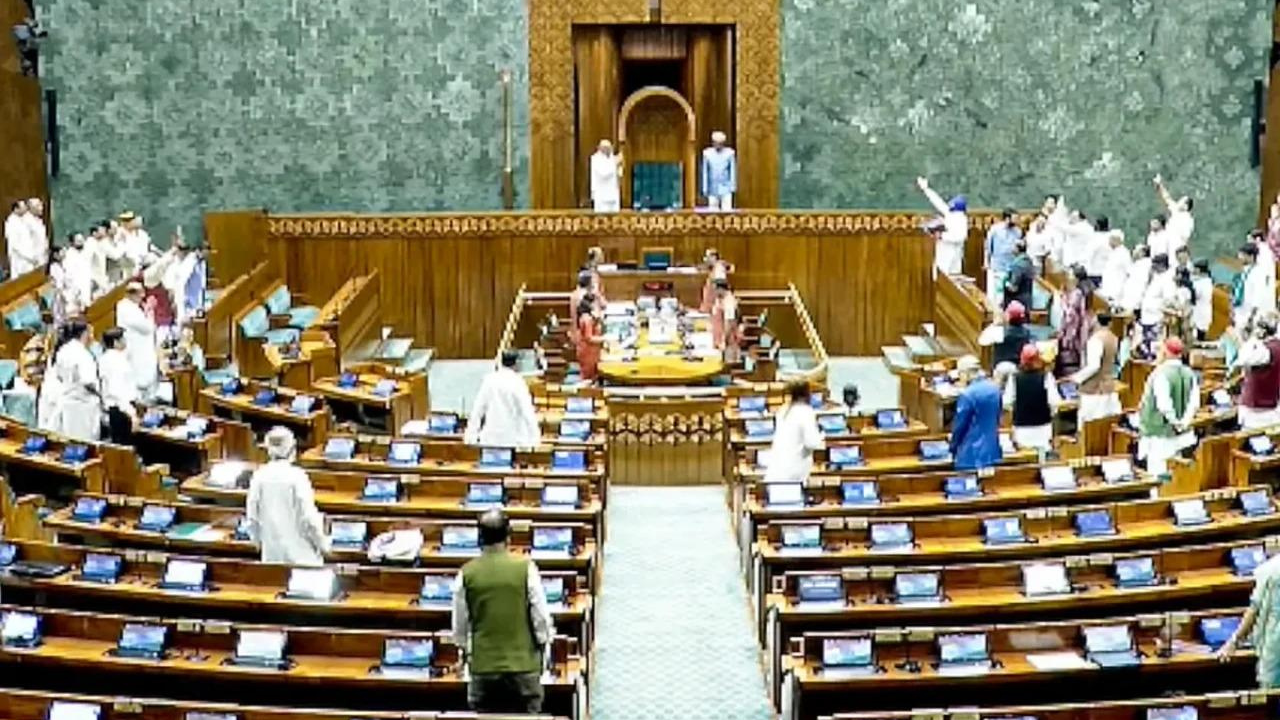
The Congress party is set to stall proceedings in both houses of Parliament this week, demanding a thorough investigation into alleged financial irregularities in the collection and utilisation of donations for the Ram Temple in Ayodhya. The party has termed the matter a public scandal and has insisted that the government's response so far has been insufficient.
According to sources within the Congress, the party will raise the issue during the Zero Hour and may resort to adjournment motions if the government does not agree to a discussion. The party is also likely to demand a statement from the Prime Minister or the Union Home Minister on the matter. The move is expected to bring legislative business to a standstill, potentially delaying several pending bills and policy decisions.
On the other side, the ruling Bharatiya Janata Party (BJP) has dismissed the Congress's allegations as a politically motivated attempt to derail the ongoing session. A senior minister, speaking on condition of anonymity, said that the Ram Temple Trust, which manages the temple's finances, has maintained full transparency. The minister also accused the Congress of trying to create controversy after its repeated electoral defeats and lack of public support.
The Ram Temple Trust, officially known as the Shri Ram Janmabhoomi Teerth Kshetra Trust, was established by the government in 2020 to oversee the construction of the temple. It collected crores of rupees through donations from millions of devotees, both in India and abroad. The trust has consistently published annual reports and claimed that all funds were accounted for. However, certain activists and opposition members have previously raised questions about the use of funds, particularly regarding the procurement of construction materials and administrative expenses.
The Congress's decision to stall the House is seen as part of a broader strategy to corner the government on issues of transparency and accountability. Party president Mallikarjun Kharge and Leader of Opposition in the Lok Sabha Rahul Gandhi have both indicated that they will not allow the session to proceed unless the government agrees to an independent probe. They have also called for a joint parliamentary committee (JPC) to examine the matter.
Political observers point out that such parliamentary disruptions are nothing new. In recent years, both ruling and opposition parties have used similar tactics to press their demands. However, with the monsoon session having only a few days left, the standoff is likely to result in a truncated or wasted session. The government, for its part, has accused the Congress of running away from debate on crucial issues like the economy and national security.
The Congress has, however, maintained that the Ram Temple donation issue is not a minor matter. The party claims that lakhs of ordinary citizens donated their hard-earned money out of faith, and they deserve to know how it was spent. The party has also sought to link the issue to the broader narrative of corporate cronyism, alleging that certain private companies with close ties to the ruling party were favoured in the construction contracts.
As the Parliament gears up for a potential showdown, the speaker and the chairpersons of both houses will face the difficult task of ensuring that legislative work proceeds. The government has expressed its willingness to hold a discussion under rules that allow voting, but the Congress's demand for a JPC remains a sticking point. Negotiations are reportedly underway between the floor leaders of both sides to break the deadlock.
In the backdrop of these developments, the Ram Temple Trust has issued a statement saying it has no objection to any inquiry. It added that all relevant financial records are available for scrutiny. The trust also appealed to the political class to not turn a sacred institution into a battleground for partisan politics. The opposition, however, has questioned why the trust has not voluntarily submitted its accounts to the Comptroller and Auditor General (CAG) for audit, a demand that the government has not yet addressed.
The outcome of this standoff is likely to shape the remainder of the parliamentary session. Both sides appear firm, raising the possibility of repeated adjournments and a washout of legislative business. For citizens, the episode underscores the increasingly adversarial nature of Indian politics, where a matter of public finance and faith can quickly become a floor-battle with little room for constructive dialogue.


