Congress Calls New UPI Merchant Fee 'Trump Appeasement' as NPCI Sets 0.4% MDR
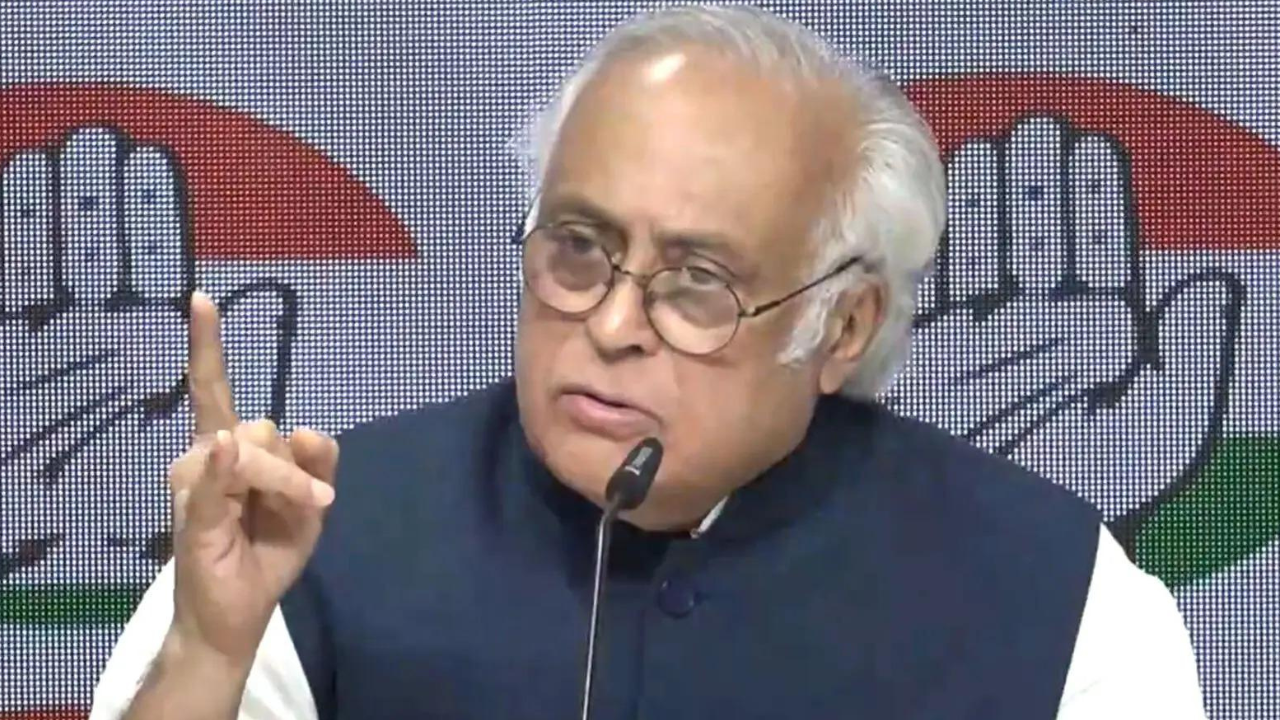
New Delhi: The Congress on Wednesday criticised the Union government over the National Payments Corporation of India's new merchant discount rate (MDR) framework for UPI, with senior leader Jairam Ramesh calling it a concession to the United States and questioning the timing of the decision.
The NPCI on Tuesday introduced a revised MDR framework under which UPI merchant transactions above Rs 2,000 will attract an MDR of 0.4%. Consumers will continue to transact free of cost using UPI. The framework will come into effect from October 15, 2026, and will apply to select merchant transactions.
In a post on X, Ramesh described the decision as "NOTA - Narendra's Ongoing Trump Appeasement". He alleged that the move was aimed at helping US card companies compete with UPI, which has become India's dominant retail payments system.
"Why 0.4% MDR? Is it because debit card MDR is also 0.4%? Is this being done to enable US card companies to compete with UPI?" he asked. He also said the US Trade Representative had earlier this year criticised UPI for being free and for having driven out Visa and Mastercard.
Ramesh linked the decision to broader trade and immigration tensions with the United States. He said the US House of Representatives was scheduled to vote on a Bill introducing 100% tariffs on India, while the US Senate had already approved what he called a draconian law. He also referred to the Trump administration's crackdown on Indian immigrants, higher H-1B visa costs and the possibility of immediate deportation for visa holders who lose their jobs.
"Here, the Modi Govt has given into a US demand to get rid of zero MDR and charge for UPI," Ramesh said. He asked whether the change would make UPI "sustainable" as the government claims.
"The estimated cost of running the entire UPI ecosystem is around Rs 20,000 crore annually. This is less than 10% of what the RBI has been transferring to the Union Govt in the past few years so as to show healthy public finances for the Modi Govt," he said. He added: "The PM has redefined NOTA - Narendra's Ongoing Trump Appeasement."
The Congress leader's remarks are the latest political flashpoint over UPI, which handles billions of transactions every month and is used by people across income groups. Since its launch, UPI has operated on a zero-MDR model, meaning merchants were not charged a fee for accepting payments through the platform. The new framework marks a significant change in that policy.
MDR is a fee paid by merchants to banks and payment service providers for processing digital transactions. Supporters of a zero-MDR regime say it has helped UPI grow rapidly and reduced the cost of digital payments for small businesses. Those in favour of a merchant fee argue that banks and payment companies need a revenue stream to maintain and expand the ecosystem, and that the absence of MDR is not sustainable in the long run.
The government has described the move as necessary for the sustainability of the UPI ecosystem, an assertion Ramesh questioned. The NPCI, which manages UPI, is an umbrella organisation for retail payments in India. It is promoted by the Reserve Bank of India and the Indian Banks' Association.
Under the new framework, UPI merchant transactions above Rs 2,000 will attract the 0.4% MDR, and it will apply to select merchant transactions. Consumers will continue to use UPI free of cost. The framework is scheduled to take effect in October 2026, giving the payments industry time to adjust.
The political row comes amid wider concerns about India-US trade relations. Ramesh has repeatedly accused the government of yielding to US pressure on trade and immigration. The government has not issued a direct response to his latest allegations.
For ordinary users, the immediate impact is expected to be limited because consumer transactions remain free. For merchants, especially larger ones, the new MDR could add to transaction costs from 2026. How the framework is implemented, and whether it changes the competitive landscape among UPI, cards and other payment methods, will be watched closely by the payments industry.