Karnataka Police Arrest Man Accused of Posing as Maoist After Crude Bomb Blast
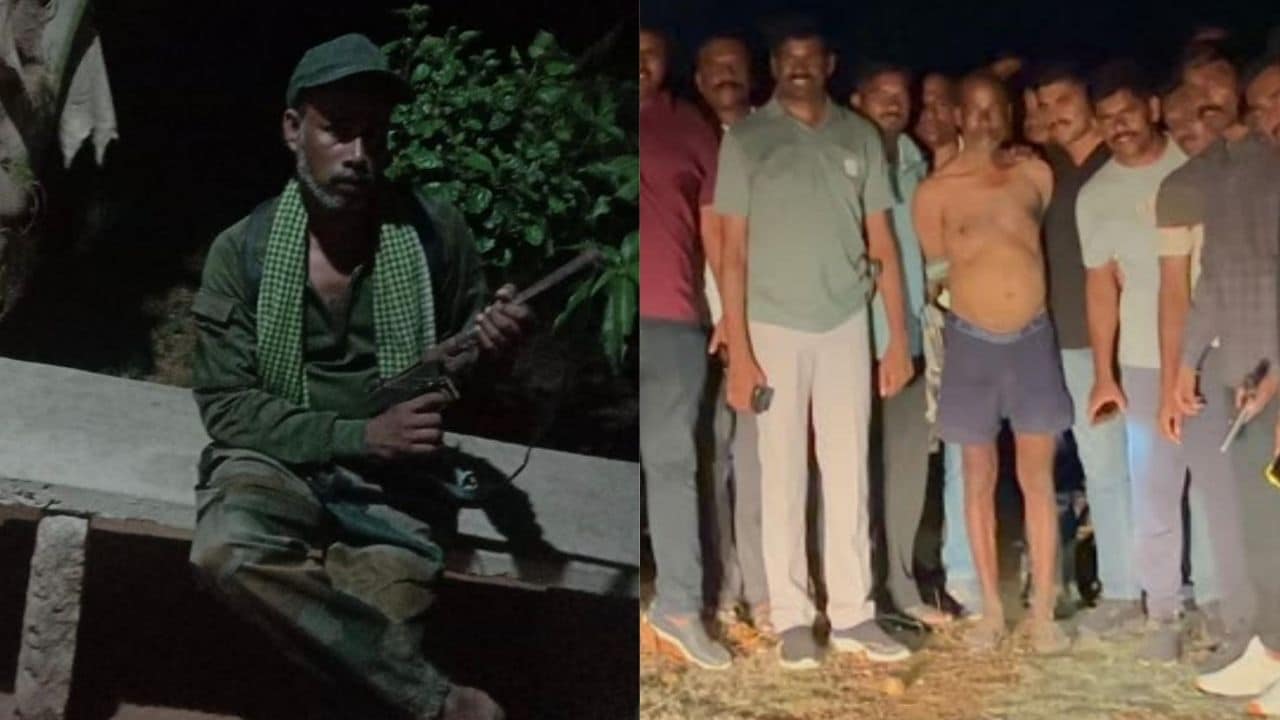
Karnataka Police have arrested a man accused of triggering a crude bomb blast and of later posing as a Maoist to threaten a farmer, ending a search that lasted nearly a month. The accused, Kanakalabande Venkatesh, was taken into custody on Tuesday night, according to police. The arrest followed an intensive operation in the hills near Pavagada, where he had reportedly been hiding.
Venkatesh had been missing since August, when a crude bomb exploded at a farmer's pump set in Kanakalabande village. The blast caused panic in the area. After the explosion, police launched a manhunt for him. He was reportedly hiding in the Kadamalakunte Hills. The incident initially left local residents worried, and police began gathering information about the possible involvement of multiple persons.
Earlier in the investigation, his wife, Savitramma, their two children and two other persons were arrested in connection with the case. Police have not released further details about those arrests or the evidence against them. The involvement of family members in such cases can raise sensitive legal and social questions, and officials are expected to follow procedures required under law.
According to police, Venkatesh later pasted a threatening letter in the name of a Maoist organisation on the gate of a farm belonging to a man identified as Bhushappa. The letter allegedly demanded Rs 5 lakh and contained threats to the farm owner. A case was registered against Venkatesh following the complaint. The allegation that he used the name of a Maoist organisation has not been independently verified.
Police said they had been conducting an intensive search for Venkatesh for the past 20 days. After receiving information that he was hiding in the hills near Pavagada, they launched a combing operation. More than 150 police personnel took part in the search, and the team traced and arrested him on Tuesday night. Such combing operations are usually carried out in rugged or forested terrain where a suspect may try to avoid detection.
The case has drawn attention because of the allegation that a Maoist identity was used in a local dispute. Police have described Venkatesh as a man who allegedly posed as a Maoist, but they have not said whether any Maoist organisation was actually involved in the blast or the threatening letter. Under Indian law, an accused person is presumed innocent until proven guilty by a court. The investigation must establish the facts through evidence and due process.
Crude bomb explosions in rural Karnataka have occasionally been linked to land, financial or personal disputes. In this case, investigators are yet to make public a full account of the motive or the materials used in the blast. The matter remains under investigation. Police have also not announced whether they are looking for other suspects.
The arrest follows a large-scale operation in the Pavagada region, where police combed hilly terrain for the suspect. Officials said the operation was aimed at ensuring public safety and completing the investigation. Further legal proceedings will follow as the case moves through the judicial process. Police are expected to produce the accused before a court in accordance with established procedure.
The right to a fair trial, the presumption of innocence and the requirement that police produce an arrested person before a magistrate without unnecessary delay are key safeguards in India's criminal justice system. As the case progresses, the focus will be on whether investigators can substantiate the charges and whether the legal process is conducted transparently.