China Opens Economic Corridor to India Amid Bangladesh Pivot
China has invited India to join the proposed Bangladesh-China-India-Myanmar (BCIM) Economic Corridor, even as Bangladesh deepens its ties with Beijing. Chinese Ambassador to Bangladesh Yao Wen stated that the corridor is open to other countries if they are willing to participate, leaving the door open for New Delhi while positioning China as the lead player in regional connectivity.
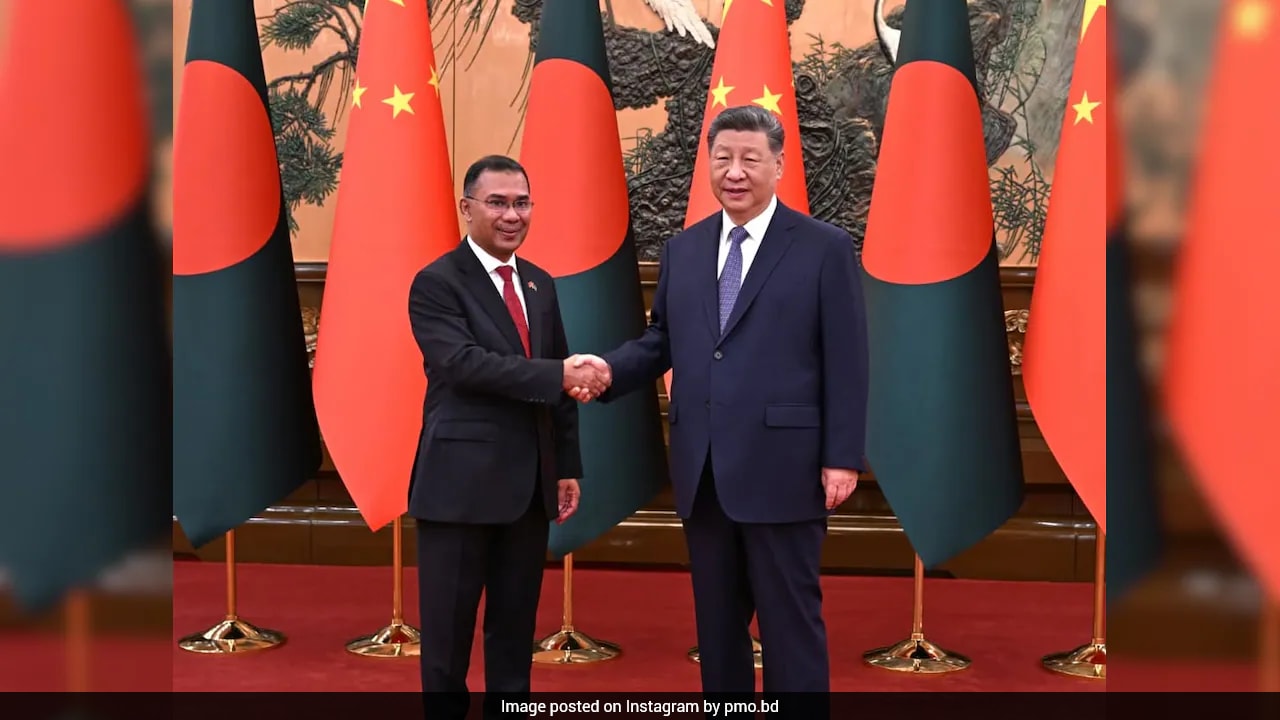
The announcement comes amid a series of agreements between China and Bangladesh, including the Teesta River project and development of Mongla Port. During a recent visit to Beijing, Bangladeshi Prime Minister Tarique Rahman met Chinese President Xi Jinping, and both sides agreed to build a 'China-Bangladesh community with a shared future,' elevating bilateral relations.
Ambassador Yao Wen noted that China proposed the BCIM corridor 15 years ago but progress was slow due to various reasons. He reaffirmed China's determination to move forward with an economic corridor involving Bangladesh and Myanmar, and said India could join if it decides to.
On the Teesta project, Yao Wen said that a previous memorandum of understanding was between a Chinese company and a Bangladeshi entity, but now cooperation is at a governmental level. He said surveys are necessary and China is committed to working with Bangladesh.
India's Ministry of External Affairs responded that India's development assistance for Bangladesh is based on a mutually agreed roadmap and that India's views on the Teesta project have been conveyed to Bangladesh. India is closely watching the developments.
The BCIM corridor, originally conceived in the 1990s to connect Kunming to Kolkata via Mandalay and Dhaka, is now being reshaped as the China-Myanmar-Bangladesh Economic Corridor (CMBC), excluding India. This new route gives China direct access to the Bay of Bengal through Myanmar and Bangladesh, potentially altering regional trade dynamics.
Analysts have noted that Bangladesh's outreach to China may be part of a strategy to strengthen its negotiating position with India, particularly on water-sharing issues like the Teesta River. However, the agreements also reflect China's growing influence in South Asia, which has implications for India's strategic interests.
The developments signal a shift in the regional balance, with China cementing its presence in Bangladesh and offering conditional inclusion to India. New Delhi will need to reassess its approach to maintain influence in its neighbourhood.







