China Lands First Reusable Rocket, Poses Challenge to US Space Dominance
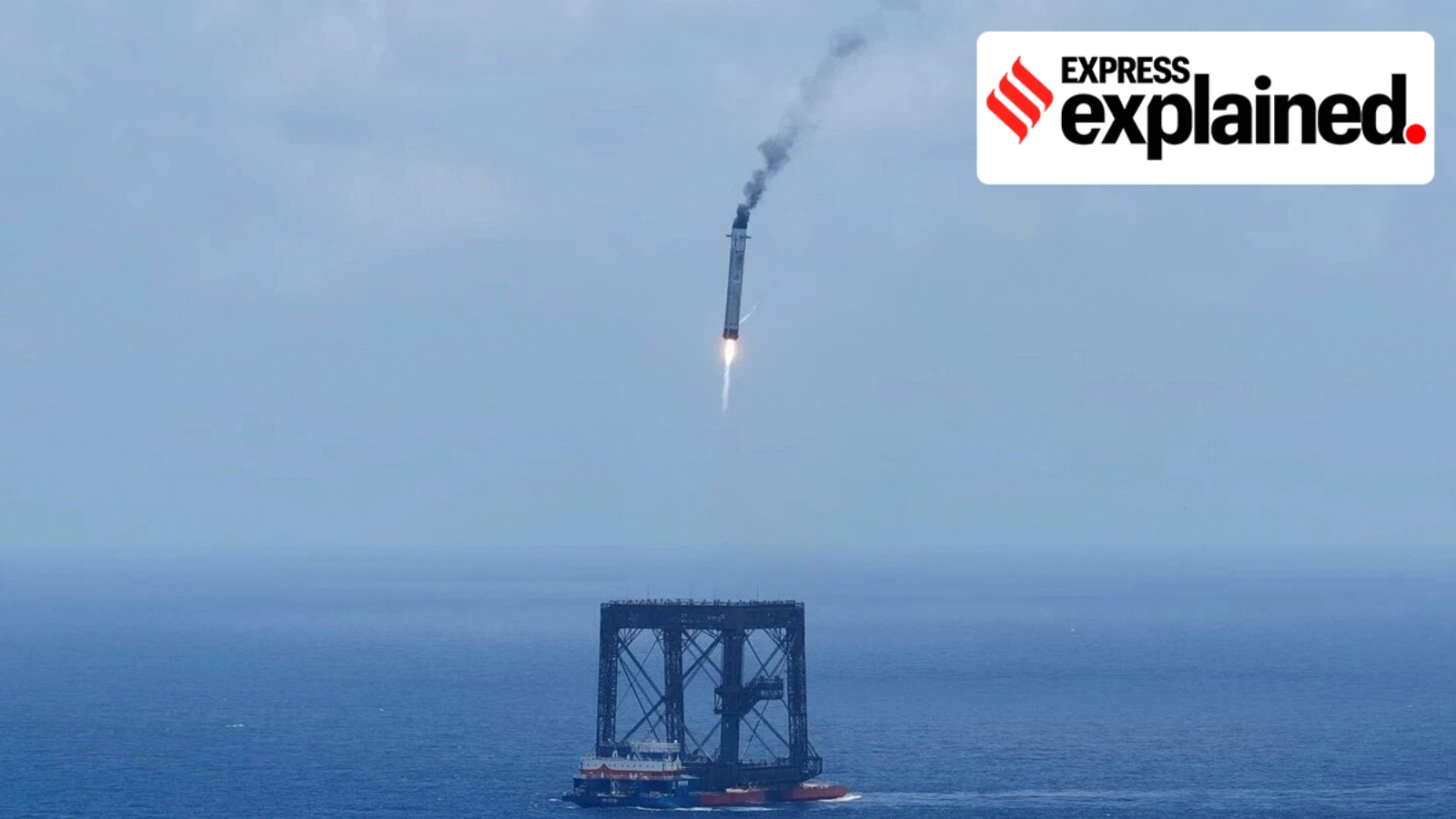
China achieved a milestone in its space program on Friday by successfully landing a reusable rocket for the first time. The feat marks a significant step for the country's space ambitions and challenges the dominance of American private companies in reusable rocket technology.
The Long March 10B rocket, capable of carrying up to 16 metric tons to low Earth orbit (LEO), lifted off from the Wenchang Commercial Space Launch Site in Hainan, southern China, at around noon local time. LEO is the region between 160 km and 2,000 km above Earth, commonly used for satellite deployment and space station missions.
Six minutes after liftoff, the rocket's booster—the lower section housing the engine and providing initial thrust—separated from the upper stage. It then executed a controlled descent to a floating platform at sea, where it was caught by a net. This marks the first time China has recovered a rocket booster intact.
Before this, only Elon Musk's SpaceX and Jeff Bezos's Blue Origin had demonstrated the ability to launch and land reusable rockets. SpaceX's Falcon 9 uses landing legs to touch down on drone ships, while Blue Origin's New Shepard performs vertical landings on land.
How Reusable Rockets Work
All rockets expend multiple stages during ascent, with each stage discarded after use. A reusable rocket, however, allows the most expensive component—the booster—to be recovered and reused, drastically reducing launch costs. The typical re-entry process involves:
- Separation of the booster from the upper stage, which continues into space.
- The booster uses pressurized nitrogen to flip and orient its engines for return.
- During re-entry, the booster, traveling at supersonic speeds, deploys grid fins for aerodynamic control.
- A braking burn slows the descent, but managing thrust is critical to avoid re-acceleration or destruction.
China's Unique Capture Mechanism
The key difference between China's approach and that of SpaceX or Blue Origin lies in the final capture method. Instead of hydraulic landing legs, China's Long March employs a net-catching system. The rocket's onboard computer coordinates with a maritime landing vessel equipped with a suspended wire net. As the booster descends, it extends landing hooks that snag the net. Auxiliary cables and an automated locking platform then secure the booster to prevent swinging.
This design eliminates the need for landing legs, reducing the rocket's mass and increasing its payload capacity. SpaceX's Starship uses giant mechanical arms, called 'chopsticks,' to catch its booster mid-air, but that method is different from the net approach.
Strategic Implications
Reusable rockets are crucial for reducing the cost of space access. China's success positions it to compete more effectively with US companies in the commercial launch market and in ambitious projects like lunar or Mars missions. Anushka Saxena, Research Analyst at the Takshashila Institution's Geostrategy programme, noted that the development underscores China's growing capabilities in space technology. By removing landing legs, China has increased the payload margin, potentially lowering costs further.
This test places China among the few nations capable of recovering rockets, a key enabler for sustainable space exploration. The Long March 10B is expected to play a role in China's future crewed and cargo missions, including those to its Tiangong space station and beyond.







