Chhattisgarh High Court: Secret Recordings Can Be Evidence, Privacy Not Absolute Bar
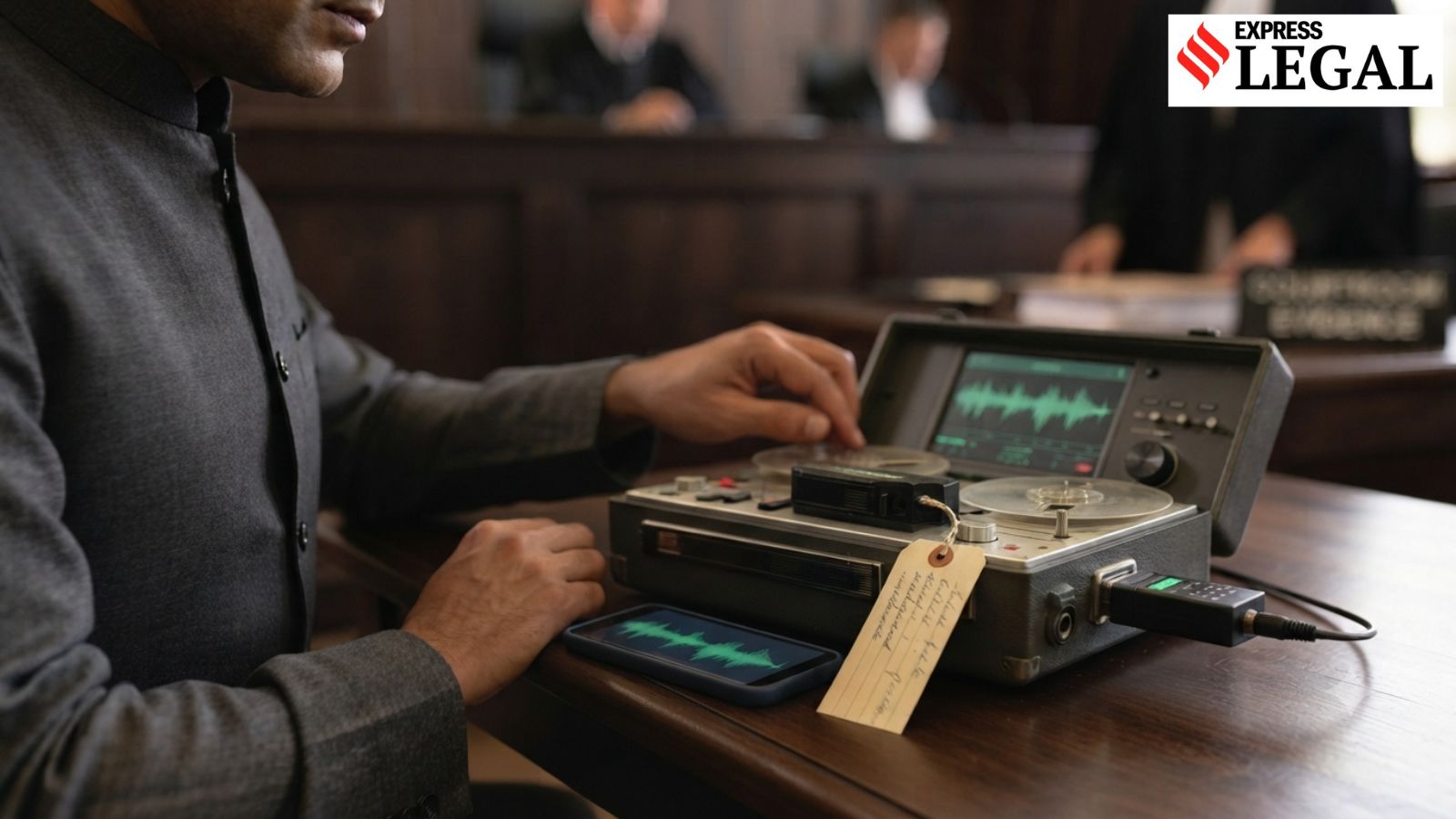
The Chhattisgarh High Court has ruled that secret recordings of conversations may be admitted as evidence in court, stating that the constitutional right to privacy does not automatically exclude such recordings. The court emphasized that each recording must be assessed for relevance, authenticity, and compliance with legal standards, rather than being dismissed outright.
Justice Ravindra Kumar Agrawal, presiding over a single-judge bench, made the observation on July 9 while hearing a petition in a land dispute case. The petitioner, Manit Singh Wadhawa, had challenged a trial court's decision to refuse the inclusion of an audio recording, its transcript, and a forensic analysis report as evidence in a civil suit.
“The right to privacy, though recognised as a fundamental right under Article 21 of the Constitution of India, is not an absolute rule of exclusion rendering every privately recorded conversation inadmissible in judicial proceedings,” the court said. It added that admissibility must be determined based on relevance, authenticity, and compliance with statutory requirements for electronic evidence. The court further noted that merely recording a conversation without the other party’s knowledge or consent does not by itself make the evidence inadmissible.
The case originated from a civil suit filed by the plaintiff seeking specific performance of an agreement for the sale of a parcel of land in Raigarh. The plaintiff also sought a declaration that subsequent sale deeds executed in favour of other purchasers were not binding on him. The plaintiff claimed that the son of the original landowner had held several phone conversations with his brother regarding the proposed transaction, during which the defendants allegedly expressed the need for money for a family wedding and requested funds for the sale. The plaintiff stated that he made payments based on these conversations.
During the suit, the plaintiff obtained an audio recording from his brother’s mobile phone, had it examined by experts, and secured a transcript and a forensic analyst’s report. He sought to place these documents on record under Order 7 Rule 14 of the Code of Civil Procedure. The trial court rejected the application on March 27, holding that there was no evidence that the defendant’s voice had been scientifically compared with the recorded voice, and that the conversation was analysed without the defendant’s permission.
The high court reversed this decision, ruling that issues of privacy, authenticity, and admissibility must be decided during the trial, not at the stage of taking documents on record. The court directed the trial court to consider the evidence in accordance with the law.







