Chandrayaan-3 Finds Lunar Soil Matches Meteorite Discovered on Earth
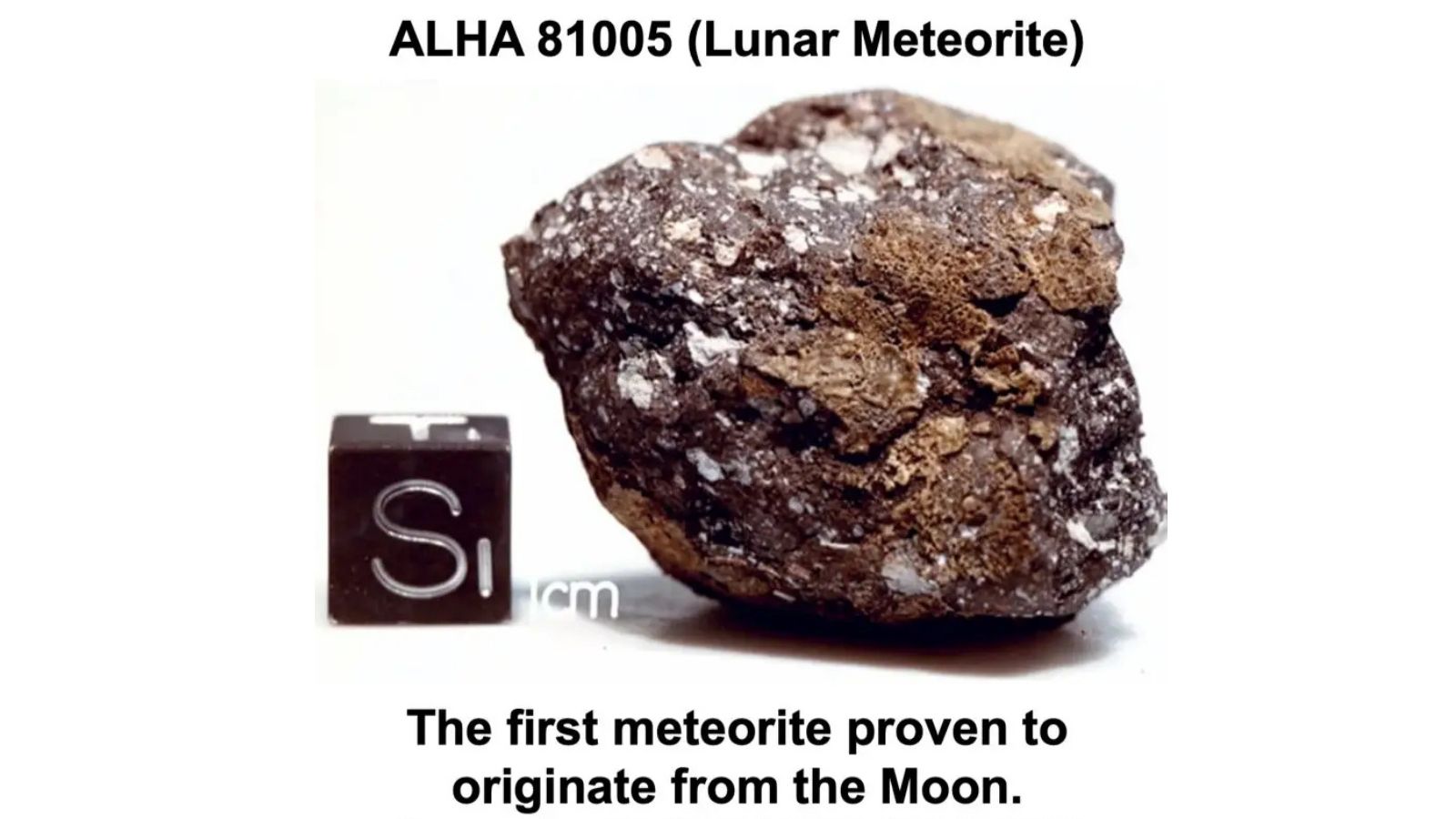
India's Chandrayaan-3 mission has yielded another significant scientific result: the lunar soil at its landing site shares a close compositional link with the first lunar meteorite ever identified on Earth. The discovery, published by researchers from the Indian Space Research Organisation (ISRO) in the journal Nature, offers new insights into the Moon's geological evolution and the impact processes that have shaped its surface over billions of years.
Chandrayaan-3 landed on the Moon on August 23, 2023, near the south polar region at a site now known as Shiv Shakti Point. Using its onboard instruments, the mission analysed the chemical and mineralogical composition of the surrounding soil and rocks. Scientists compared these data with laboratory studies of the Calcalong Creek meteorite, a rock found in Australia in 1960 that was later confirmed to have originated from the Moon. The analysis revealed striking similarities, indicating that the material at Shiv Shakti Point likely originates from the lunar highlands and contains debris from multiple layers of the lunar crust.
The findings support the hypothesis that large impacts have excavated and mixed materials from different depths, distributing them across the lunar surface. This process has homogenised some regions while preserving distinct signatures of deeper crustal layers. The connection to the Calcalong Creek meteorite, which is believed to have been ejected from the Moon by an ancient impact, reinforces the idea that meteorites found on Earth can serve as valuable proxies for studying lunar geology.
Dr. S. Somnath, Chairman of ISRO, stated that the results demonstrate the scientific value of in-situ measurements combined with laboratory analysis of meteorites. 'This is a step forward in understanding the Moon's history and its connection to Earth,' he said. The research also helps validate the precision of Chandrayaan-3's instruments in characterising lunar material.
The Chandrayaan-3 mission, which included a lander and a rover named Pragyan, successfully completed its primary objective of demonstrating soft landing and roving capabilities. However, its scientific contributions have been substantial, including detection of sulphur at the landing site and now this correlation with a lunar meteorite. The findings open avenues for future missions to explore the Moon's geology and resource potential.
Moving forward, ISRO plans to further analyse the data to refine models of lunar crustal structure and impact history. The study also underscores the importance of international collaboration in planetary science, as meteorite studies complement spacecraft observations. With Chandrayaan-3's continued data transmission, scientists expect more revelations about the Moon's complex past.







