Centre Slows Legislative Agenda as Opposition Protests Disrupt Parliament
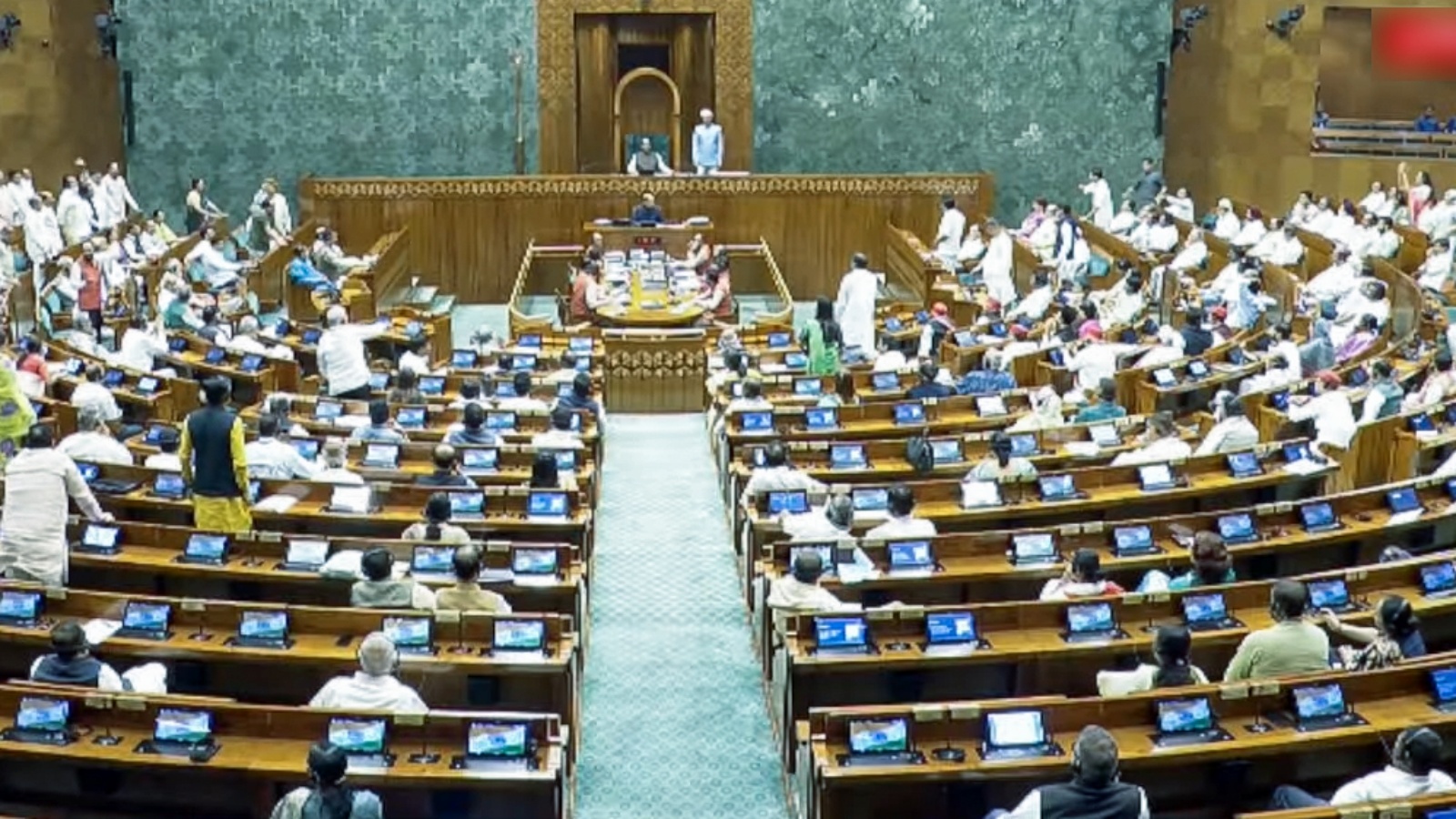
The Union government has appeared to slow its legislative drive in Parliament as Opposition parties continue to protest against alleged police excesses on student demonstrators and the reported theft of donations at the Ram Temple in Ayodhya. Sources indicate that the government is waiting for the Opposition to allow Parliament to function before introducing crucial legislation next week.
On Thursday, the government secured the passage of the Prevention of Insults to National Honour (Amendment) Bill, 2026, commonly referred to as the Vande Mataram Bill, amid the din in the Lok Sabha. The Bill makes intentional disruption of the national song a criminal offence, punishable with up to three years in prison. The Rajya Sabha had passed it earlier.
The Bill saw a short discussion with only two participants: Union Minister of State for Home Nityananda Rai and DMK MP Kanimozhi. Rai defended the legislation, saying all six stanzas of the song were necessary to achieve "Ek Bharat, Shreshtha Bharat (One India, Best India)." Kanimozhi criticised it as "a Hindutva agenda masquerading as nationalism" and argued it went against federalism and secularism.
The Bill has placed several parties, including the Congress and the Samajwadi Party, in a difficult position. A BJP leader noted that many Opposition parties avoided a detailed debate on the Bill because opposing it might be politically damaging, while supporting it could alienate their support base.
The government also deferred the consideration and passage of the Supreme Court (Number of Judges) Amendment Bill, which proposes to raise the court's sanctioned strength from 33 to 37. Sources said the Bill, deferred at the Opposition's request, is likely to be taken up on Monday.
Next week, the government plans to introduce the MSME Development Act (Amendment) Bill and the Foreign Contribution (Regulation) Amendment Bill. A BJP leader said the government wants the Opposition to participate in discussions, particularly on the FCRA Bill, and is deliberately not rushing. The FCRA amendments aim to regulate foreign contributions to ensure they do not adversely affect national interest, public order, or security. Critics, including minority groups, claim the changes could harm institutions run by Christians and other minorities.
The MSME amendments propose mandatory digital invoicing, stronger safeguards against delayed payments, and faster dispute resolution. These changes are designed to improve liquidity for small businesses, which often face long waits for payments after completing work.
Government sources indicated that repeated adjournments could postpone the 131st Constitution Amendment Bill, which aims to increase Lok Sabha seats and is linked to the Women's Reservation law and the Delimitation Bill. The Monsoon Session is scheduled to conclude on August 13.


