Cape Verde makes history: Smallest nation to reach World Cup knockout stage
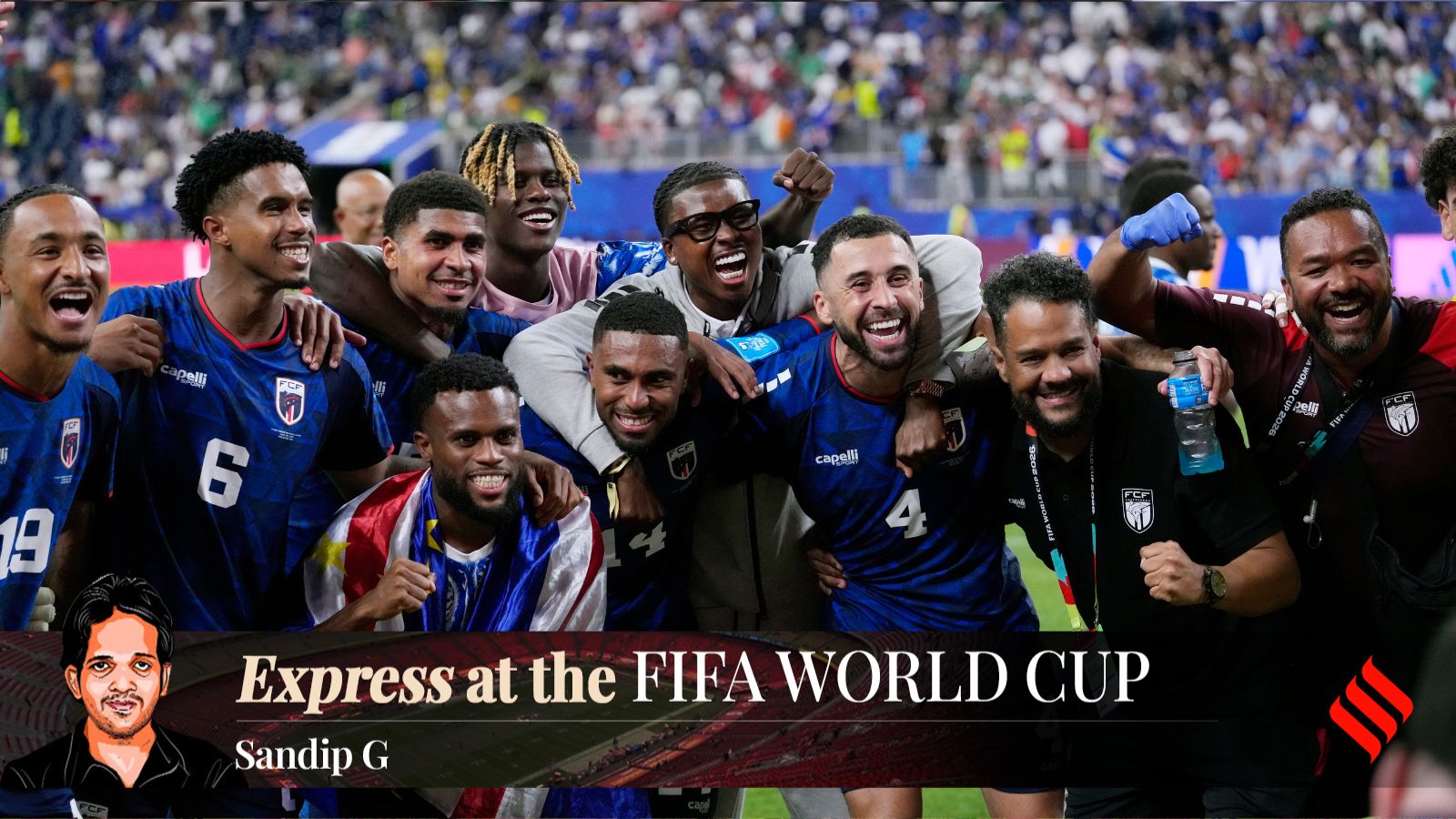
When Cape Verde defeated Saudi Arabia — home to one of the world's richest leagues and the team that beat Argentina at the previous World Cup — the small island nation still awaited confirmation of its knockout-stage berth. Its fate depended on the result of the Uruguay-Spain match. After shaking hands with the Saudi players, the Cape Verde team waited anxiously. Then news arrived: Spain had beaten Uruguay. Cape Verde became the smallest nation ever to reach the knockout round of a FIFA World Cup.
Midfielder Deroy Duarte told reporters he felt like crying. “Everyone was just waiting and praying,” he said. “We deserved it so much, because we gave everything. There was so much tension. The joy that came out is something I never felt before, and I hope to feel it again.”
Soon, he joined his teammates in a celebration. Manager Pedro Leitão Brito, known as Bubista, walked in furiously waving a giant Cape Verde flag. Some players wore the flag like a cape. Forward Garry Rodrigues wore a mask resembling a blue shark, the team’s nickname. The players sang and danced, inviting fans to join.
Told that Cape Verde were the smallest country ever to reach the World Cup knockouts, Bubista said: “It’s us? I didn’t know that.” He added: “In that case we have become an example that small countries also can have big objectives provided they have focus, determination and work with organisation. We have shown that nothing is impossible. We have represented our country but we also represent Africa and small countries around the world.”
The archipelago spans 4,033 square kilometres, about half the size of New Jersey. Its population is 530,000. Houston, the Texas city where they celebrated the achievement, has 4.15 million residents. More players in the squad were born in Rotterdam than in Praia, their capital. Their 26-member group plays in leagues across 14 countries.
To understand the scale of the achievement, consider who did not make it. From their own group, two-time champions Uruguay, managed by Marcelo Bielsa, were eliminated. So were Turkey, Czechia and New Zealand — all countries with greater resources and deeper football heritage. Scotland, which gave football to the world, are on the brink. Before the tournament, few could name five Cape Verde players. Now they have one of the most liked goalkeepers at the World Cup in Vozinha.
The mood in camp before the tournament was set by Dailon Livramento: “Let’s have some fun. We got ourselves into the World Cup, now it’s time to have fun together.” They did, and they played serious football. Three draws against teams far more accomplished in resources and personnel. Stopping Lamine Yamal and Nico Williams from scoring was not an accident. It was defensive organisation and relentless heart.
The day before the Saudi game, Vozinha had told reporters not to underestimate them. “We’re from a small country,” he said. “But we knew we would come here to compete. There’s a lot of quality in our national team. Maybe a lot of you thought that Cape Verdean players don’t have a lot of quality, but we’ve shown we are here to compete.”
Next up is Argentina, the defending champions. Many Cape Verdean players will be in awe of Lionel Messi. But Bubista vows to fight as they have throughout. “First of all we are proud to be able to play Argentina. This is a country with which we have longstanding ties. But above all our will is to do things with our identity regardless of who the opponent is. We will play our game with attitude and responsibility, knowing that Argentina have some of the best players in the world plus Messi, who some believe is the best of all time.”