Beyond Childcare: Four Hidden Barriers Keeping Women Out of India's Urban Workforce
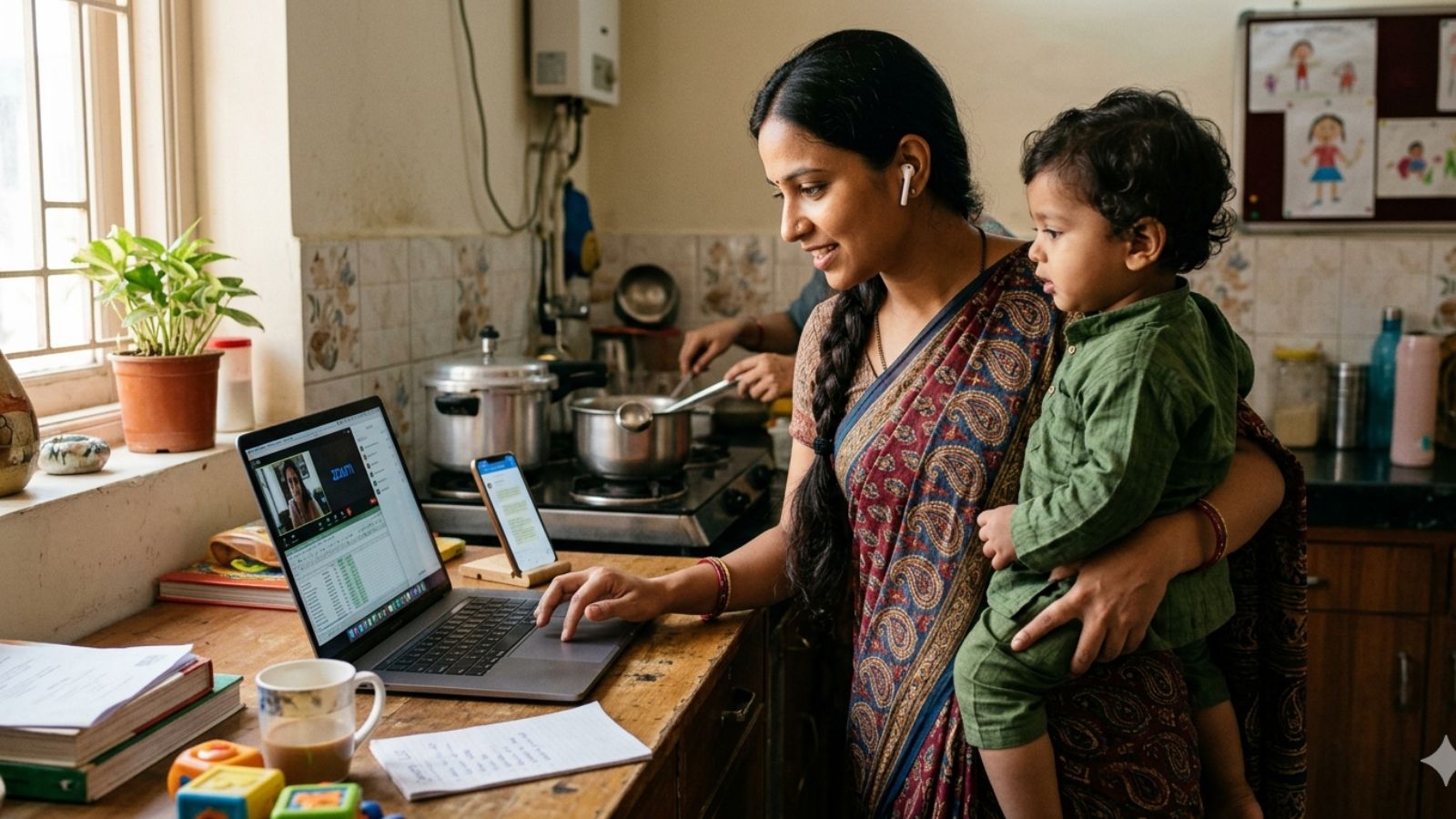
India's million-plus cities are seeing a promising rise in female labour force participation, from 19.8 per cent in 2017-18 to 27.2 per cent in 2025, according to the latest National Statistics Office report. Entrepreneurship is also growing: in 32 of 46 such cities, over 20 per cent of unincorporated establishments are now run by women. Cities like Surat, Vadodara and Pune have 40 per cent women-run establishments. However, these gains mask persistent gaps.
Even after this increase, female labour participation is barely a third of the male rate of 75.9 per cent. Nearly 70 per cent of women outside the workforce cite childcare and home commitments as the reason. Beyond this, four systemic barriers explain why the gap is not closing faster.
1. Mobility: For many women, the labour market begins not at the workplace but on the street. The Observer Research Foundation's 'Women on the Move' study found that over half of women reported harassment on public transport, and a similar share perceive it as unsafe. Women's commutes are often 'chained'—dropping children to school, running errands—while transport systems are designed for simple home-to-office trips. Unsafe, unreliable, or poorly designed transport shrinks labour supply before women even reach an employer.
2. Public Spaces: Beyond commuting, women rarely occupy public spaces without a clear purpose. They are seldom seen lingering in parks, cafes, or streets idly. This reflects a deeper social expectation that women must justify their presence in public. Safety concerns alone do not explain this; it is about urban design that assumes men as default users. Cities must be planned assuming women are full participants in public life.
3. Career Progression: Women who overcome mobility and public space hurdles still face a glass ceiling. Only 5 per cent of NSE-500 companies are women-led. While caregiving and maternity breaks explain some exits, they do not account for the lack of progression among women who stay. Unconscious bias plays a role: successful women are often perceived as less likeable than successful men. Assertiveness in a man is seen as conviction; in a woman, as sharpness. This forces women to manage tone and perception constantly, affecting self-belief and ambition. As one report noted, men apply for jobs when they meet 60 per cent of qualifications, while women wait until they meet nearly all.
4. Funding: Access to capital remains a major hurdle for women entrepreneurs. Banks, investors, and financial systems often favour male-led businesses, perpetuating the gap. Addressing this requires deliberate efforts to ensure women have equal access to funding.
These barriers are not about compromising merit. Promoting women is about uncovering merit that is systematically overlooked. Organisations that exclude half the workforce are not protecting standards—they are narrowing them. To close the gender gap, India's cities must redesign transport, public spaces, workplace cultures, and financial systems to include women as equal participants.