Bengal: 90 lakh removed from voters list; Muslim share of deletions exceeds population share
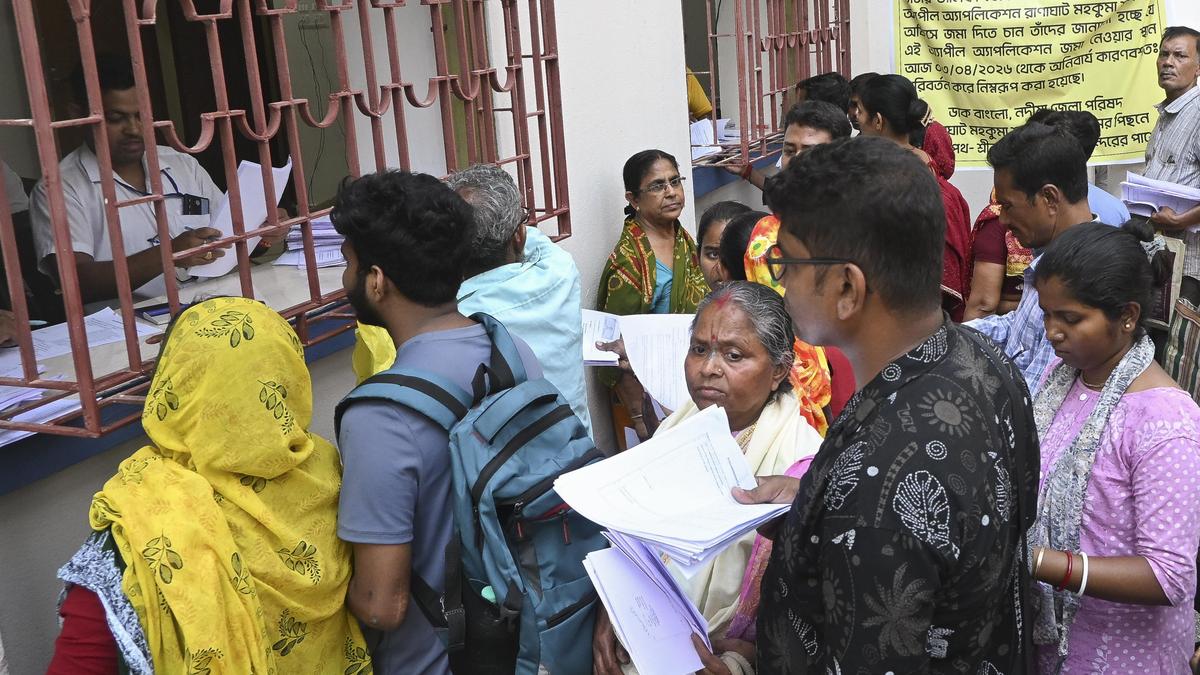
West Bengal's special intensive revision (SIR) of electoral rolls has resulted in the removal of nearly 90 lakh names, according to booth-level data compiled before and after the process. Of these, 57.47 lakh—63%—are Hindus, while 31.1 lakh—34%—are Muslims. The Muslim share of deletions is notably higher than the community's 27% share of the state's population as recorded in the 2011 census.
The SIR is a periodic exercise conducted by the Election Commission to update electoral rolls. It aims to remove duplicate entries, names of deceased voters, and those who have permanently moved away, while also adding new eligible voters. The process involves verification at the booth level, with opportunities for objections and claims. However, the latest figures have drawn attention because of the disproportionate effect on Muslim voters in percentage terms.
In absolute numbers, Hindu deletions are the largest, reflecting the community's majority share in the state. But the fact that Muslims constitute a higher proportion of those removed than their population share raises questions that election watchdogs and political parties may seek to examine. Electoral roll revision is a sensitive issue, as errors in deletion can disenfranchise eligible citizens.
Under the Representation of the People Act, 1950, electoral registration officers must follow a structured process. Notices are issued to individuals whose names are proposed for deletion, giving them a chance to respond. After final publication, voters whose names have been removed can still file claims for inclusion. The Election Commission maintains that deletions are based on field verification and not on any arbitrary criteria.
Political analysts note that any perception of bias in voter list revision can undermine trust in the electoral process. In a democracy, the accuracy and inclusivity of electoral rolls are paramount. The West Bengal data, while showing that Hindus form the majority of deletions, also highlight the need for transparent documentation of reasons for each removal.
Comparisons with the 2011 census are used as a baseline, but population demographics may have shifted since then. The census data on religion is from over a decade ago, and no updated figures are available. Still, the magnitude of the gap—34% versus 27%—is significant enough to warrant a clear explanation from the authorities.
Civil society groups have called for the publishing of booth-level deletion lists with reasons, so that affected individuals can challenge their removal. The Election Commission's online portals allow voters to check their status, but awareness campaigns are needed, especially in rural and marginalized communities.
It is also important to note that deletion from electoral rolls does not necessarily mean permanent disenfranchisement. The SIR is followed by a continuous updation process, and eligible persons can register throughout the year. However, for those who are unaware of the process, the practical impact may be exclusion from voting in upcoming elections.
As West Bengal approaches future polls, the integrity of its electoral rolls will remain under scrutiny. The data from this SIR underscores the need for careful oversight to ensure that every eligible citizen can exercise their franchise without undue barriers.