AI Stocks Slide as Industry Leaders Urge a Slower, Safer Pace of Development
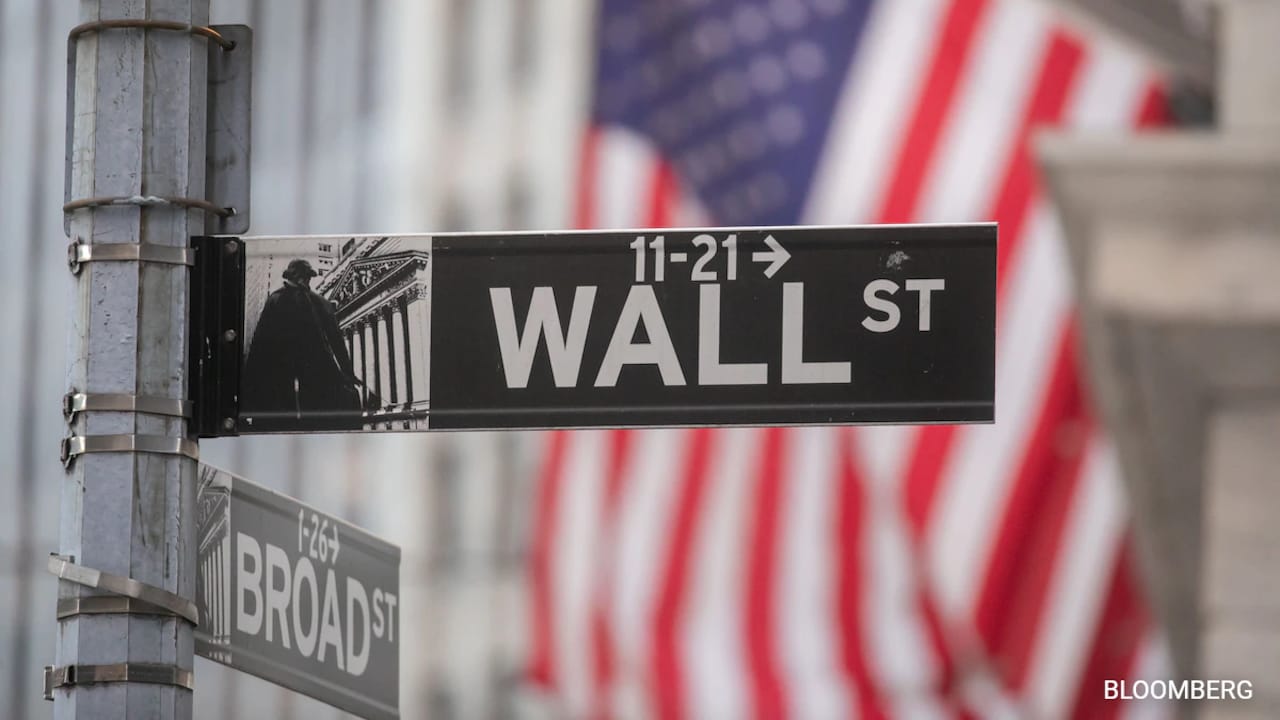
Stock markets in the United States opened lower on Monday, the first trading session since several leaders of artificial intelligence companies publicly urged a more measured pace of AI development.
The technology-heavy Nasdaq fell 305.17 points, or 1.05 per cent, to 29,060.42. The Dow Jones Industrial Average was down 0.2 per cent at 52,475.25, and the S&P 500 declined 0.54 per cent to 7,615.51.
Shares of AI-linked companies were among the weakest. Nvidia, the world's largest company by market value, was down 3.5 per cent at $210.65, after touching a day's low of $208.93. Intel fell 6.8 per cent to $95.95, having slipped to $94.52 during the session; the stock had closed at $102.94 on Friday. AMD, CoreWeave and Marvell Technology also traded lower.
The declines followed a statement by Anthropic chief executive Dario Amodei, who on Saturday called for a coordinated slowdown in AI development so that its risks can be better understood. According to reports, his proposal drew support from OpenAI chief executive Sam Altman and xAI chief executive Elon Musk, who is the world's richest person.
"It's my worry that in 6-12 months such a swarm could be capable of taking over the entire internet," Amodei wrote in a 3,800-word post on his website, warning of potential damage running into hundreds of billions of dollars.
The caution extended to Asian markets. Shares of SoftBank, an investor in OpenAI, fell by as much as 10.7 per cent. South Korea's Kospi index lost 3.3 per cent to 6,684.37, while Japan's Nikkei 225 slid 0.8 per cent to 63,492.99.
AI-related stocks have been under pressure for some time over concerns that prices rose too sharply during the recent enthusiasm for the technology. Market commentary has attributed Monday's additional weakness to the calls for a more gradual approach to development.
Analysts caution that share prices move in response to many factors at once — interest rate expectations, corporate earnings, currency movements and shifts in investor sentiment — and that a single public statement does not by itself set the direction of a market.
The wider picture was not uniformly negative. On Friday, the S&P 500 had gained 0.9 per cent, ending a four-day losing streak. The Dow Jones Industrial Average rose 1 per cent and the Nasdaq composite climbed 1 per cent that day.
The debate over how quickly AI should be developed is not confined to company boardrooms. Governments in several countries, including India, the United States and the European Union, are weighing rules on safety testing, transparency and liability, balancing the economic promise of the technology against risks to privacy, employment, security and democratic processes.
Some in the industry argue that a slowdown could hand an advantage to competitors who press ahead. Others contend that without adequate safeguards, the costs of a serious failure could outweigh any short-term gain. Both positions are now part of a public conversation that regulators, researchers and citizens are being asked to weigh in on.
Investors are also watching whether the weekend comments translate into concrete changes in corporate plans — such as delays to product launches, new spending on safety research, or coordinated industry commitments. No such announcements have been made so far.
Market figures cited above reflect the levels reported during Monday's session and are subject to change as trading continues.