African football officials split over Infantino's FIFA leadership
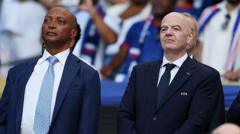
As FIFA president Gianni Infantino eyes another term, African football leaders are divided over his record and future role. While some officials praise his investment and loyalty to the continent, others caution against unconditional support, highlighting the complexities of football governance in Africa.
South Africa's Minister of Sports, Arts and Culture, Gayton McKenzie, came out in support of Infantino. In a post on X, McKenzie said Infantino had been "very good to African football" and urged the continent to be "cautious in joining the public lynching" of the FIFA president. He added, "We can debate his ideas but let's not forget who has been a friend to us. Many of those calling for his head want the old status quo back too."
Football officials from Malawi and Uganda echoed similar sentiments. Speaking to the BBC, Malawi FA president Fleetwood Haiya stressed the financial realities facing many African nations. "Malawi needs money. Malawi needs stadiums, our government cannot manage to give us even $1m every year for football," Haiya said on BBC's Newsday programme. "Our government is not able to make sure that they have medical supplies in hospitals [and] at the same time to look at football."
The president of the Gambia Football Federation, Lamin Kaba Bajo, told BBC Sport that he would encourage Infantino to stay and work for re-election. "As far as I'm concerned, most of my colleagues are concerned, we'll encourage him to stay, and we'll do everything within our means to ensure that he is re-elected come next year, 2027," Bajo said. "That's my personal opinion as president of the federation, and a good number of African memberships also stand on that line. He is here to stay."
However, support for Infantino is not unanimous across the continent. Former Sierra Leone FA president and ex-FIFA Council member Isha Johansen voiced opposition, warning that his proposals risk over-commercialising football. She asked, "What price does one have to pay in order to get to this elevated development for football in Africa?" Johansen urged African football chiefs to think carefully about the game's future.
Last month, Confederation of African Football (CAF) president Patrice Motsepe lauded Infantino for his "excellent work" after this year's World Cup and described him as "a good friend". "He is loyal to Africa," Motsepe said on 22 July. "When people have been loyal to you, you never stab them in the back."
Other nations, including Senegal, whose men's team is the second-highest ranked African team behind Morocco, have yet to comment publicly. The mixed reactions reflect broader debates about the benefits and costs of FIFA's engagement with African football under Infantino's leadership, particularly as the continent seeks to balance development needs with long-term sporting integrity.