Women's Reservation: Gandhi Questions Delay, Rijiju Seeks Congress Support
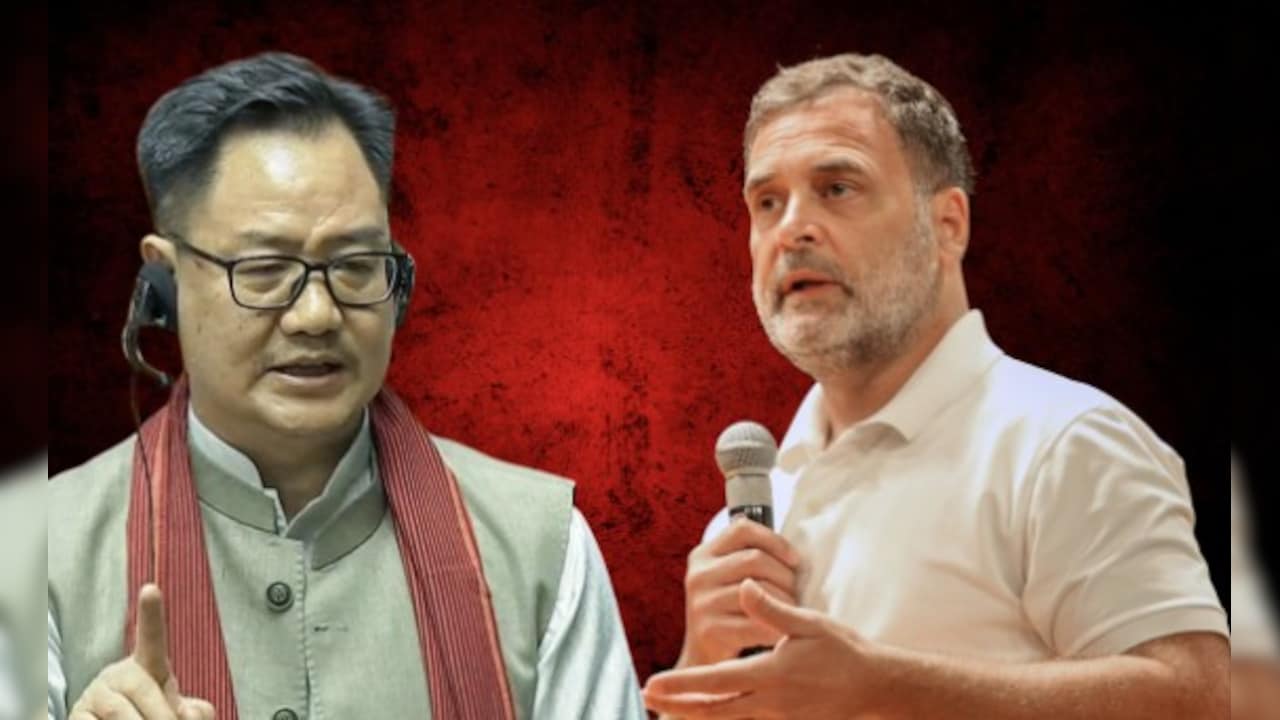
Leader of Opposition Rahul Gandhi and Parliamentary Affairs Minister Kiren Rijiju engaged in a social media exchange on Saturday over the implementation of the Women's Reservation Act. The discussion began with Mr. Gandhi's video message on women's empowerment, to which Mr. Rijiju responded by asking the Congress to support the Women's Reservation Bill.
In a video posted on Friday, Mr. Gandhi said it was important to bring women 'back into the conversation and allow them to do what they want to do.' Responding to this, Mr. Rijiju described it as a 'positive message' and questioned whether there had been a 'change of heart' in the Congress leader.
'This seems to be a positive message from the Congress Party. There's a visible change of heart in Shri Rahul Gandhi Ji about the Women,' Mr. Rijiju posted on X. He added: 'Now, I hope Congress Party will support the Women's Reservation Bill unconditionally.'
Mr. Gandhi replied on the same platform, pointing out that the Women's Reservation Bill, 2023, had already been passed unanimously with the support of the Congress. He asked why the government had not implemented it in the three years since and why it was being linked to delimitation.
'Mr. Rijiju, who would know better than you, as the Minister of Parliamentary Affairs—that the Women's Reservation Bill 2023 has already been passed unanimously, with the full support of the Congress. The question is, why has it still not been implemented even after three years, and why do you now want to unnecessarily link it to delimitation?' Mr. Gandhi posted.
He demanded that the Centre implement the 2023 law 'without any conditions.'
The exchange highlights a continuing political disagreement over the Women's Reservation Act, which mandates 33 per cent reservation for women in the Lok Sabha and state legislative assemblies. The Act was passed by Parliament in September 2023, but its implementation is tied to a delimitation exercise, which is yet to be undertaken. Delimitation involves redrawing constituency boundaries based on population changes, and the government has linked the rollout of the reservation to this process.
The Congress and other opposition parties have opposed the Delimitation Bill, arguing that the women's quota should be implemented at the current strength of Parliament and assemblies. The government, however, has been pushing for an increase in the number of seats in Parliament and state assemblies, saying this is necessary to accommodate the quota.
Mr. Gandhi's comments on Friday were an extension of his remarks during Thursday's 'Ask Me Anything' session on social media. In his video, he said: 'I was thinking to myself that the energy of India's women is trapped, is not allowed to express itself, is not allowed to imagine.'
'To me, no country can be successful if the women in that country are not expressing themselves. I think a lot of my politics and a lot of what politics should be in this country is in making people understand that our country is stunted, incomplete, without the expression of our women,' he said.
The Congress leader said it was not only about women succeeding in business or politics, but also about them being able to express themselves in their homes and walk the streets comfortably. He added: 'That is them putting a point of view that many others don't agree with, that is them questioning their parents, their husbands, their brothers, sisters, whatever. So a certain amount of freedom from this patriarchy, from the rigid control that India's men impose on their women, is required if India has to really develop.'
In his Thursday session, Mr. Gandhi was asked about his message to young women fighting for their right to education. He responded that 'India's women are our strength, our biggest asset' and expressed dissatisfaction with how women are treated in the country, including in education and corporate systems.
The exchange between Mr. Gandhi and Mr. Rijiju comes at a time when the Women's Reservation Act remains unimplemented, with the government and opposition holding differing views on the path forward. The issue is expected to be a point of debate as Parliament continues its proceedings.