VPN Interest Rises Sharply During India’s Temporary Telegram Ban
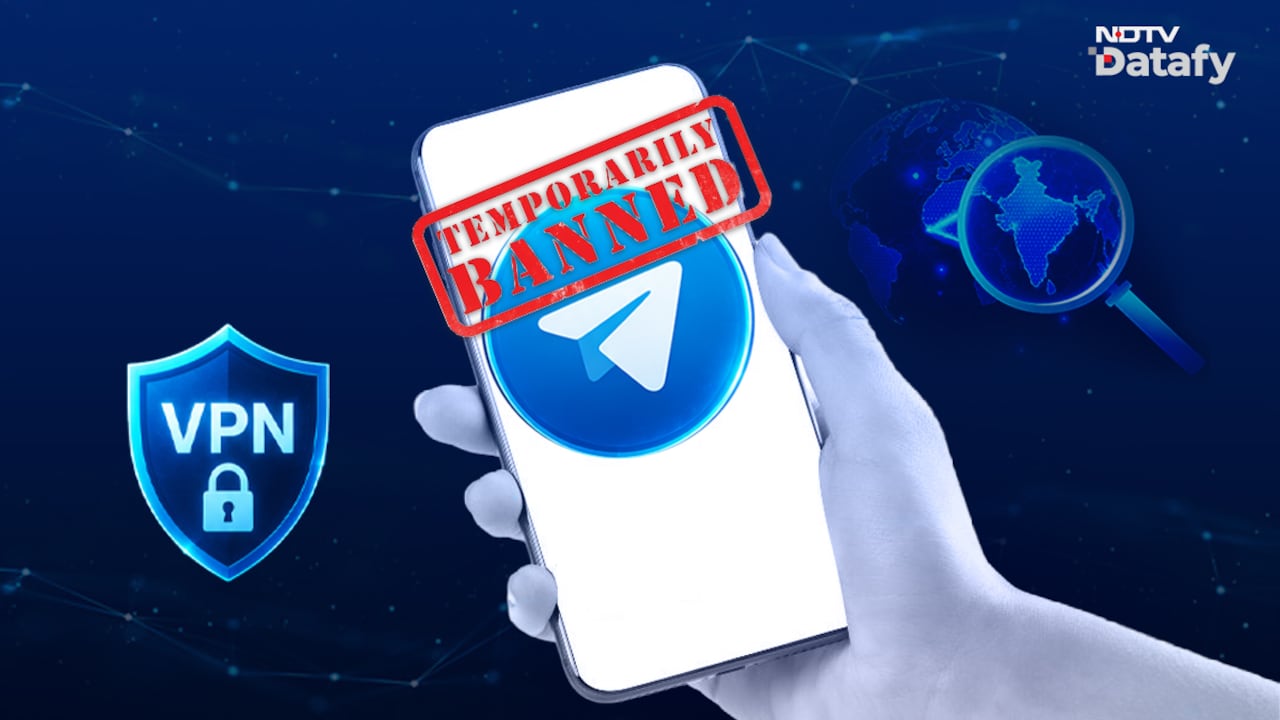
In June, the central government imposed a temporary nationwide restriction on the messaging platform Telegram, effective from June 16 to June 22. The move followed widespread reports of irregularities in the National Eligibility cum Entrance Test (NEET), a crucial medical entrance examination. Authorities acted after it emerged that leaked question papers and other unauthorised materials were being circulated through Telegram channels. The government reportedly used its powers under Section 69A of the Information Technology Act to temporarily block the platform in the interest of examination integrity and public order.
Data from Google Trends now reveals a swift reaction from Indian internet users. Search interest for the phrase “VPN for Telegram” remained negligible until June 15. However, as the restriction began on June 16, it surged dramatically. On that day, the relative search volume index climbed from zero to 5, then to 18, 28, and peaked at 99 within hours. The trend continued into June 17, reaching the maximum index value of 100. This sharp upswing, measured on a scale where 100 represents peak popularity, demonstrates that a significant number of users actively sought technical workarounds—specifically, virtual private networks (VPNs)—rather than discontinuing use of the platform.
Telegram holds a substantial user base in India. According to a global survey by Statista, 45 per cent of Indian respondents reported using Telegram regularly, the highest proportion among all countries surveyed. This places India well ahead of second-ranked Brazil (38 per cent) and far above nations such as the United States (9 per cent) and Japan (1 per cent). The platform’s deep penetration—nearly one in two users—means any service disruption affects a large demographic accustomed to its features, including large group capacities, channels, and strong encryption.
A VPN works by encrypting internet traffic and routing it through servers in other locations, effectively masking the user’s real internet address. The use of VPNs is not illegal in India, and many individuals and businesses employ them for legitimate privacy and security reasons. However, using a VPN to access services that have been specifically blocked by government order may contravene the underlying directive. The sudden spike in searches indicates that users were willing to bypass the restriction despite the legal ambiguity.
India has witnessed similar trends during past internet shutdowns and app bans. For instance, when the short-video app TikTok was banned in 2020, VPN downloads and searches rose sharply. The current episode reaffirms a consistent pattern: motivated users quickly pivot to circumvention tools when faced with access barriers.
Telegram’s popularity in India stems from its blend of privacy and functionality, making it widely used for education, news, and community groups. Yet the same attributes have also made it a conduit for piracy, rumour-mongering, and the distribution of illicit materials. The temporary ban represented a targeted attempt to curb misuse during a sensitive examination period, but the spontaneous shift towards VPNs highlights the challenge of enforcing digital borders in a technologically literate society.
As the restriction was lifted after June 22, the Google Trends data serves as a real-time case study of user behaviour under censorship conditions. It underscores that while temporary measures can disrupt normal access, they also prompt a rapid search for alternatives, potentially moving problematic activities onto encrypted channels that are even harder to monitor. The episode raises important questions about the long-term effectiveness of such interventions and the need for a balanced approach that addresses both platform accountability and users’ rights.