Venezuela Earthquake: Death Toll Rises to 1,430 as Rescue Efforts Continue
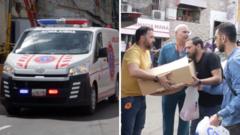
Two powerful earthquakes struck Venezuela on Wednesday, leaving widespread destruction and a mounting human toll. According to official figures released by the Venezuelan government, the death count has reached 1,430, with 3,238 people injured. Rescue operations are ongoing, though the critical window for finding survivors under the rubble is narrowing.
The first earthquake, with a magnitude of 7.3, struck near the coastal town of Cumaná at 5:32 PM local time. A second tremor of magnitude 6.8 followed hours later, compounding the damage. The epicentres were located in the eastern part of the country, affecting states such as Sucre, Anzoátegui, and Monagas. The tremors were felt as far away as the capital, Caracas, where buildings swayed and residents poured into the streets.
In Caracas, the Hospital Universitario de Los Andes has become a focal point for families searching for missing relatives. BBC correspondent Vanessa Silva reported from outside the facility, where crowds gathered with desperate hope. Many held photographs of loved ones, while others received news of injuries or deaths. The hospital has treated a range of cases, from fractures to panic-related ailments, stretching its already limited resources.
Venezuela's seismic vulnerability is well-documented, lying along the boundary of the Caribbean and South American tectonic plates. The country has experienced major earthquakes in the past, including a devastating 7.0 magnitude quake in 1967 that killed hundreds. However, decades of economic crisis and infrastructure decay have hampered the nation's ability to respond to natural disasters.
Rescue teams, including firefighters, military personnel, and volunteers, are working in affected areas to clear debris and search for survivors. However, challenges persist: damaged roads hinder access to remote communities, intermittent power cuts disrupt communication, and a shortage of heavy equipment slows rescue efforts. International aid offers have begun to arrive, with neighbouring countries and global organisations pledging support.
The Venezuelan government has declared a state of emergency in the hardest-hit states and set up temporary shelters for those displaced. Officials have warned that the death toll may rise as more bodies are recovered. In Cumaná, entire neighbourhoods have been reduced to rubble, and survivors are combing through wreckage for belongings and loved ones.
The psychological impact is also severe. Mental health professionals have been deployed to provide counselling to survivors and families. The term 'panic attacks' used in some reports carries a stigma; clinicians emphasise that acute stress reactions are a normal response to trauma and require compassionate care.
As rescue operations continue, the international community has been urged to assist. The United Nations has expressed readiness to provide humanitarian aid. Meanwhile, Venezuelans across the country are coming together, donating food, water, and clothing to relief efforts. The full scale of the disaster will only become clear in the days ahead.