Vande Mataram row: BJP chief says Congress is 'new Muslim League'
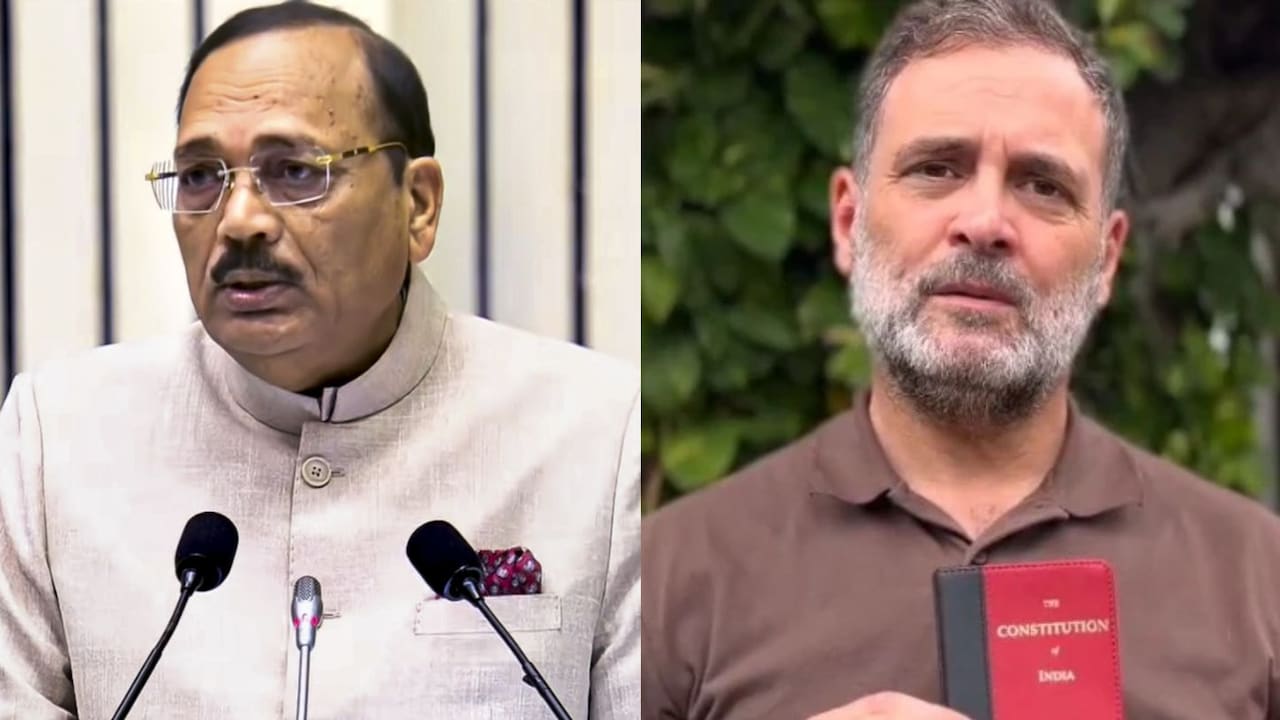
In a sharp escalation of the Vande Mataram controversy, Bharatiya Janata Party (BJP) chief Nabin on Monday likened the Congress's stance on the national song to that of the Muslim League during the freedom struggle. He accused the Congress of displaying the same obstinacy against the full version of the song that the Muslim League had shown in the pre-independence era.
"The Congress is showing the same stubbornness against the full version of Vande Mataram that the Muslim League had exhibited. This reveals the Congress's mindset of appeasing a particular community at the cost of the nation's cultural unity," Nabin said while addressing a press conference. He further asserted that the Congress had transformed into a "new Muslim League" by opposing the recitation of the complete rendition of the song.
Vande Mataram, composed by Bankim Chandra Chattopadhyay in the 1870s, became a rallying cry for Indian nationalists during the independence movement. The song was part of his novel "Anandamath". In 1950, the first two stanzas of the song were formally recognised as the national song, distinct from the national anthem "Jana Gana Mana". The full version contains verses that some religious groups, particularly among Muslims, have historically found objectionable due to their allegorical references to Hindu deities.
During the independence struggle, the Muslim League had opposed Vande Mataram, with its leaders arguing that the song conflicted with Islamic principles of monotheism. This opposition was one of the factors that contributed to the demand for a separate Muslim homeland, culminating in the partition of India in 1947. After independence, however, the Constituent Assembly adopted the song, albeit with the compromise of using only the first two stanzas at official functions to address the concerns of Muslim members.
In recent years, the issue has flared up periodically, with the BJP accusing the Congress of refusing to sing the full version of Vande Mataram to avoid offending minorities. The Congress has consistently denied these allegations, stating that its reverence for the national song is absolute and that the BJP is manufacturing controversies for electoral gains. Congress leaders have also noted that the party has always sung the full version at its own events, and they have challenged the BJP to provide evidence of any Congress leader skipping the song.
From a constitutional standpoint, there is no mandatory provision requiring the singing of the full version of Vande Mataram at public events. The government issues circulars from time to time, and the practice varies across states. In 2006, the Madras High Court had directed that Vande Mataram be sung at least once a week in schools, but the Supreme Court later upheld the directive, making it optional. This legal ambiguity has allowed political interpretations to flourish.
Political observers say the controversy serves the BJP's narrative of projecting the Congress as a party that appeases minorities at the expense of national symbols. The Congress, on the other hand, sees the repeated focus on Vande Mataram as a deliberate attempt to polarise society. The exchange of barbs has intensified in the run-up to several state elections, with both parties using cultural and historical symbols to consolidate their respective voter bases.
As of now, the Congress has not issued a formal response to Nabin's specific remarks. However, party insiders suggest that the leadership is likely to dismiss the comparison as "unwarranted and divisive". The episode underscores the deep political divide over the interpretation and use of national symbols in India. The Vande Mataram row is not new; it has resurfaced multiple times over the decades. Each time, it exposes the fault lines in the country's collective identity. While the BJP frames the issue as one of patriotism, the Congress sees it as a cynical ploy to divert attention from governance failures.