US Treasury Secretary: Tariffs on India to Return to Previous Levels After Section 301 Review
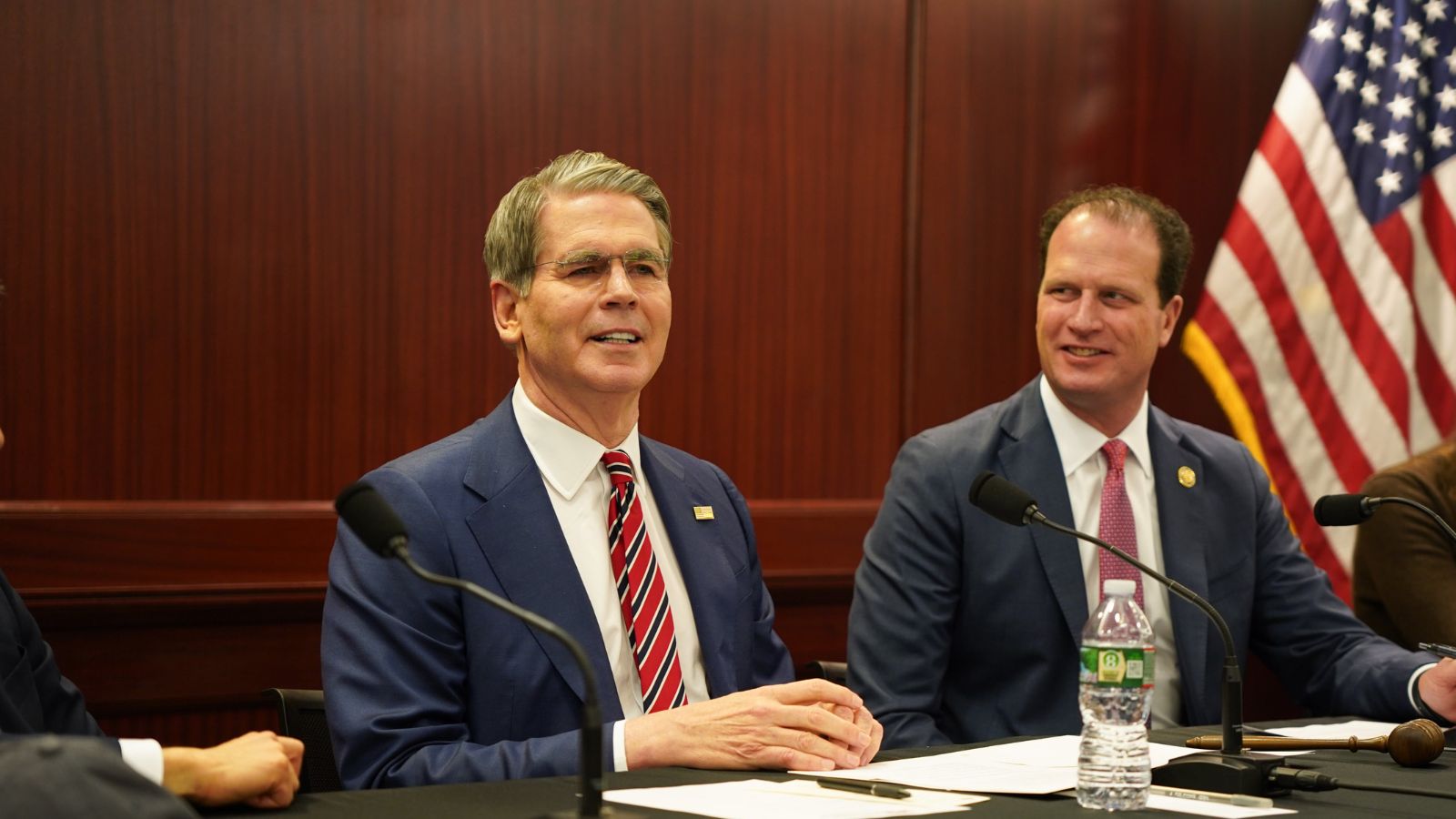
Indian negotiators have been seeking clarity on US tariffs under Section 301 of the US Trade Act of 1974, as well as a competitive advantage over other nations before finalising a bilateral trade deal. In response, US Treasury Secretary Scott Bessent stated that tariff rates will revert to their earlier levels once ongoing studies are completed.
“We have rebooted the tariff program. Right now, we have something called Section 122 tariffs, which is a 10 per cent global tariff. Currently, USTR Ambassador Jameson Greer is doing studies for Section 301s, and if those studies are successful, and I have no reason to believe they won’t be, but we don’t know until they are – then the tariff rates are going to go back to exactly where they were,” Bessent said in a television interview.
Previously, the International Emergency Economic Powers Act (IEEPA) imposed a 25 per cent tariff on India, which was reduced to 18 per cent in February, days before President Donald Trump’s IEEPA authority was declared invalid. Washington has now proposed a 12.5 per cent tariff on India, effective July 7. Results of another Section 301 investigation are expected by the end of next month.
Bessent noted that using IEEPA in 2025 allowed the US to quickly reach trade deals that might not have been otherwise possible. He cited the European Union as an example, where the EU agreed to pay 15 per cent tariffs while charging the US zero, along with reducing non-tariff barriers. He said similar progress is happening with Japan, South Korea, China, and other countries.
India’s Commerce and Industry Minister stated on Thursday that the India-US trade deal, confirmed on February 6, was based on IEEPA tariffs that gave India a competitive edge over countries such as Vietnam, Thailand, the Philippines, Indonesia, Malaysia, and China. India is now seeking a similar advantage under the new US tariff structure.
India has accelerated its efforts to negotiate trade agreements with other nations. The UK trade deal is set to take effect next month, the EU deal by year-end, and the India-Oman deal came into force on June 1. Indian negotiators are also in talks with the Russia-led Eurasian Economic Union (EAEU), Canada, Peru, and Chile.
The United States Trade Representative (USTR) was scheduled to visit Uzbekistan after India this week. While no India-US deal was announced, the US and Uzbekistan agreed to an early harvest of trade commitments to strengthen bilateral ties.
USTR launched two sets of Section 301 investigations on forced labour and excess capacity, covering India, China, the European Union, Japan, Vietnam, Taiwan, Switzerland, and South Korea. The US has already proposed the first set of tariffs. Countries such as the UAE, UK, Israel, Qatar, Saudi Arabia, and Pakistan appear only once in the investigations and may face lower tariffs. The US has proposed a 10 per cent rate for Pakistan, Canada, Ecuador, the EU, Indonesia, and Mexico, citing their commitment to address forced labour imports through a formal Agreement on Reciprocal Trade (ART).
Separately, the US has launched a third investigation on Vietnam and a fresh case against Germany. China has been subject to Section 301 tariffs since Trump’s first term.