US Civics Contest Scoring Questioned by Sikh Teen's Family
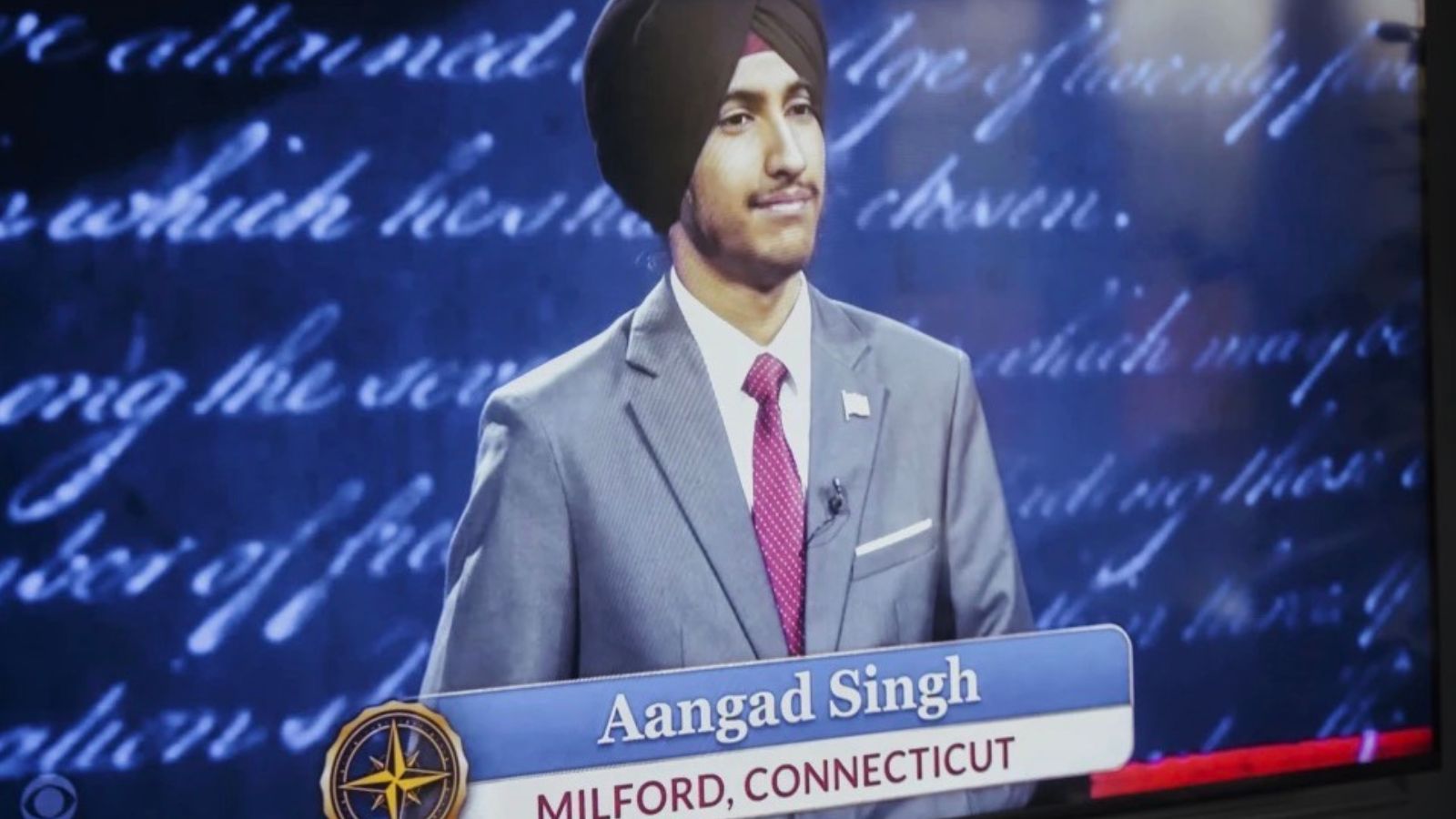
The family of a 15-year-old Indian-American Sikh student has raised concerns about the scoring of the Presidential 1776 Award civics competition, organised by the US Department of Education, after he narrowly missed a top-three finish. The competition, part of America’s 250th anniversary celebrations, includes an online test, regional rounds, and a national final held at the Kennedy Center in Washington, DC.
Aangad Singh, a high school student from Milford, Connecticut, was among 20 finalists. His family, as reported by the US digital news platform NOTUS, believes judging errors may have cost him a place among the winners. The family pointed to specific instances where they claim his answers were marked incorrectly despite matching constitutional text.
One disputed question concerned the jurisdiction of federal courts under Article III of the US Constitution. Another involved a lightning-round question on which constitutional amendment abolished slavery; Aangad answered “the 13th Amendment,” but the response was marked incorrect, possibly due to pronunciation. The family noted that auto-generated subtitles reflected the correct answer.
After reviewing the broadcast, the family compiled their own score sheet and concluded that correcting even one answer would have placed Aangad among the top three. They also questioned the absence of a consistent live scoreboard during the televised final.
Some fellow contestants and parents believed Aangad had performed strongly, with one contestant telling him he “clearly knew everything.” However, the family’s concerns grew after an Education Department official declined to release detailed scores, citing proprietary reasons.
In a response shared after the report, Deputy Chief of Staff Chase Forrester, writing on behalf of Education Secretary Linda McMahon, stated that judges exercised “independent good faith judgement” and that their decisions were final under the competition rules. The department also said broadcast graphics accurately reflected the judges’ scoring. The judging was handled independently by the James Madison Memorial Fellowship Foundation.
While Aangad and his father attributed the outcome to possible judging errors or interpretation differences, other family members questioned whether his visible Sikh identity, including his turban, may have influenced perceptions. However, the NOTUS report noted that no evidence of intentional bias has emerged.
The Presidential 1776 Award is part of a broader push by the Trump administration for what it describes as “patriotic education.” The Singh family said they are seeking transparency and accountability rather than a change in results. Ramandeep Singh told NOTUS that if there had been bias or errors, the issue should be addressed “on behalf of every kid.”
No formal inquiry into the competition has been announced.